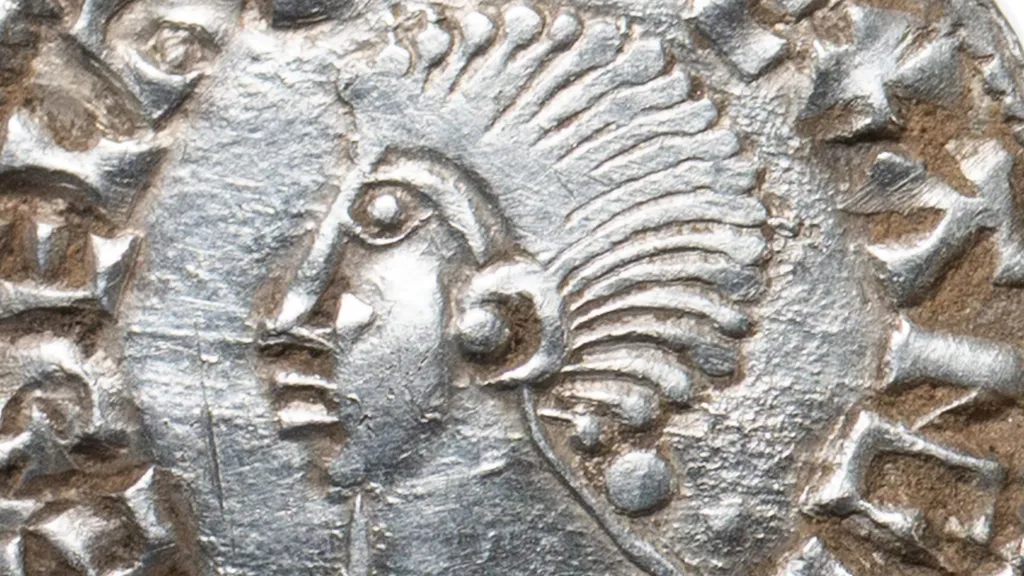
The small Essex hoard dates to a troubled reign marked by Viking pressure, Danegold payments and political instability in Anglo-Saxon England
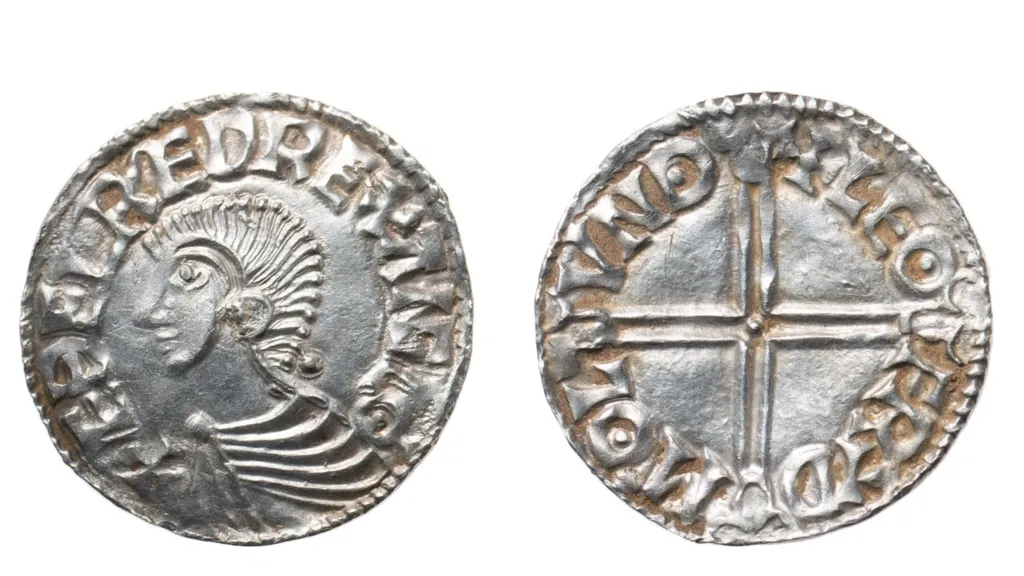
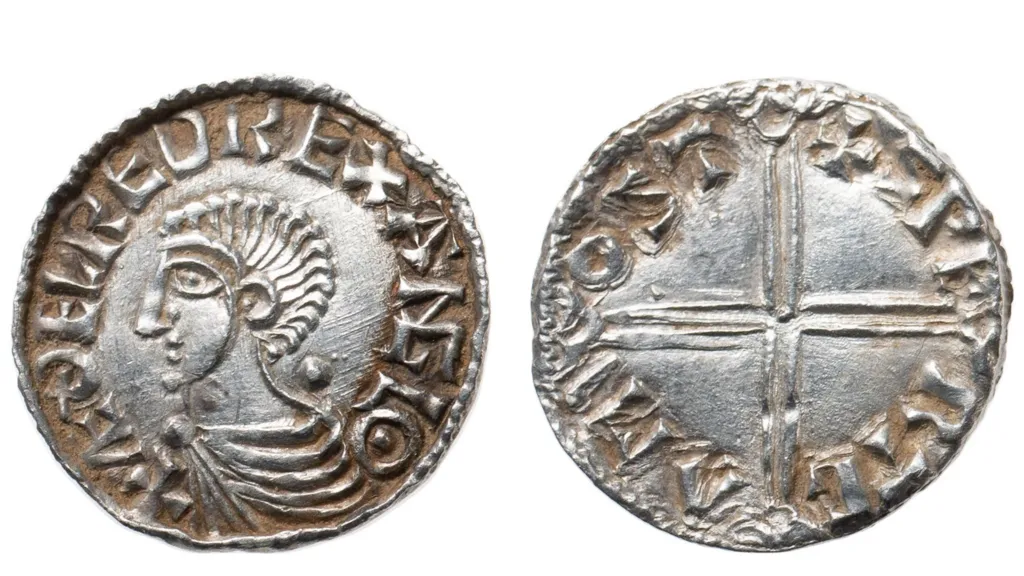
Ethelred the Unready is once again at the center of England’s Viking-age story after a hoard of 14 Saxon silver pennies was discovered near Maldon in Essex. The coins, struck for King Ethelred II between AD 997 and 1003, were found by metal detectorists in January 2025 and have now been declared treasure.
The find may look modest at first. Fourteen small silver coins do not sound like a dramatic discovery. But in late Anglo-Saxon England, this was a meaningful sum, possibly equal to about two weeks’ wages. More importantly, the coins come from one of the most unstable periods in English history, when Viking raids, royal payments and local insecurity shaped daily life.
Braintree Museum hopes to acquire the hoard, along with another early Saxon treasure declared at the same inquest: a rare 6th-century gilded silver sword pommel cap found near Hatfield Peverel.
A small hoard from a dangerous century
The Maldon pennies are in unusually good condition. That detail gives the hoard much of its force. They appear to have seen little use before they were buried, dropped or lost. Coins that circulated for years carry the marks of ordinary exchange. Fresh silver, hidden soon after minting, points to a more sudden moment of uncertainty.
No one can say who owned the coins. They may have belonged to a traveller, a local landholder, a trader moving through Essex, or someone who hid them for safekeeping and never returned. What is clear is that the hoard belongs to a century when silver was more than money. It was security, status and sometimes survival.
The find was made near Maldon, a landscape already deeply tied to Viking-age memory. In AD 991, the area became the setting for the Battle of Maldon, where an English force led by Byrhtnoth suffered a major defeat against Viking attackers. The battle later entered English literature through the Old English poem The Battle of Maldon. The newly found coins bring that same troubled world into a smaller, more personal frame.
Ethelred’s England and the price of peace
Ethelred II came to the throne in AD 978 as a boy of about 12, after the murder of his half-brother Edward the Martyr. His long reign became associated with political tension, military failure and repeated Scandinavian attacks.
His nickname, “the Unready,” is often misunderstood. It did not mean he was unprepared in the modern sense. It came from an Old English word meaning poor counsel or bad advice. The name became a bitter joke on Ethelred’s own name, which meant noble counsel.
Under Ethelred, England faced waves of Viking raids that tested the kingdom’s military and financial systems. One of the king’s most controversial responses was the payment of tribute to Viking forces, known as Danegold. The policy aimed to buy peace, but it also exposed the kingdom’s weakness. Silver could persuade raiders to leave for a time. It could not stop them from coming back.
That is why the Maldon hoard matters. These pennies were not just coins. They belonged to a world in which royal silver moved through local markets, military pressure, river routes and Viking tribute.
Maldon’s waterways made the region vulnerable
The find spot near Maldon adds another important layer. The area was close to connected waterways, including the River Chelmer and the Blackwater estuary. In the Viking Age, rivers were not quiet borders. They were routes of trade, travel and danger.
Although there is no recorded Viking raid at Maldon in AD 1003, the wider region had already felt Scandinavian pressure. The waterways around Maldon could link coastal movement with inland settlements, including places where Danish presence was known or suspected.
The hoard should not be read as direct proof of a raid at the exact find spot. Its value is more subtle. It reflects the kind of insecurity that made people carry, hide and protect silver in a landscape shaped by conflict and uncertainty.
Royal silver in a weakening kingdom
The coins were minted during Ethelred’s later reign, when English coinage remained one of the most advanced monetary systems in western Europe. Anglo-Saxon pennies carried royal authority in miniature. Their inscriptions named the king, the moneyer and often the mint, turning each coin into a small statement of political order.
Yet that order existed alongside crisis. Ethelred’s kingdom could still produce high-quality coinage, but it struggled to control violence coming from the sea. This tension gives the Maldon pennies their historical weight. They show a state that remained administratively strong while its security weakened.
The years after the coins were struck only deepened the crisis. In 1013, Sweyn Forkbeard, king of Denmark, drove Ethelred from the throne. Ethelred returned after Sweyn’s death in 1014, but he died in London in 1016, with England still caught in a struggle for power.
A rare glimpse of early Saxon Essex
The second treasure find declared at the same inquest reaches further back into Essex’s early medieval past. The 6th-century gilded silver sword pommel cap found near Hatfield Peverel likely belonged to a high-status weapon. It offers rare evidence for elite groups in early Anglo-Saxon Essex, a period that is still unevenly represented in the archaeological record.
Its survival is especially notable because even the famous sword from the Prittlewell Prince burial lacks a surviving pommel. The Hatfield Peverel object may have come from a lost burial or even an unknown cemetery, raising the possibility that more early Saxon material once existed in the area than the current record suggests.
Together, the two finds tell a wider story of Essex across several centuries. The sword fitting points to local elites in the 6th century, when power was often expressed through weapons, burial display and warrior identity. The Maldon pennies belong to a later world of kingship, taxation, coinage and Viking pressure.
One object speaks of status. The other speaks of insecurity.
Fourteen coins, one unsettled kingdom
The Maldon hoard does not need to be large to matter. Its importance lies in timing, place and condition. Fourteen near-fresh silver pennies from the reign of Ethelred the Unready, found close to one of England’s most symbolic Viking-age landscapes, form a compact but powerful piece of evidence.
They do not rewrite the history of Ethelred’s reign. They make it more tangible.
A king tried to hold his kingdom together. Viking forces pressed against England’s coasts and rivers. Silver moved through the hands of ordinary people, officials, traders and raiders. Somewhere near Maldon, someone carried 14 pennies and lost them to the ground.
More than a thousand years later, that small sum still carries the weight of a troubled age.
Silver pennies from the hoard were minted under Ethelred II, whose reign from AD 978 to 1016 was marked by Viking raids and Danegold payments. Credit: Colchester and Ipswich Museum Service