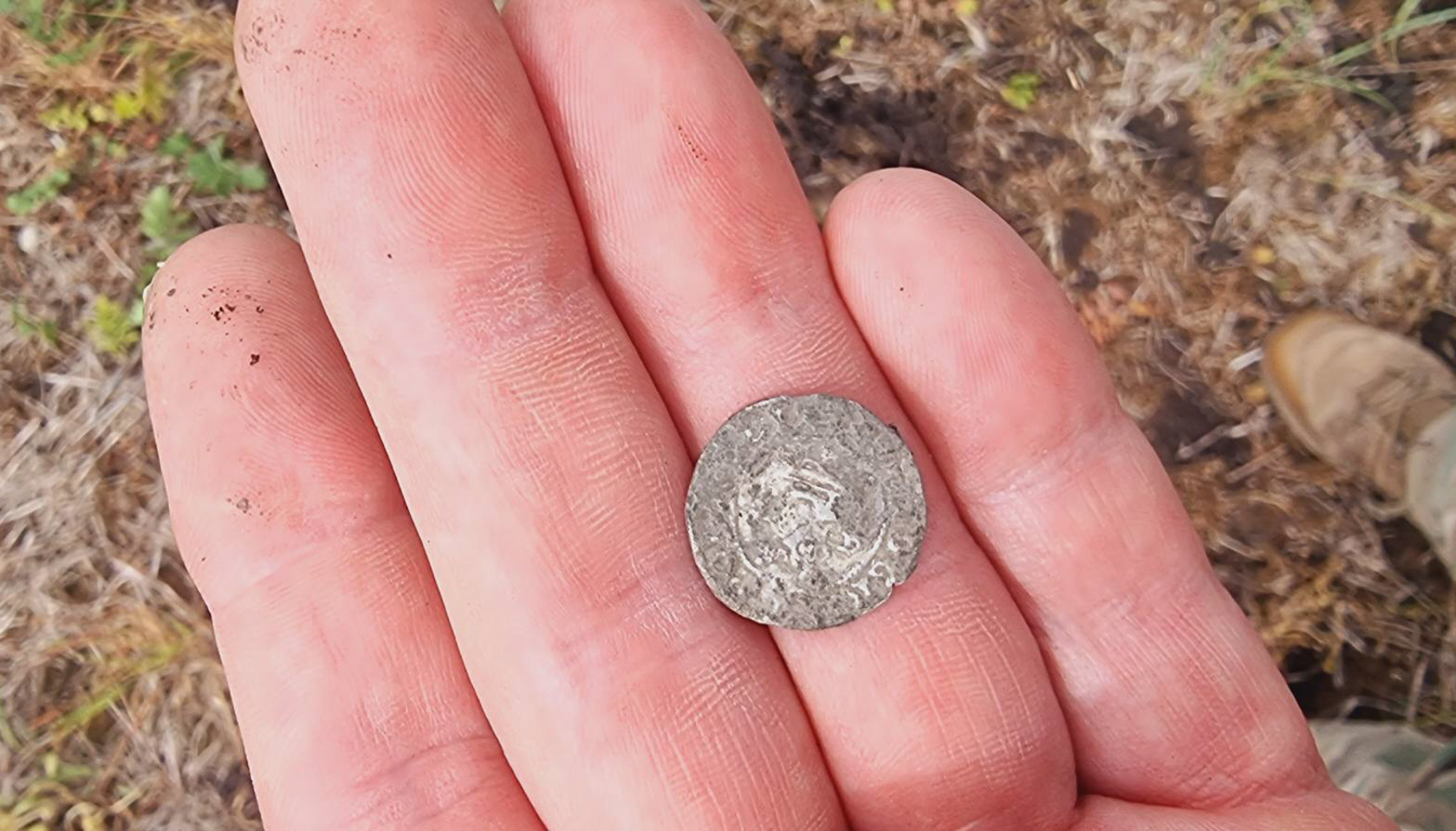
Archaeologists and historical researchers working in southern Poland have uncovered a rare Celtic silver coin more than 2,000 years old during investigations at the historic battlefield of Kliszów in the Świętokrzyskie region. The discovery was made by members of the Świętokrzyska Exploration Group (ŚGE) while surveying agricultural land near Pińczów.
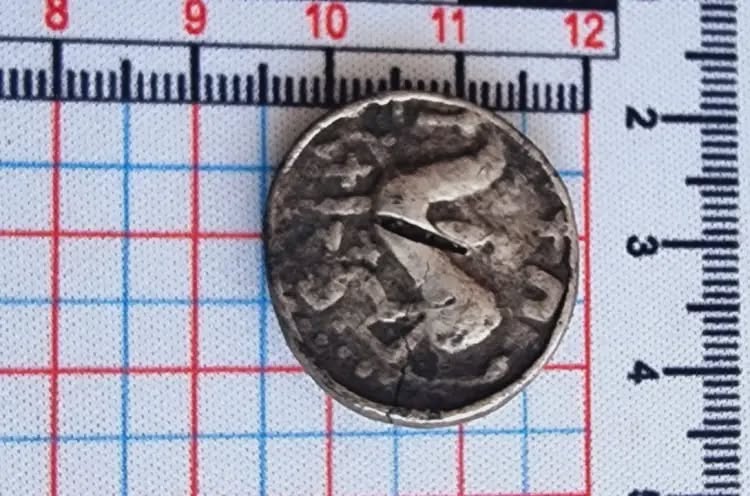
The coin was found by explorer Wojciech Ciszewski during fieldwork on the battlefield site, which is primarily known for the 1702 Battle of Kliszów, one of the key clashes of the Great Northern War. Specialists in Kraków later identified the artifact as a Celtic imitation of a tetradrachm originally issued under Philip II of Macedon, dating to the late 3rd or early 2nd century BC.
According to ŚGE president Sebastian Grabowiec, the silver coin is slightly larger than a modern Polish five-złoty coin but noticeably thicker and heavier. A visible cut mark on its surface reveals a common ancient practice used to verify the purity of precious metals. By slicing into the coin, people could check whether it was made entirely of silver rather than plated with a cheaper metal.
Another important object was discovered near the coin: a La Tène-period fibula, a decorative brooch used to fasten garments. The presence of this artifact suggests that a Celtic settlement or temporary occupation site may once have existed in the area.
Archaeological finds from the Świętokrzyskie region have long indicated that Celtic groups periodically moved through or settled in parts of present-day Poland, bringing with them elements of Mediterranean culture such as coinage used in trade. Earlier discoveries in the region include iron torcs, distinctive brooches, and wheel-made pottery associated with Celtic material culture.
The area was particularly attractive due to its position along important trade routes linking Kraków with the Kujawy region, as well as its proximity to the rich iron ore deposits of the Świętokrzyskie Mountains.
Although the Celtic coin represents a much earlier historical layer, the main focus of current research remains the Battle of Kliszów, fought on July 19, 1702. During that engagement, the forces of Swedish king Charles XII defeated the combined Polish-Saxon army of Augustus II the Strong.
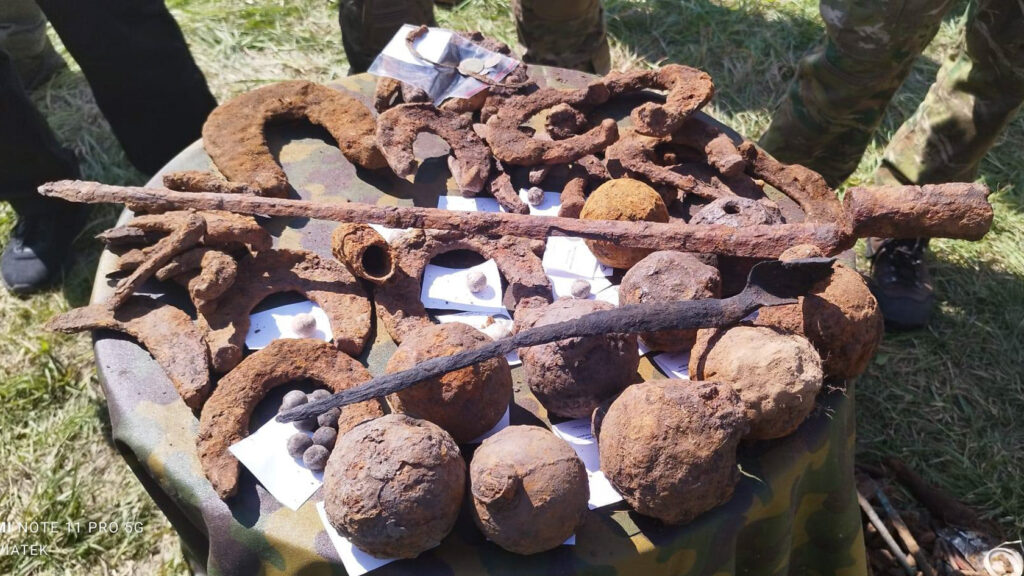
Recent surveys of the battlefield have yielded additional artifacts from the conflict, including hand grenades, a socket bayonet from a flintlock musket, and a brass decorative fitting bearing the Polish eagle and Saxon coat of arms. Researchers hope that continued work may eventually reveal mass graves of fallen soldiers and lost Saxon artillery pieces from the battle.
For archaeologists, the unexpected Celtic coin highlights the deep historical layers hidden beneath well-known historical landscapes, reminding researchers that even famous battlefields can preserve traces of civilizations that lived there more than two millennia earlier.