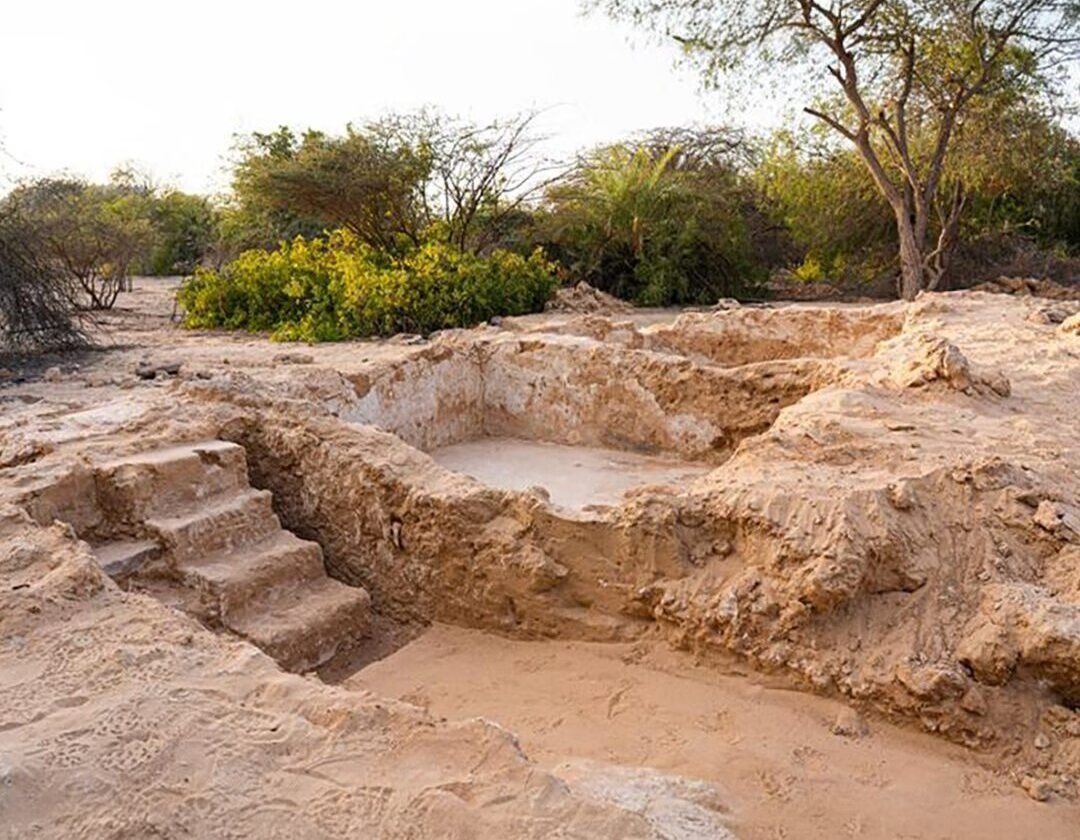
Archaeologists in Abu Dhabi have uncovered a Christian cross dating back to the 7th–8th centuries CE on Sir Bani Yas Island, offering new insight into the Gulf’s early monastic communities and the region’s long history of coexistence.
Early Christianity in the Gulf
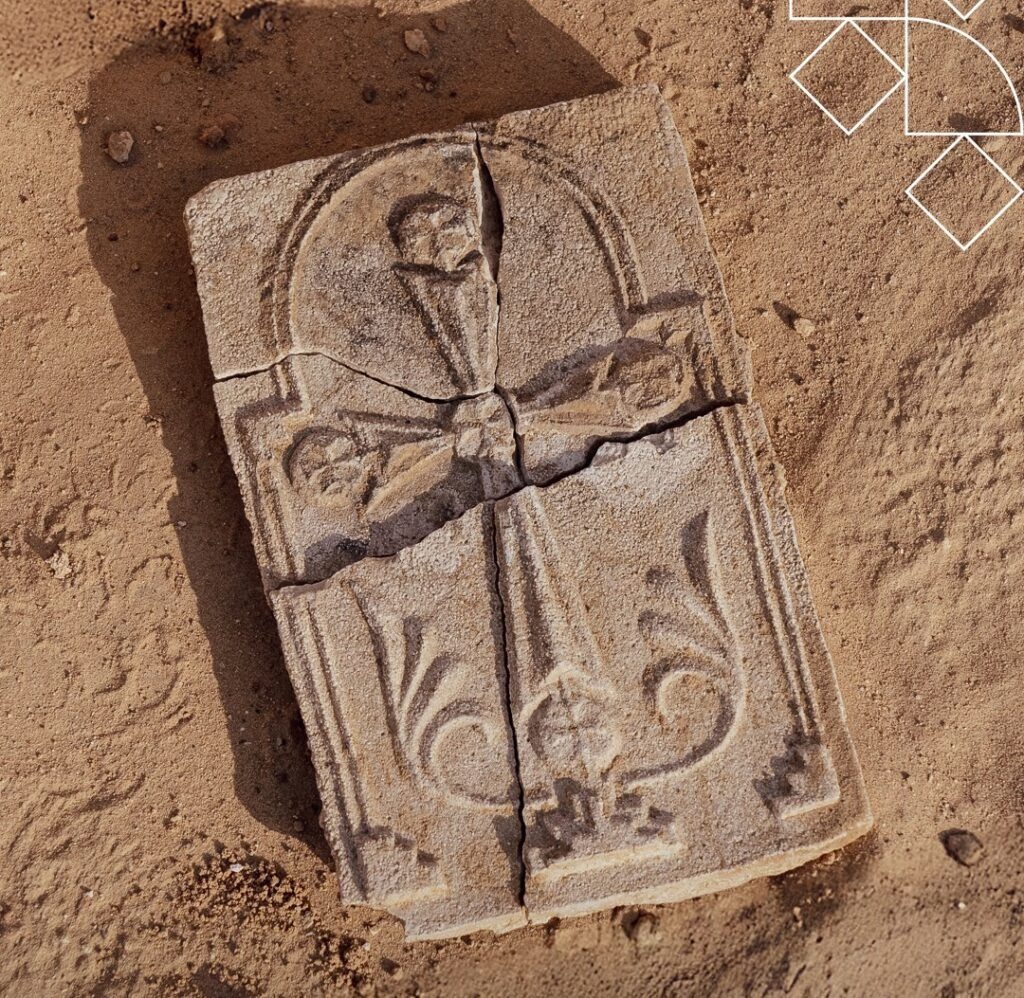
The excavation, led by the Department of Culture and Tourism – Abu Dhabi (DCT Abu Dhabi), marks the first large-scale archaeological campaign on the island in more than three decades. The stucco cross, measuring 27 by 17 centimeters, was found lying face down and revealed intricate details once turned over.
Its design resembles examples found in Iraq and Kuwait, linking it to the Church of the East, one of the oldest Christian traditions in the Middle East. The stepped base at the bottom is believed to symbolize Golgotha, the hill where Christians believe Jesus was crucified, while floral patterns and decorative dots highlight the cultural exchanges that shaped early Gulf Christian art.
The Monastery Complex
Sir Bani Yas’s monastery was first identified in 1992, revealing the remains of a church and living quarters for monks. Current excavations focused on a cluster of courtyard houses north of the monastery, which may have served as private retreats for senior monks or temporary lodgings for pilgrims traveling across the Gulf.
Emirati archaeologist Hager Al Menhali described the moment of discovery:
“When we turned the plaster over and saw the cross perfectly preserved, it was a moment of genuine awe. It is one of the most significant finds of the season.”
Where Christianity and Islam Coexisted
Sir Bani Yas is better known today as a wildlife reserve, but its human history stretches back over 8,000 years. Archaeological evidence shows that during the 7th and 8th centuries, the Christian community on the island coexisted peacefully with the arrival of Islam. The monastery appears to have been abandoned without signs of conflict, underscoring a legacy of mutual respect between early Muslim and Christian communities.
Preserving a Shared Heritage
DCT Abu Dhabi has invested heavily in conserving the site, including protective shelters, a visitor center, and curated displays of artefacts such as glass chalices and seals. Inspired by the island’s heritage, a multi-faith church has also been built nearby, symbolizing the UAE’s ongoing commitment to religious tolerance.
Mohamed Khalifa Al Mubarak, Chairman of DCT Abu Dhabi, emphasized:
“The discovery of this cross is a reminder that coexistence is not a modern ideal but a deep-rooted value woven into the very history of our region.”
Future excavations and radiocarbon dating are expected to shed further light on daily life in this early Christian community, strengthening Sir Bani Yas’s role as a cultural landmark of the Arabian Gulf.