
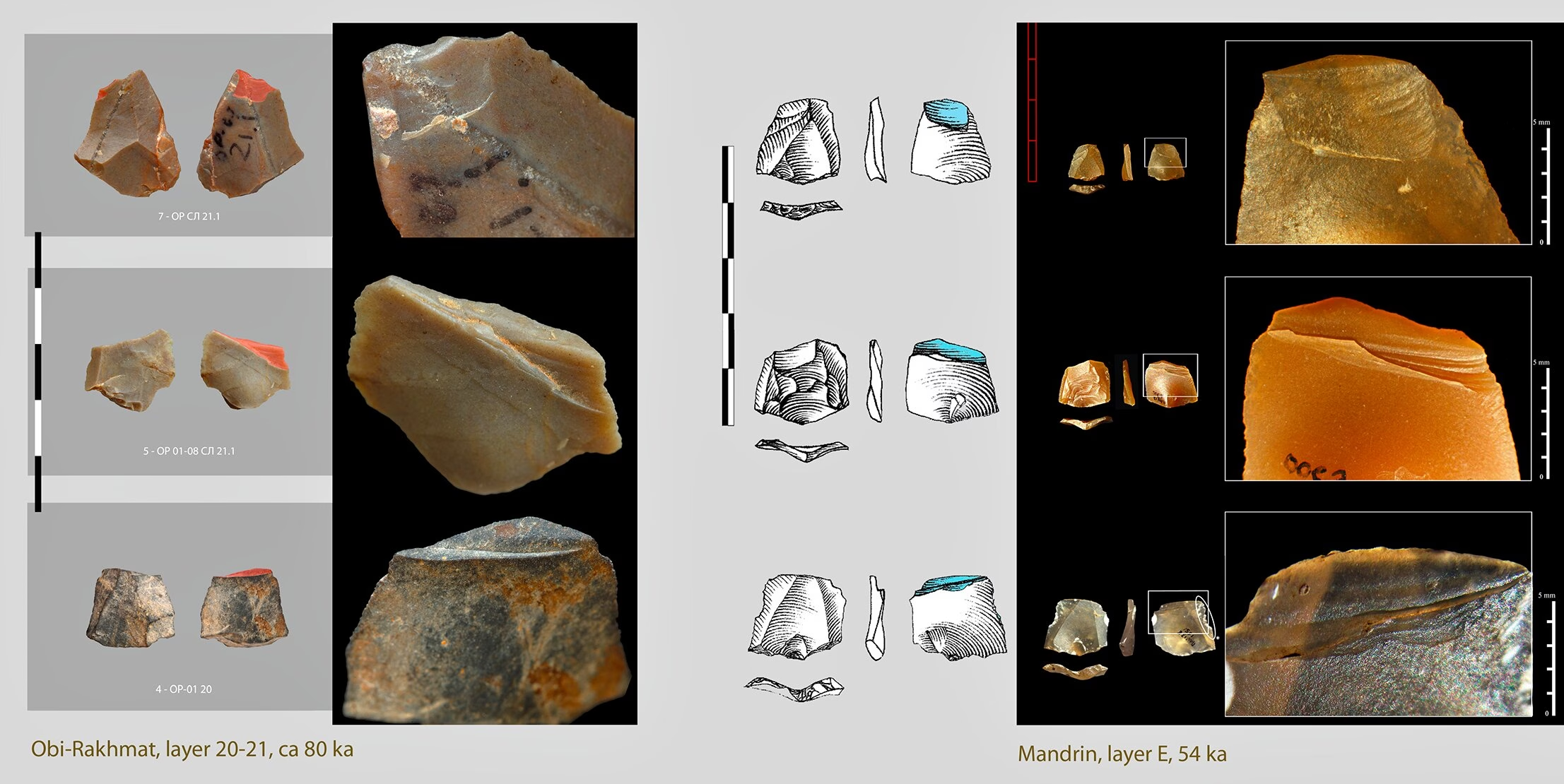
Stone tools unearthed at the Obi-Rakhmat rock shelter in Uzbekistan may represent the earliest evidence of arrows ever found. Researchers from the Université de Bordeaux and the Institute of Archaeology and Ethnography in Novosibirsk report their findings in PLOS ONE, arguing that tiny triangular flakes—known as micropoints—were mounted on arrow-like shafts around 80,000 years ago.
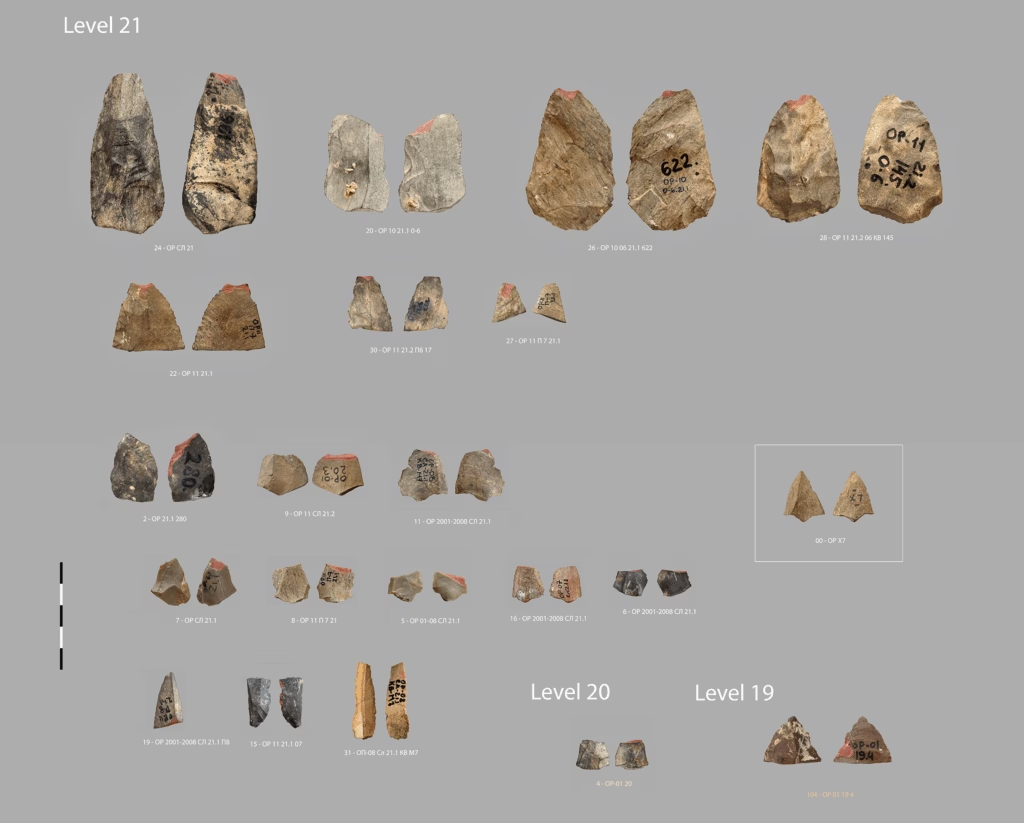
Excavations in layers 20–21 of the shelter yielded 194 point specimens, 193 triangular flakes, and 96 cores. Among them, several micropoints (measuring just 1–3 cm) showed microscopic impact fractures and linear wear traces, strongly suggesting use as projectile tips.
To verify this, researchers reproduced the artifacts using local silicified limestone, mounted them on 8 mm wooden arrow shafts, and fired them with a 36-lb bow at a small ungulate carcass. The resulting fractures matched the archaeological specimens, confirming their function as hunting weapon tips.
The study identifies three classes of projectile armatures:
- Large retouched points likely used as spearheads,
- Micropoints suitable only for arrows,
- Bladelets inserted laterally as cutting elements.
One intact Levallois micropoint measured 21.8 × 17.3 mm and weighed 1.1 g, far too small for anything other than lightweight arrows.
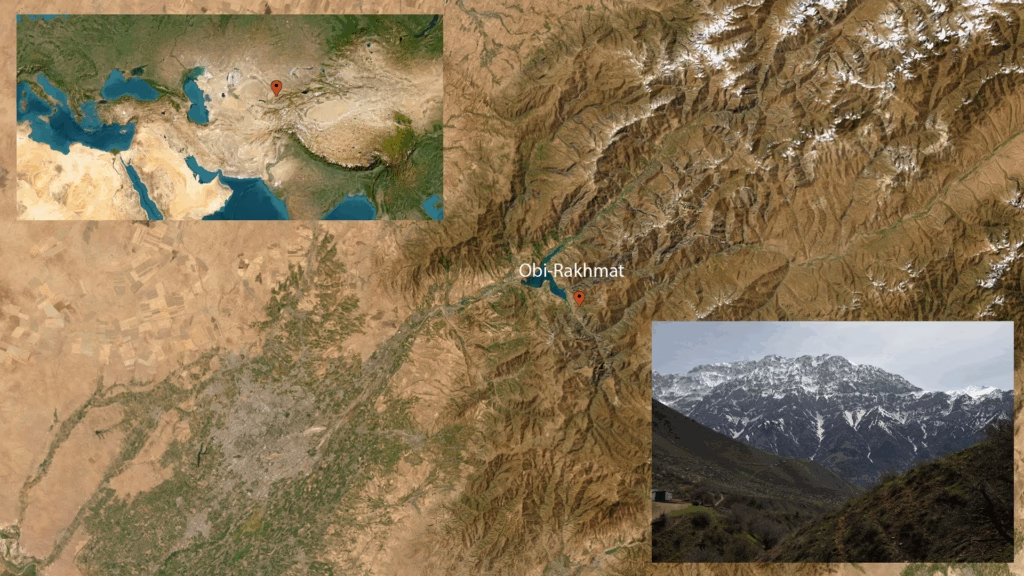
Situated in the Paltau Valley of the Tien Shan Mountains, the Obi-Rakhmat rock shelter preserves 21 cultural layers spanning 90,000–40,000 years ago. The findings suggest that early humans in Central Asia experimented with complex long-range hunting weapons much earlier than previously thought.
If confirmed, Obi-Rakhmat could represent the earliest known use of arrows, pushing the roots of archery back into the Middle Paleolithic.
Hugues Plisson et al, Arrow heads at Obi-Rakhmat (Uzbekistan) 80 ka ago?, PLOS One (2025). DOI: 10.1371/journal.pone.0328390