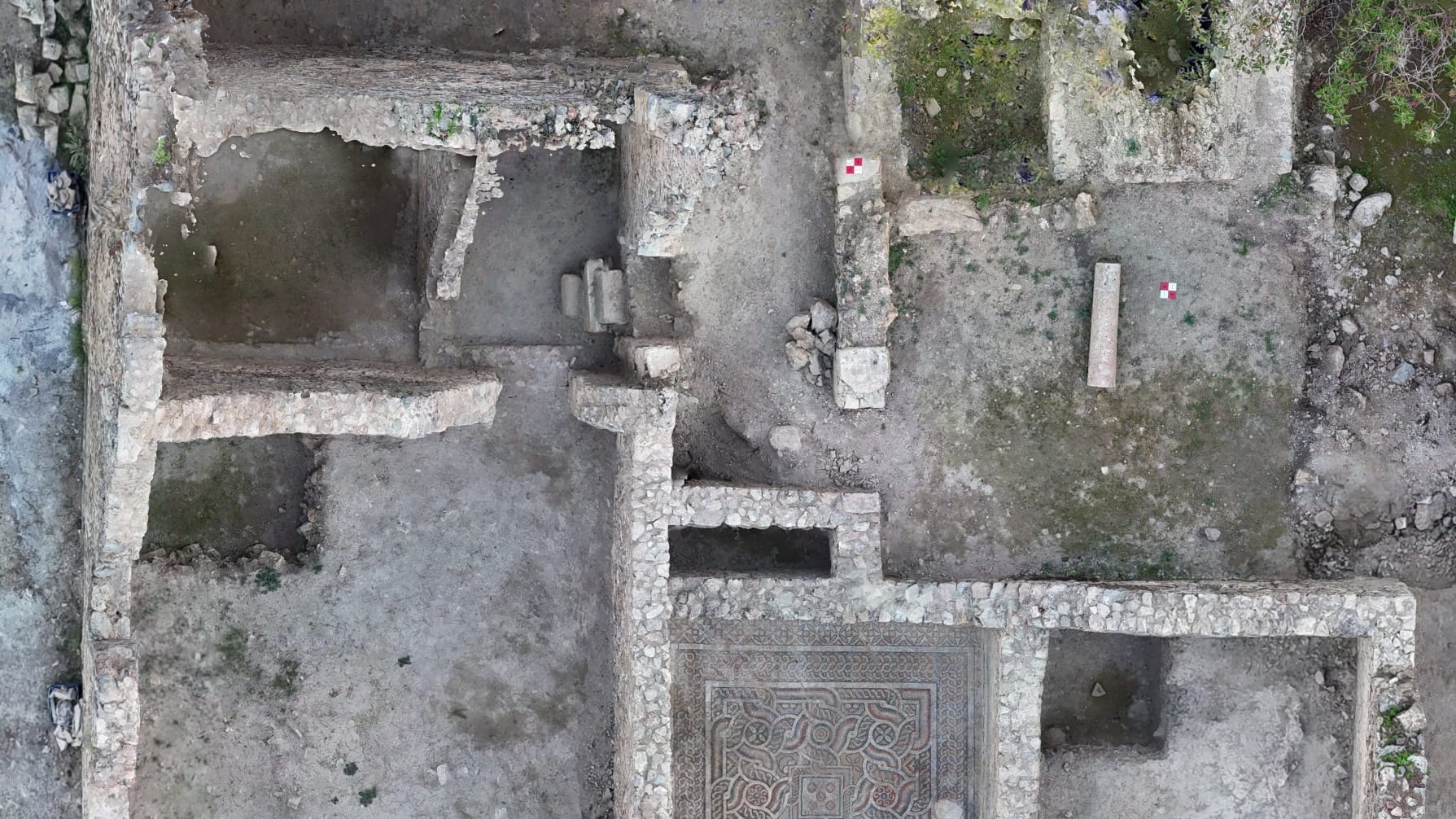
A mosaic floor laid some 1,500 years ago in a house overlooking the Mediterranean carried a message for anyone who stepped inside. Written in Greek letters set into colored stone, the words were simple and direct: “Let the envious burst.”
Archaeologists recently uncovered the inscription in the ancient city of Syedra, near modern Alanya in southern Turkey, where excavations revealed a well-preserved Late Antique mosaic decorated with geometric patterns and two short texts.
A voice from a Late Antique household
Mosaic floors were among the most prestigious decorative elements in Roman and Byzantine homes across the eastern Mediterranean. In many residences, the entrance floor served as a symbolic threshold where the owner could greet visitors or express prosperity through both imagery and text.
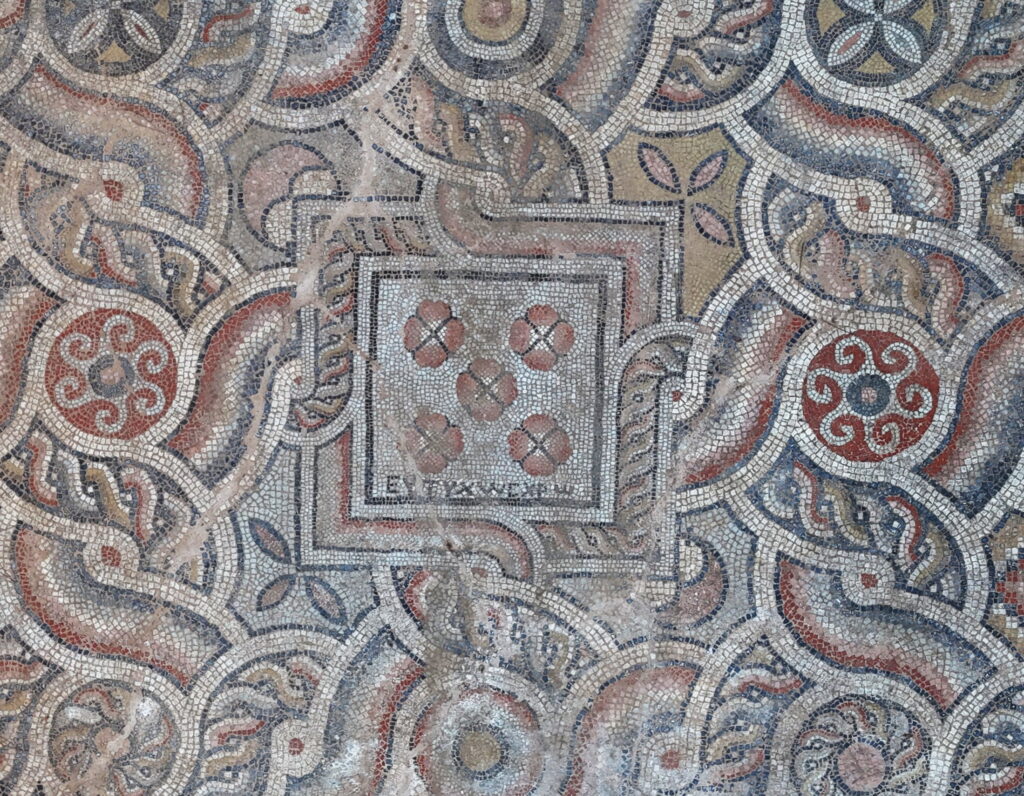
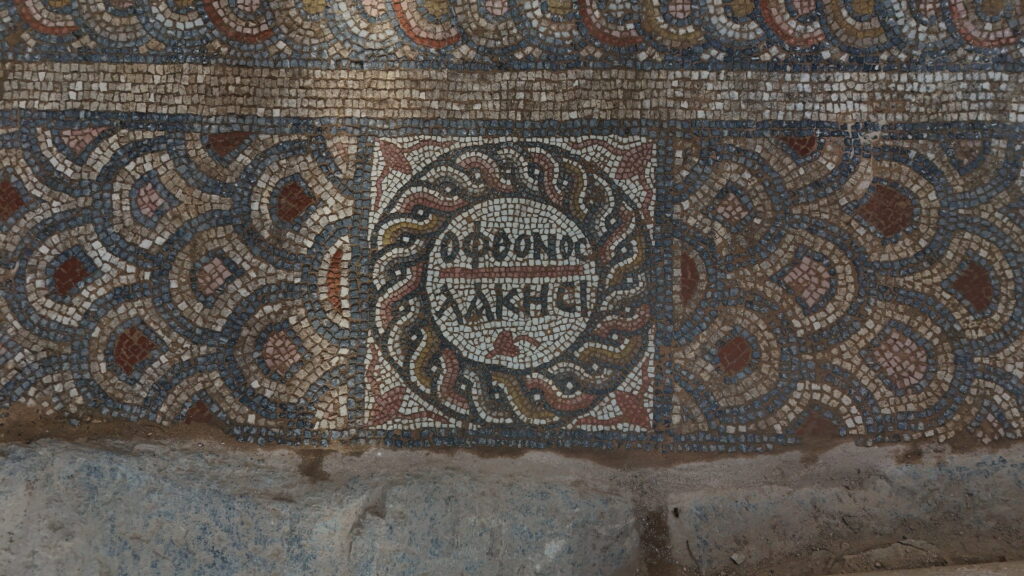
The newly uncovered mosaic from Syedra appears to belong to this tradition. The central inscription carries a phrase equivalent to “Use it in good health,” a familiar expression of hospitality intended for guests stepping into the house. Nearby, however, another inscription introduces a strikingly different tone with the phrase “Let the envious burst.”
Placed within the decorative layout of the mosaic, the statement may have reflected a homeowner’s pride in the property while acknowledging the possibility of envy from outsiders.
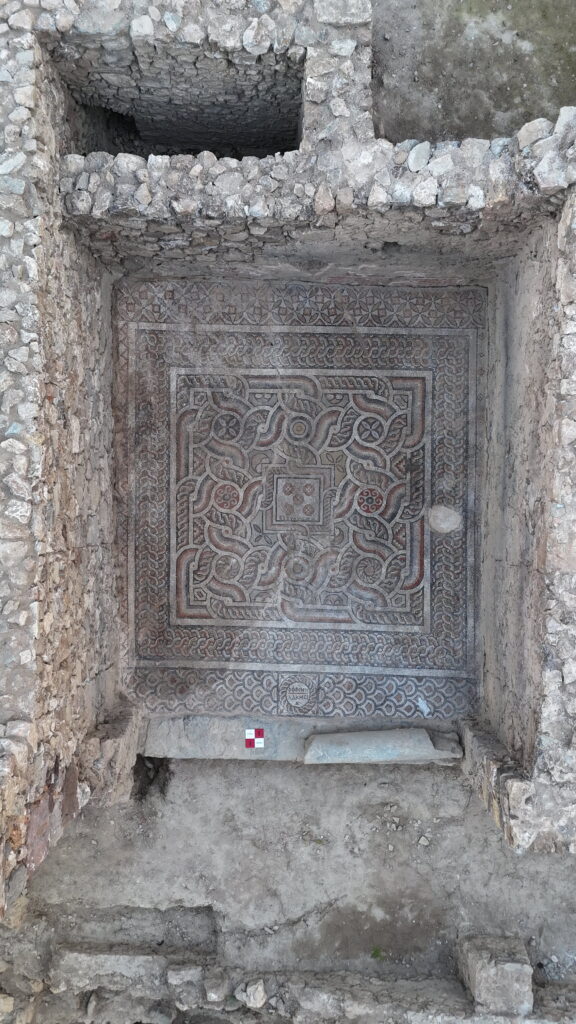
Mosaic discovered during excavations at Syedra
The mosaic was uncovered during ongoing archaeological excavations at Syedra, an ancient city located near modern Alanya in southern Türkiye. The work is conducted within the framework of the Heritage for the Future Project, supported by the Turkish Ministry of Culture and Tourism and the General Directorate of Cultural Heritage and Museums.
Excavations are directed by Assoc. Prof. Dr. Ertuğ Ergürer of Alanya Alaaddin Keykubat University. According to the excavation team, the mosaic was discovered in the entrance area of a large residential structure currently under investigation.
The floor measures approximately 4.5 by 4.5 meters and is decorated with geometric and vegetal patterns characteristic of Late Antique mosaic design. Based on stylistic and archaeological evidence, the mosaic is dated to the 5th–6th centuries AD.
A house used for centuries
The building in which the mosaic was discovered appears to have experienced several phases of architectural change. Archaeological evidence indicates that the structure remained in use for a long period, from roughly the 2nd century AD until the 7th century AD.
Such long-term occupation reflects the broader history of Syedra during the Roman and Byzantine periods, when the city functioned as an active settlement along the southern Anatolian coast.
The presence of an elaborate inscribed mosaic within the entrance area suggests that the residence once belonged to a household with the resources to commission decorative flooring—an indicator of status in Late Antique urban society.
Syedra overlooking the Mediterranean
Syedra occupies a prominent hilltop position overlooking the Mediterranean between Alanya and Gazipaşa. Founded during the Hellenistic period, the city expanded during the Roman era and continued to be inhabited into the Byzantine period.
Archaeological remains include streets lined with columns, public baths, large cisterns, temples, and residential quarters, reflecting centuries of urban development.
Recent excavations have increasingly focused on domestic architecture within the city, revealing details about everyday life, housing patterns, and the social landscape of Syedra’s inhabitants.
Conservation completed
Following the discovery, conservation work was carried out to stabilize and protect the mosaic floor. The restoration allows the decorative patterns and inscriptions to remain clearly visible.
Beyond its artistic qualities, the mosaic preserves something more subtle—a brief but vivid expression of personality from a Late Antique household. Even after fifteen centuries, the message still resonates: a greeting to guests paired with a confident reminder that prosperity may invite envy.