
Archaeologists in southeastern France have uncovered a vast Roman necropolis dating from the 1st to 3rd centuries A.D. near the ancient city of Olbia, in today’s Hyères, Var. The burial ground, located along a Roman coastal road just outside the city walls, contains at least 160 cremation tombs — one of the largest known assemblages of its kind in southern Gaul. The discovery offers a vivid glimpse into the funerary traditions of a port that once connected the western Mediterranean to Rome.
A Port Between Worlds
Founded around 325 B.C. by Greek settlers from Massalia (modern Marseille), Olbia rose on the remains of an earlier Phoenician settlement. Conceived as a fortified harbor to protect Massilian trade routes, it remained modest until Julius Caesar’s conquest of Massalia in 49 B.C. Under Roman rule, the outpost flourished into a bustling port and became part of the colony of Arles (Arelate). The settlement thrived until the 7th century A.D., when recurrent floods forced its inhabitants to retreat inland, abandoning the ancient harbor.
Fire and Farewell: Roman Cremation Rituals
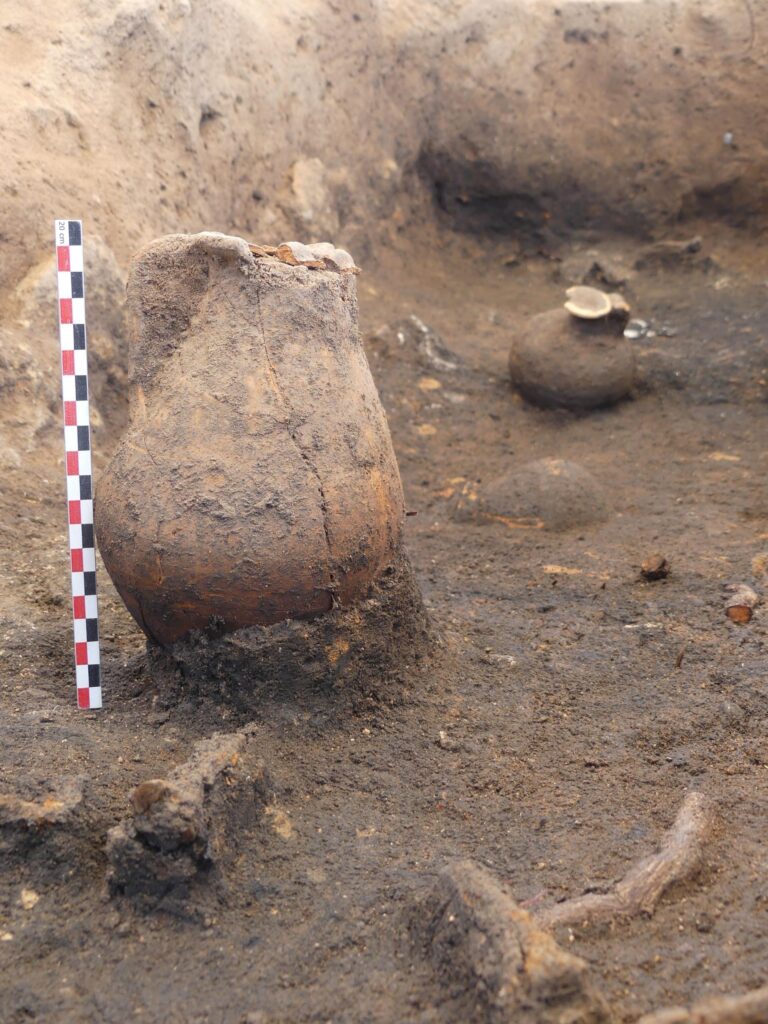
The necropolis reveals classic Roman funerary rites from the early imperial period. Each tomb was built as a rectangular pit topped with a pyre, on which the body of the deceased was placed amid pottery, lamps, and personal belongings. As the fire burned, it calcined bones, melted glass, warped bronze artifacts, and collapsed the remains into the pit below.
Once the flames died out, families sometimes deposited unburned offerings — vases, jewelry, or coins — over the ashes. In other cases, the remains were carefully gathered and arranged into compact heaps before being sealed beneath layers of earth and tile.
Libations to the Dead
A hallmark of the Olbia burials is the presence of libation channels, allowing mourners to pour offerings — wine, mead, or perfume — into the tombs. Most were ingeniously fashioned from reused amphorae, reflecting Olbia’s strong maritime trade links and its people’s enduring belief in the connection between the living and the dead.
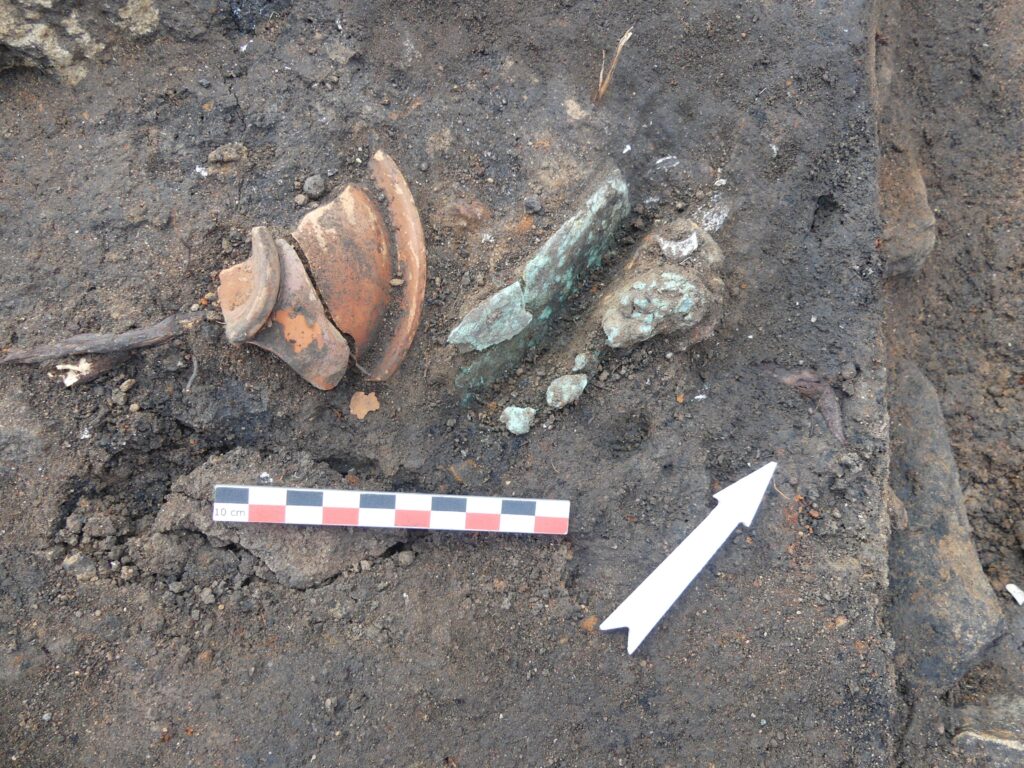
Perfume, coins, and lamps were also offered through these conduits to appease deities or ensure the protection of the deceased. In many graves, the channels were built into tile-roofed covers, which shielded the cremation layers from erosion. The soil around the tombs was packed to hold these conduits upright, leaving their rounded openings visible at the surface — small yet powerful portals of remembrance.
Echoes Beneath the Provençal Soil
Beyond its archaeological richness, the discovery highlights how Roman, Greek, and Phoenician influences intertwined along the Mediterranean frontier. Olbia’s necropolis is more than a cemetery — it is a microcosm of ancient life and death on the French coast.
According to excavation experts, the site stands as one of the most complete records of Roman cremation practice in southeastern Gaul, offering invaluable data for understanding burial customs, trade networks, and cultural exchange in the early Empire.
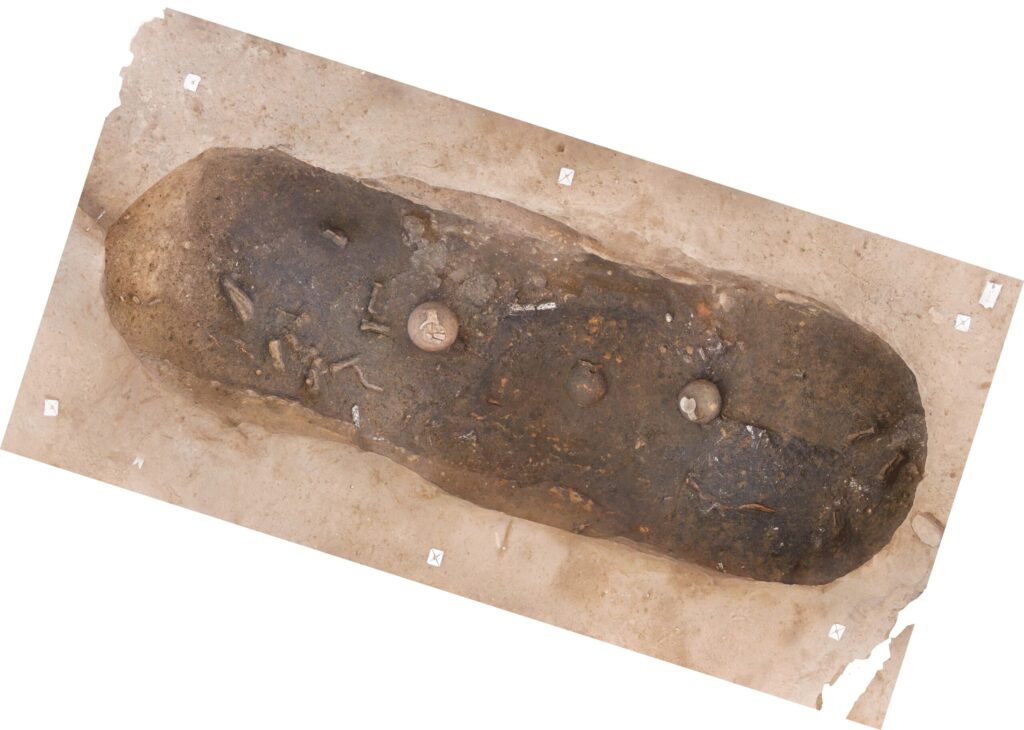
As archaeologists continue to analyze the artifacts and human remains, the silent tombs of Olbia promise to rewrite part of the region’s ancient story — where fire, faith, and the sea met in ritual harmony.
Cover Image: A Roman cremation pit covered by tiles and fitted with an amphora-based libation channel, uncovered at the necropolis of ancient Olbia in Hyères, southern France. Credit: INRAP