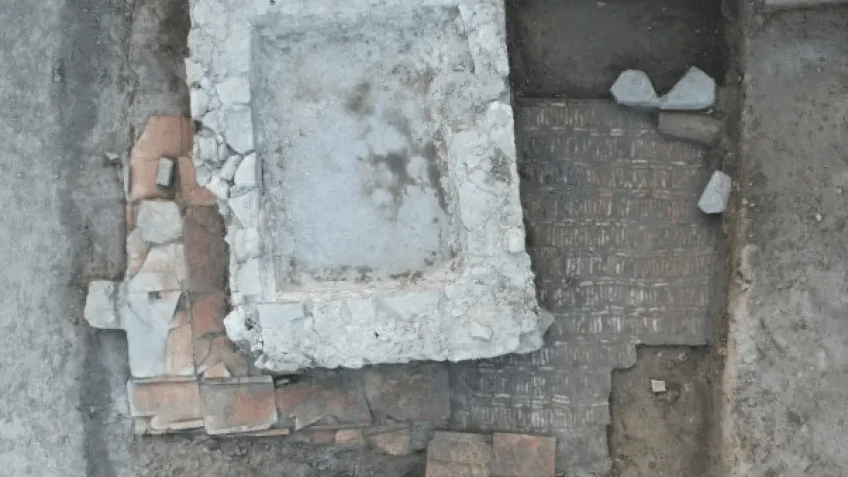
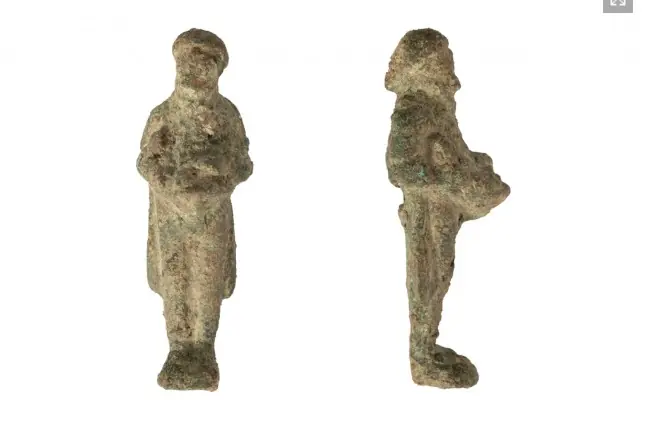
A rare bronze figurine of Priapus and a sculpted head identified as the god Mithras have been found at Novae, a Roman legionary fortress beside the Danube in northern Bulgaria. The discoveries came during an excavation season that also revealed more of a vast building that may have housed the commander of the legion.
The Priapus figurine is an unusual find for the region. According to the University of Warsaw, only five comparable objects were previously known from the Lower Danube. Archaeologists have also recovered two inscribed altars, one of which survives almost intact with its inscription.
A small figure and a sculpted head
Priapus was associated with fertility, gardens and herds in Greek and Roman religion. The bronze figure is one of the smallest finds reported from this season at Novae, but also one of the most distinctive.
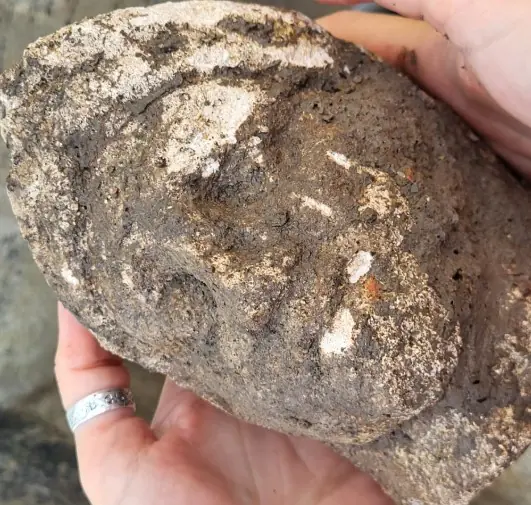
The second sculpture is a head identified by the team as Mithras. His worship spread through the Roman Empire and had followers among soldiers. The discovery adds to the evidence of religious life at Novae, although the head alone cannot establish where or how Mithras was worshipped at the site.
The season’s other finds include part of a marble imperial portrait and an architectural ornament shaped like a pine cone. Archaeologists have not yet established whether these objects, the altars and the two depictions of gods originally belonged to the same building or period of occupation.
A possible commander’s residence
Nearby, archaeologists have exposed more than 3,000 square metres of a richly furnished building. Excavation director Prof. Piotr Dyczek estimates that the original complex covered about 4,500 square metres, making it the third-largest structure in the fortress after its headquarters and military hospital.
The building contained private baths, painted plaster and a floor laid with bricks of different colours. Fragments of bronze furniture, figurines and costly ceramics offer further evidence of its lavish furnishings.
Dyczek believes it may have been the praetorium, the residence of the legate who commanded the legion. He told the PAP that a large private bath would have been unusual within a fortress and supports that interpretation. The identification still requires confirmation.
Novae was home to Legio I Italica and later developed into a civilian centre. Polish and Bulgarian archaeologists have worked at the site since 1960. This season’s discoveries range from a possible commander’s residence to two small sculptures that offer a closer look at the fortress’s religious life.
Cover Image: Roman-period floors uncovered during excavations at Novae in Bulgaria. Photo: Krzysztof Narloch / University of Warsaw.Roman-period floors uncovered during excavations at Novae in Bulgaria. Photo: Krzysztof Narloch / University of Warsaw.