Scotland’s east coast does not usually give up its secrets gently. This time, it did — and then took them back almost immediately.
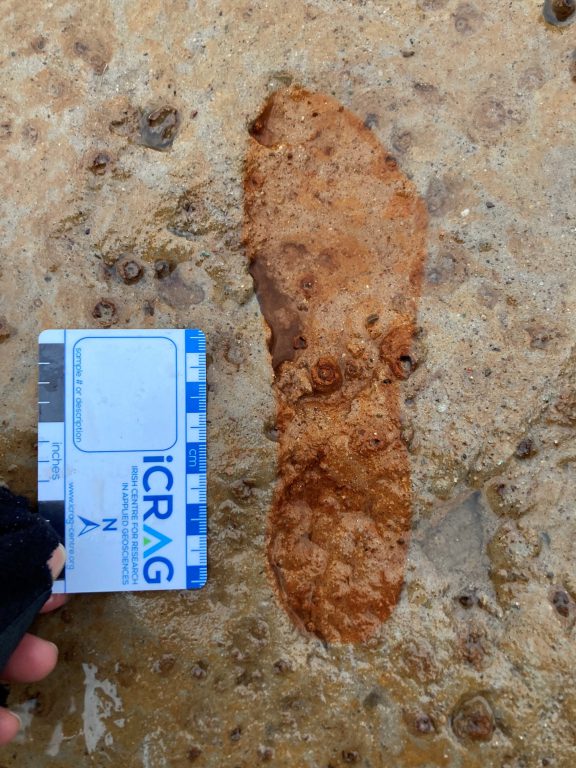
After a series of violent winter storms tore through Lunan Bay in Angus, shifting dunes exposed a band of compact clay beneath the sand. Pressed into it were human and animal footprints dating back roughly 2,000 years.
Within two days, the sea erased them.
A Discovery That Began With a Dog Walk
The first people to notice the marks were not archaeologists.
Local residents Ivor Campbell and Jenny Snedden were walking their dogs along the beach when Campbell spotted something unusual in the newly exposed clay surface. The impressions were too clear to be random. He contacted regional archaeologist Bruce Mann.
Mann understood immediately what might be at stake. Coastal footprint sites are rare in the UK. Scotland had never recorded one like this.
He alerted specialists at the University of Aberdeen. There was no time to waste.
“We Were Being Sand-Blasted”
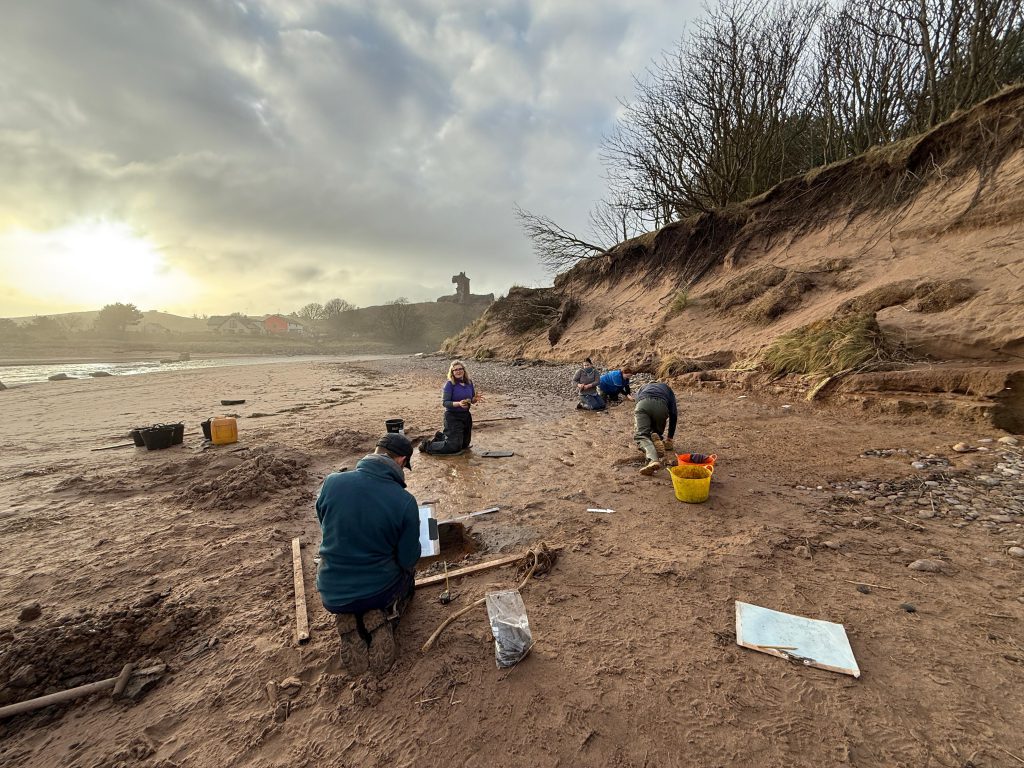
A team led by Professor Kate Britton arrived as winds pushed beyond 55 miles per hour. Sand whipped across the exposed clay. Each high tide chewed away at the fragile surface.
“There was no question that this was a rare site,” Britton said. “But it was also obvious the sea would reclaim it very quickly.”
Conditions were brutal. Archaeologists tried to clean, measure and document the prints while waves crept closer and wind-driven sand scoured both the site and the team.
“It became a race against the elements,” Britton explained. “Within 48 hours, the entire site was gone.”
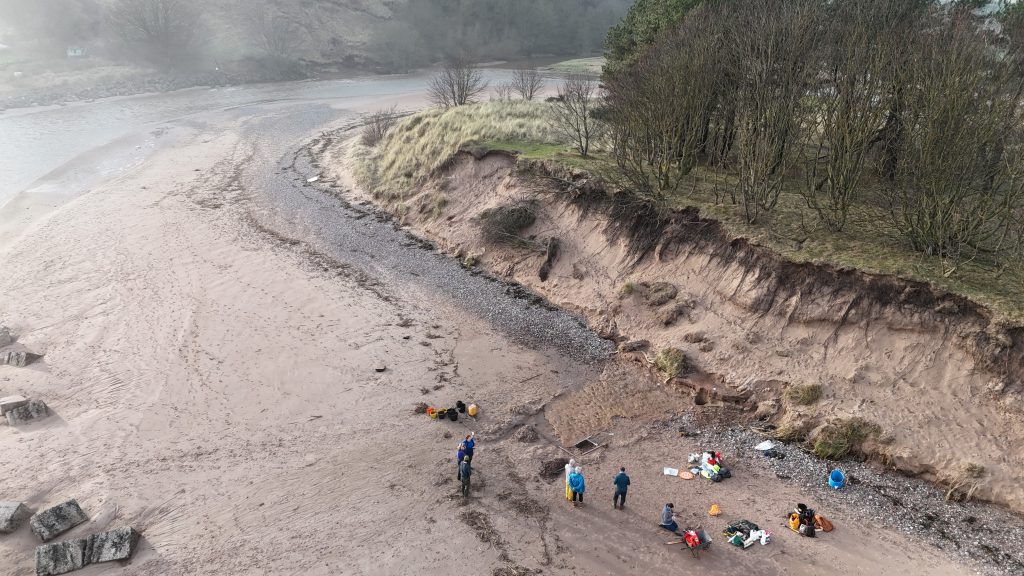
They worked anyway — mapping, photographing, creating plaster casts and capturing drone footage during brief lulls in the wind.
Human Steps From the Late Iron Age
Back in the lab, radiocarbon dating of preserved plant material beneath the footprint layer confirmed what the team suspected: the impressions were made around 2,000 years ago.
That places them in Scotland’s Late Iron Age — around the time of Roman expansion into Britain and centuries before the emergence of the Picts as a recognizable political force.
The surface preserved more than just human steps. Analysis identified tracks of red deer, roe deer and other animals, alongside barefoot human prints pressed into what was once a muddy estuary.
Professor Gordon Noble noted that the date aligns with what is already known about settlement activity in the nearby Lunan Valley.
“It’s extraordinary to think these prints were made at a time of profound change in Scotland,” he said. “They connect directly to people living through the era of Roman incursions.”
The beach visible today would have looked very different two millennia ago. Instead of dry sand, the area appears to have been a wet estuarine zone — perhaps used for hunting deer, moving livestock, or gathering coastal plants.
Rare Evidence in a Vanishing Landscape
Sites like this are exceptionally uncommon.
Comparable footprint discoveries have been recorded at the Severn Estuary, Formby in Merseyside and Happisburgh in Norfolk. Scotland, however, had no documented example — until now.
Dr William Mills emphasized how fragile such traces are.
“These prints took minutes to make and hours to disappear,” he said. “It is incredibly rare to catch a record like this in time.”
The team used drone photography to create millimetre-accurate 3D models of the site before it vanished. Although the clay surface has been destroyed, the digital reconstruction survives.
Dr Elinor Graham described the logistical challenge:
“The site was extremely vulnerable. We had small windows where the wind eased, and we used those moments to capture aerial data. Without that, we would have lost far more.”
Revealed by Erosion — Destroyed by It
The same storms that exposed the footprint layer ultimately destroyed it.
Across Scotland, rising sea levels and intensifying coastal erosion are accelerating the loss of archaeological sites. At Lunan Bay, the storm stripped away protective sand and revealed a surface that had remained sealed for two thousand years. Once uncovered, it did not last.
Bruce Mann reflected on the moment he first saw the images.
“I knew immediately it was something special,” he said. “Many important discoveries begin with someone simply noticing something unusual and reporting it.”
Standing on the beach as waves rolled in, he watched the clay layer collapse.
“There is nothing left now,” he said. “The storms both revealed and destroyed the site in just over a week.”
What remains are casts, 3D models and photographs — and the knowledge that beneath Scotland’s shifting coastline, other traces may still lie hidden.
For a brief moment, a Late Iron Age shoreline surfaced again. Human feet in wet clay. Deer moving across tidal ground. Then the sea closed over it.
Cover Image: University of Aberdeen archaeologists at Lunan Bay during a brief lull in extreme weather conditions