In a forested area of western Poland, archaeologists have confirmed the remains of a long-forgotten medieval town: Stolzenberg. Hidden for centuries near the modern settlement of Zagrody, close to Sławoborze, the site preserves the earthworks and layout of a town that briefly flourished in the late 13th or early 14th century—before being mysteriously abandoned.
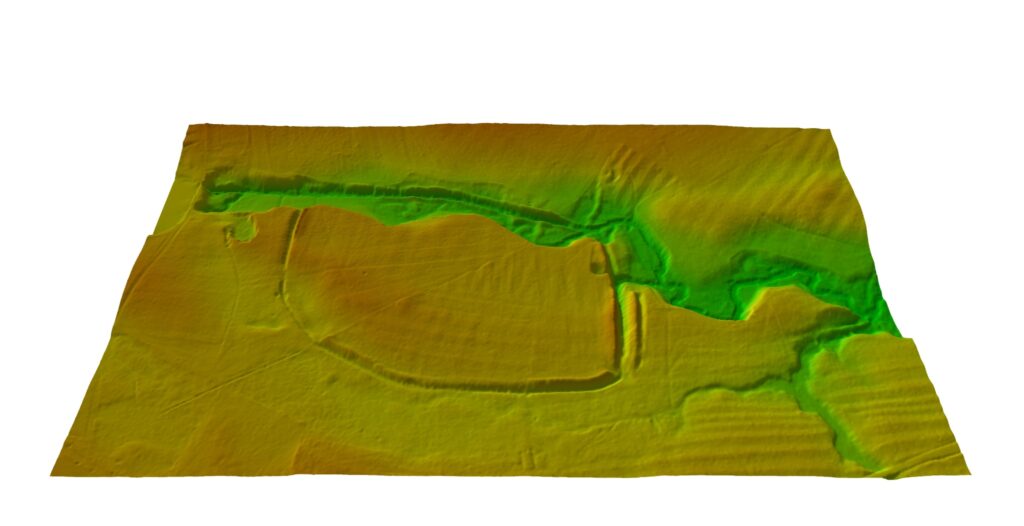
Spread across roughly six hectares and enclosed by an earthen rampart and moat, Stolzenberg appears to have been a planned urban foundation. Yet despite its defensive system and formal layout, it survived only for a short period. Why it was deserted remains unknown.
From 16th-Century Mentions to 21st-Century Discovery
The first written references to Stolzenberg date to the 16th century. Nineteenth-century German scholarship mentioned the remains of a “dead city” near Sławoborze, noting surviving fortifications and field names such as Alt Stadt (“Old Town”) and Hospital.
Definitive archaeological evidence emerged only recently.
Between 2020 and 2021, archaeologists from Fundacja Relicta, working alongside the Parsęta Exploration Group, conducted metal-detector surveys that yielded more than 400 medieval metal artifacts. The finds included:
- Tools and everyday implements
- Belt fittings and dress accessories
- Medieval bracteates from Szczecin and Strzałów
- A denarius issued during the reign of Pomeranian duke Barnim II
These objects, dating from the late 13th to the 15th century, confirmed sustained activity at the site during the High Middle Ages.
LiDAR Reveals the Hidden Urban Plan
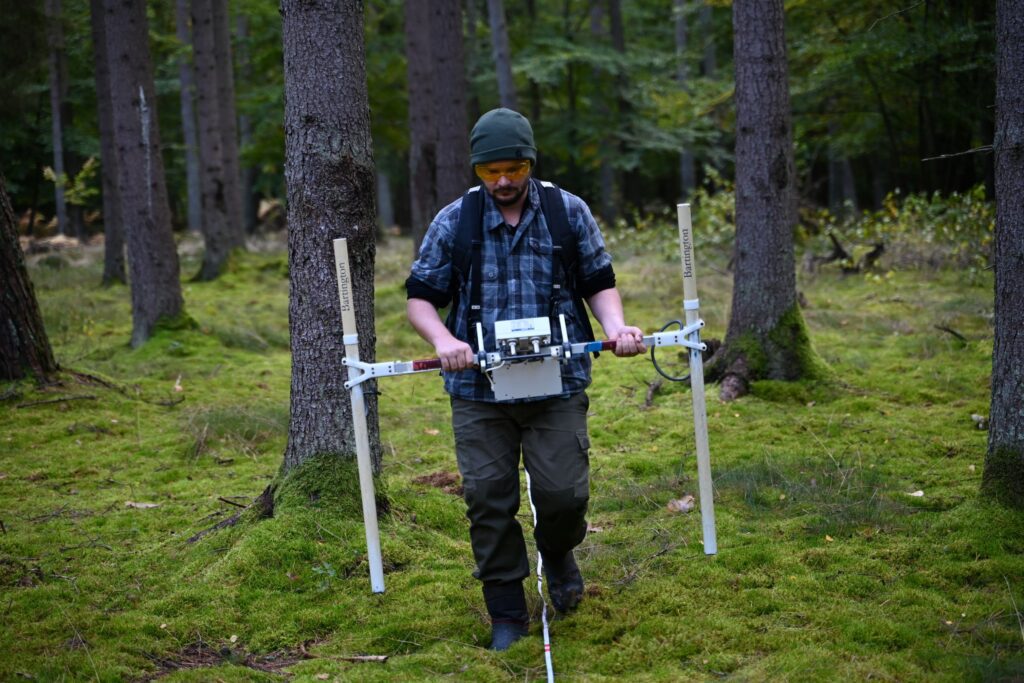
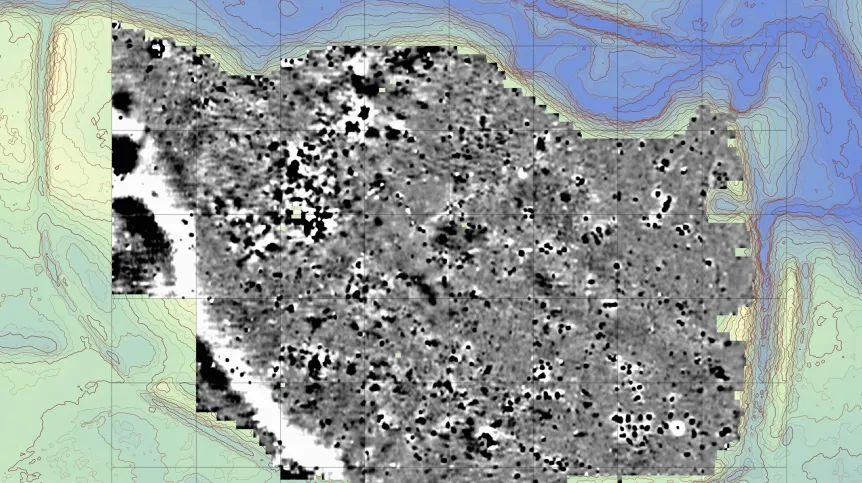
In 2025, researchers conducted geophysical surveys, drone-based LiDAR scanning, and geological core drilling. The results left little doubt: beneath the forest floor lies a structured medieval town.
Archaeologists identified:
- More than 1,500 subsurface anomalies
- Cultural layers exceeding two meters in depth
- A regular parcel system characteristic of towns founded under German law
- A probable central marketplace
- A main street leading toward a town gate
Because the area remained forested and undeveloped for centuries, the earthwork fortifications are exceptionally well preserved. The surrounding moat still reaches depths of 5.5 meters in places.
Radiocarbon dating of organic material indicates that the town was already active in the early decades of the 14th century, with its foundation likely occurring in the late 13th century.
Who Founded Stolzenberg — and Why Was It Abandoned?
The identity of Stolzenberg’s founders remains debated. Archaeologists consider the Margraves of Brandenburg—then controlling the nearby Neumark region—the most plausible initiators, possibly establishing the settlement as a frontier town. A foundation linked to the bishops of Kamień is regarded as less likely.
More puzzling is the question of its disappearance.
Was it economic decline caused by shifting trade routes?
Environmental pressures such as flooding?
Military conflict in a contested borderland?
At present, no single explanation prevails. The town’s population size is also unknown.
The Search for the Church and Cemetery
Future research aims to locate the town’s church and cemetery, first mentioned in historical records in 1291. Identifying these features would provide critical insights into Stolzenberg’s spatial organization and social structure.
The 2025 investigations, funded by Poland’s Ministry of Culture and National Heritage, represent only the first stage. Further non-invasive studies and targeted excavations are planned in the coming seasons.