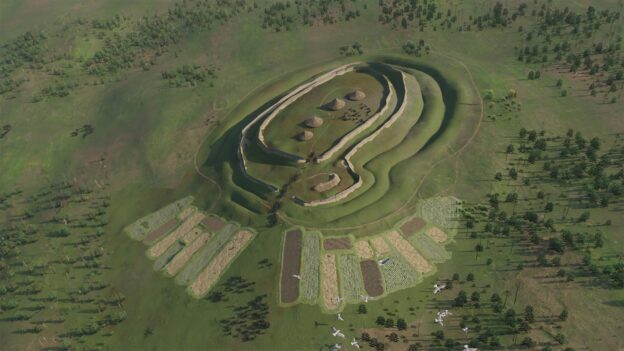
When engineers began building a new bridge and highway near Perth, they didn’t expect to uncover the traces of a vanished world. Yet beneath the earthworks of the Cross Tay Link Road, archaeologists have revealed a lost Iron Age settlement that thrived more than two thousand years ago—then mysteriously disappeared before the Roman legions reached Scotland.
The discovery, made by GUARD Archaeology during the £118 million Cross Tay Link Road project in 2022, has opened a rare window into life in prehistoric Perthshire. Excavations at the site—known as Broxy Kennels Fort—have shown that this hilltop once housed a vibrant community, complete with earthen ramparts, timber roundhouses, and even traces of metalworking.
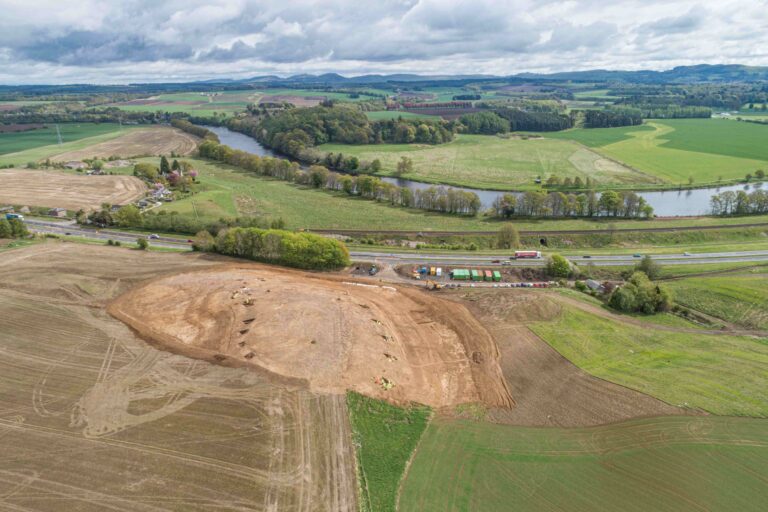
“Without the aerial photographs taken in the 1960s, no one would have known there was a hillfort here,” said Kenny Green, Project Officer at GUARD Archaeology, who directed the excavation. “Centuries of ploughing had erased every visible trace.”
Radiocarbon analysis reveals that the first fortifications were built between 550 and 400 BC, when local communities decided to settle permanently atop the hill overlooking a bend in the River Tay. Charred wattle, daub fragments, and layers of bog ore suggest the inhabitants were skilled builders and metalworkers—people living on the edge of technological change.
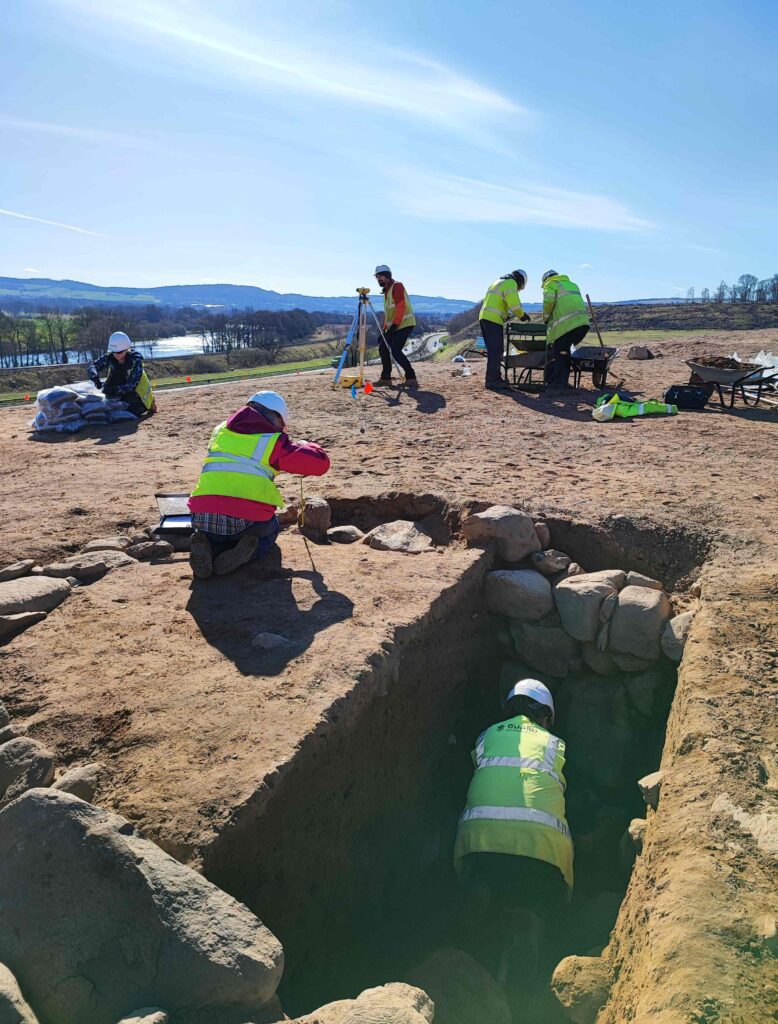
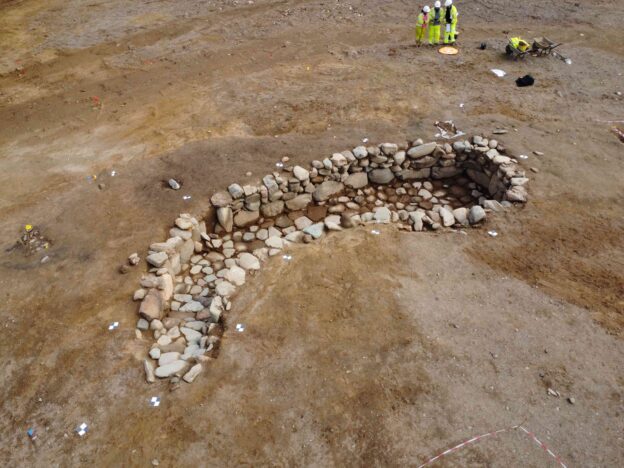
Around 400 BC, the settlement expanded. Its residents filled part of a defensive ditch to create a souterrain—a semi-subterranean stone chamber nine meters long, paved and walled with boulders hauled up from the river below. Nearly 200 such structures are known in Scotland, but their function remains enigmatic. At Broxy Kennels, only a few cereal grains were found—too few to prove it was for storage—leaving archaeologists guessing at its true purpose.
By 300 BC, the fort’s ditches had silted up. Yet life continued here until roughly the late first century AD, just before the Roman army advanced northward. After that, the settlement faded into silence. No battle, no destruction—just abandonment.
“Perhaps social structures changed, or people moved to new types of settlements,” Green noted. “Whatever the reason, the hilltop was eventually left to the plough.”
Today, little remains on the surface. But thanks to the excavation—part of the infrastructure project managed by BAM Nuttall Ltd for Perth and Kinross Council—the lost community of Broxy Kennels has been brought back into Scotland’s archaeological story.
“Many drivers crossing the new bridge won’t realize they’re passing over the site of a prehistoric fort,” said Jillian Ferguson, Roads Infrastructure Manager at the council. “This project gave us an unexpected opportunity to rediscover our past.”
Through careful excavation and analysis involving experts from National Museums Scotland and several universities, the Broxy Kennels site now helps fill a gap in the story of Iron Age Scotland—one of the last settlements to flourish before the shadow of Rome reached the north.
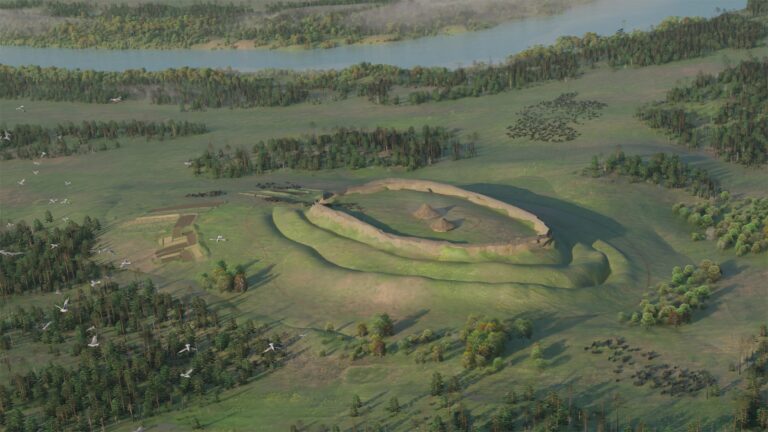
Cover Image: Digital reconstruction of Broxy Kennels Fort showing its concentric ramparts and roundhouses overlooking the River Tay. Credit: GUARD Archaeology