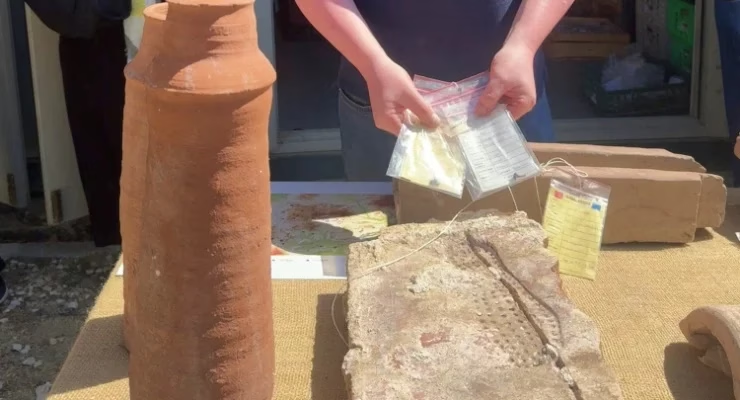
In Turkey’s ancient city of Sagalassos, archaeologists are conducting a detailed re-examination of a shoeprint preserved on a clay tile, left by a hobnailed shoe worn by a woman nearly 2,000 years ago. The rare find provides a vivid glimpse into everyday life in Roman Anatolia and is set to be faithfully reconstructed.
A Footprint Preserved in Clay
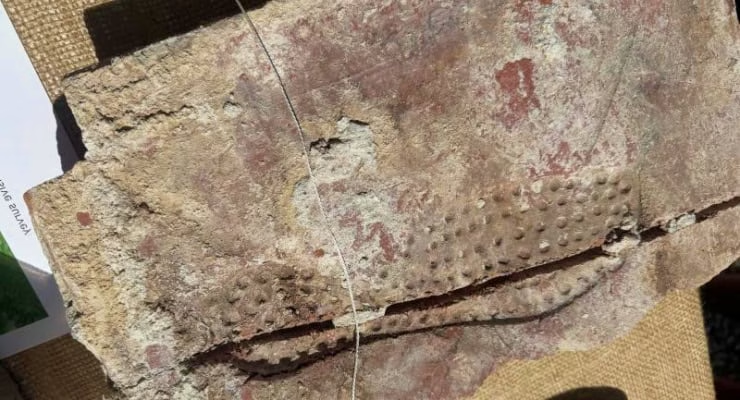
Sagalassos, a UNESCO World Heritage Tentative List site and one of the Roman Empire’s most prominent urban centers, has been the subject of continuous excavations since 1989. Among its wealth of discoveries, a footprint pressed into wet clay centuries ago is now under close scientific scrutiny. The imprint captures not only the sole’s outline but also the precise arrangement of hobnails, frozen in time.
She Walked Here: A Glimpse of Women’s Daily Lives
Professor Jeroen Poblome of KU Leuven University’s Department of Archaeology explained that the footprint measures around a European size 37, suggesting it belonged to a woman.
“This trace proves that women also wore durable hobnailed footwear and played an active role in social life during the Roman period,” Poblome said.
Reconstructing a Roman Shoe from Evidence
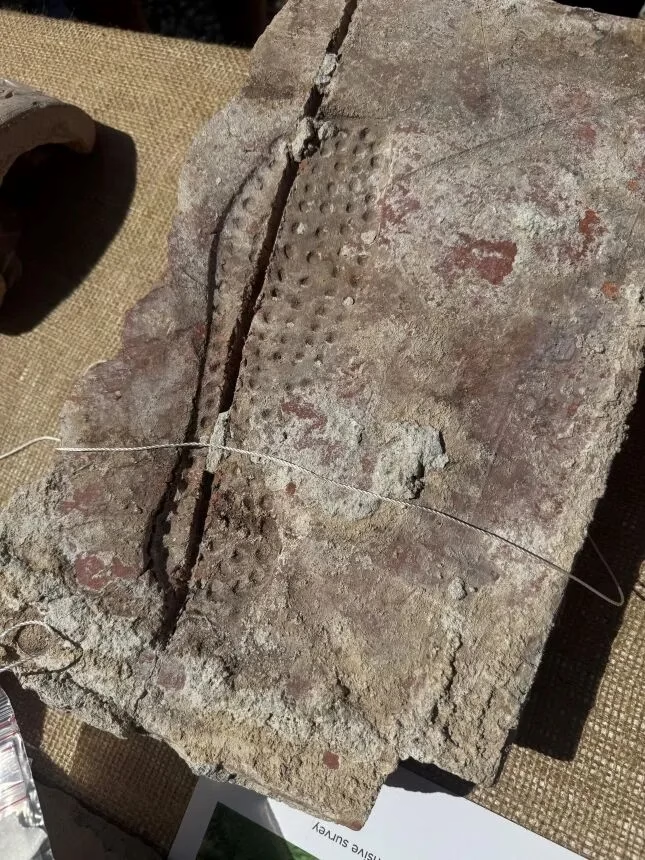
Microscopic studies have mapped the placement and size of the hobnails in remarkable detail, giving archaeologists the data they need to create a faithful reconstruction of the leather shoe. Using nails excavated from the site, the team will recreate the design, bringing ancient craftsmanship and rural Roman life to light.
Sagalassos: A Hub of Culture and Industry
Located in the Pisidia region, Sagalassos was not only a political and cultural hub but also one of the Roman Empire’s five leading ceramic production centers. This re-analysis of the shoeprint offers a rare, tangible connection to the daily routines of its inhabitants nearly two millennia ago.
Cover Image: A 2,000-year-old Roman-era woman’s shoeprint with hobnails preserved on a clay tile in Sagalassos, Turkey. Credit: AA