
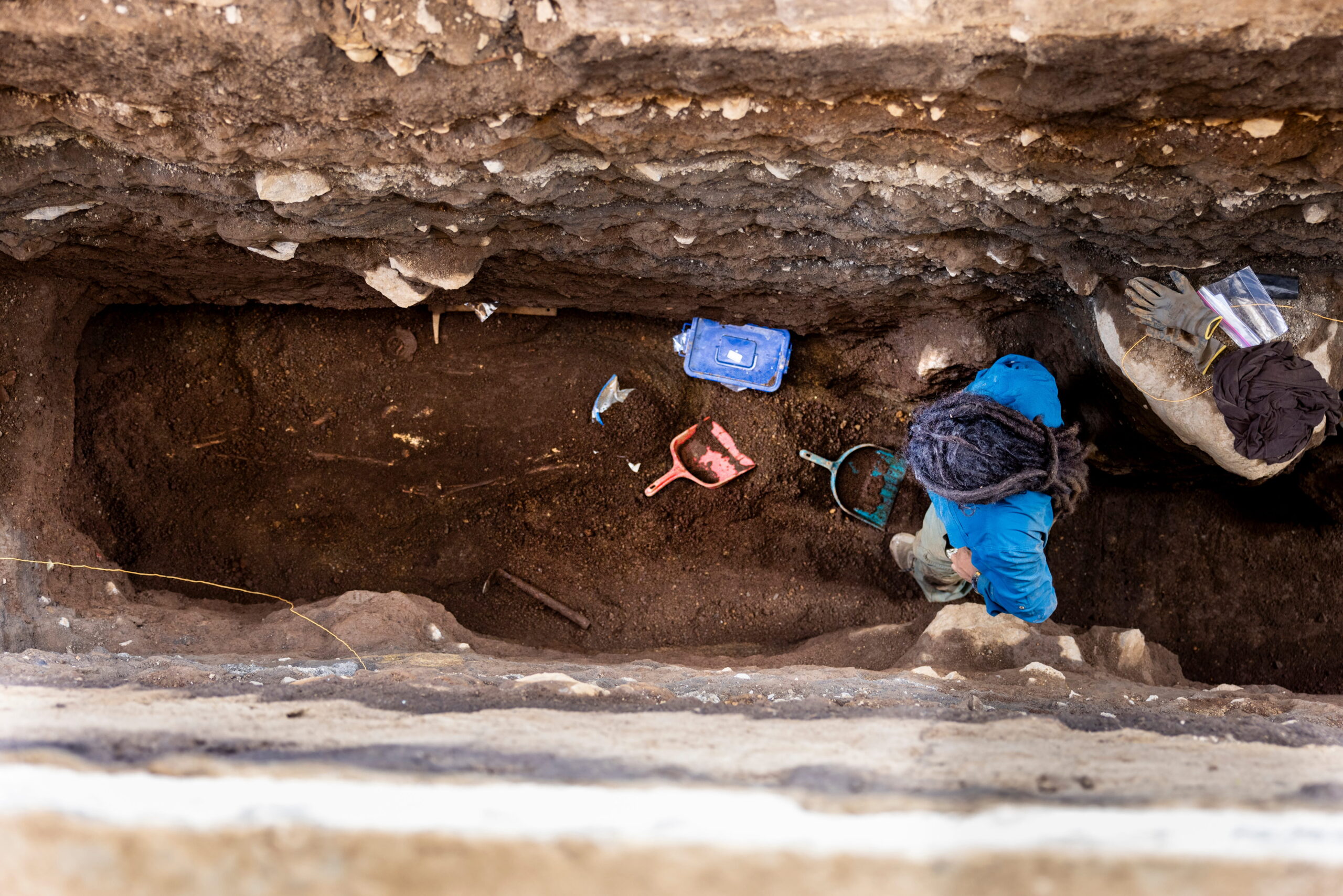
Archaeologists excavating beneath a residential area in El Salvador have uncovered a pre-Hispanic burial that may date to around 850 B.C.
The grave was discovered at the Pasaje 4 archaeological site in Antiguo Cuscatlán, part of the San Salvador metropolitan area. The individual had been buried face-down, while a small ceramic vessel shaped like a sea turtle was found nearby.
If radiocarbon dating confirms the preliminary estimate, the burial could be among the oldest documented examples yet identified in El Salvador.
Burial Found Beneath Volcanic Deposits
The skeleton was uncovered inside an excavation trench beneath several layers of volcanic ash deposited during different eruptions.
The remains were found in a ventral position, with the body lying face-down and aligned approximately 17 degrees east of north. Archaeologists have not yet determined the individual’s age, biological sex or cause of death.
The suggested date of around 850 B.C. is based on the burial’s archaeological context and its relationship to volcanic deposits associated with the Plan de la Laguna eruption. Further laboratory analysis will be required before the chronology can be confirmed.
Rather than fully exposing the fragile bones at the site, the team removed the burial inside a block of surrounding soil. The block will be excavated under controlled laboratory conditions, allowing specialists to recover small organic materials and other traces that might otherwise be lost.
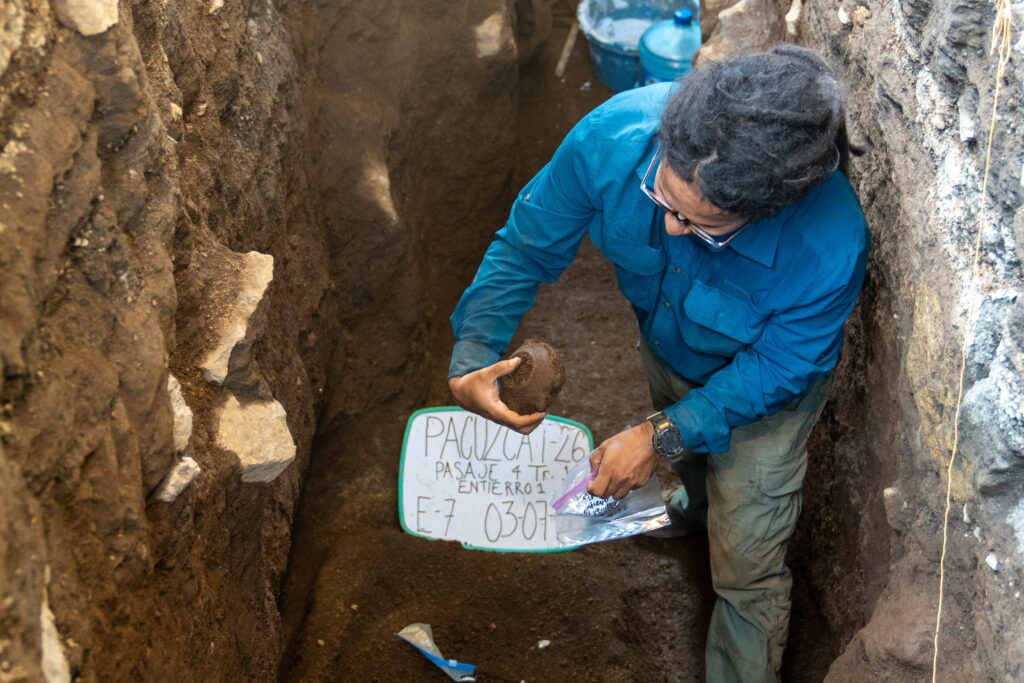
A Turtle-Shaped Usulután Vessel
Among the most distinctive objects recovered from the site is a small ceramic container modeled in the shape of a sea turtle.
The vessel has been identified as belonging to the Usulután ceramic tradition, which developed in parts of present-day El Salvador during the Preclassic period and later spread across southern Mesoamerica.
Usulután pottery is usually recognized by its resist-painted decoration, often formed by flowing parallel lines. The newly discovered example stands out because of its animal-shaped form and its apparent association with the burial.
Archaeologists have not yet confirmed whether the vessel was deliberately placed as a funerary offering. Its exact relationship to the deceased will depend on the final excavation of the soil block and the analysis of the grave context.
Ancient Agricultural Furrows Preserved in Ash
The excavations also revealed agricultural features from different periods of pre-Hispanic occupation.
Two cultivation furrows were identified beneath separate volcanic deposits. One lay beneath ash associated with the Plan de la Laguna eruption, dated to around 850 B.C. The other was preserved below deposits from the eruption of the Ilopango Caldera, which occurred during the fifth or sixth century A.D.
The furrows have been linked to yuca cultivation, although further archaeobotanical analysis may be needed to confirm which crops were grown there.
These preserved agricultural surfaces show that communities repeatedly returned to and cultivated the area over many centuries, despite living in a landscape shaped by major volcanic eruptions.
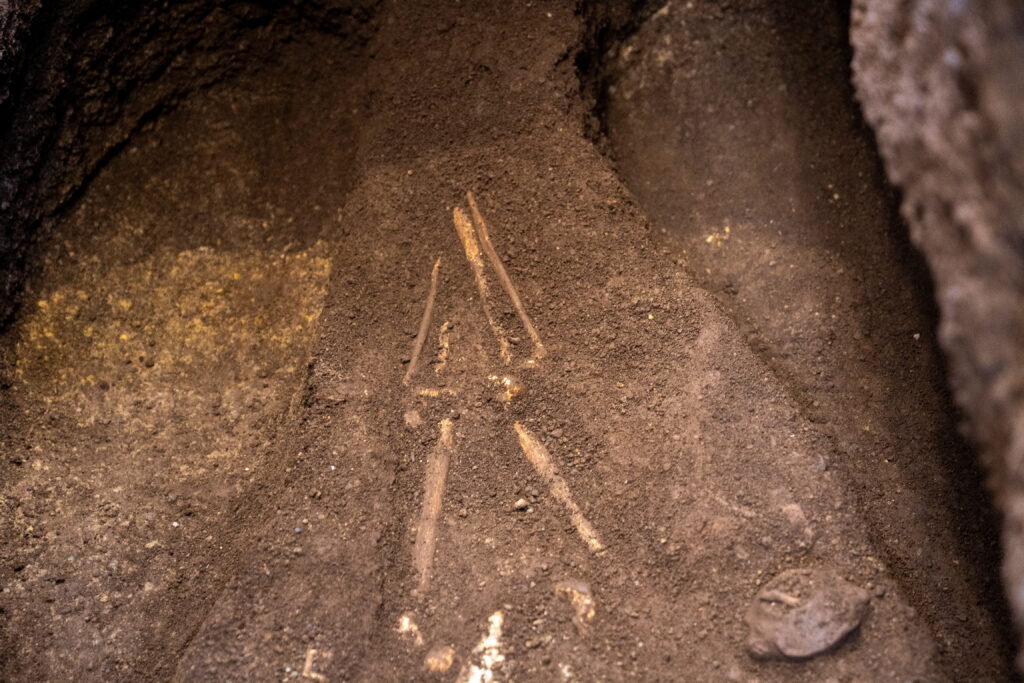
Why Was the Individual Buried Face-Down?
The position of the body is one of the most unusual aspects of the discovery.
Face-down burials are known from different archaeological cultures, but they do not have a single universal meaning. Such positions may reflect specific funerary customs, the social identity of the deceased or unusual circumstances surrounding death.
At present, there is no evidence that the individual was punished, sacrificed or buried outside normal ritual practices.
Archaeologists have suggested that more human remains may be present in the surrounding area. Comparisons have been made with Structure E3-7 at Chalchuapa, where multiple burials were uncovered during earlier investigations. However, the relationship between the two sites remains uncertain.
Laboratory Analysis Could Reveal the Individual’s Identity
Radiocarbon dating will be used to establish a more precise date for the burial.
Researchers also hope to recover ancient DNA, which could provide information about the individual’s biological sex and genetic ancestry. Osteological analysis may reveal age at death, diet, disease, physical stress or evidence of trauma.
For now, both the identity of the deceased and the meaning of the unusual burial position remain unknown.
The discovery nevertheless offers rare evidence of life and death in the region nearly three millennia ago. Together with the turtle-shaped vessel, cultivation furrows and volcanic deposits, the burial provides a new glimpse into the early communities that once occupied the landscape beneath modern Antiguo Cuscatlán.