
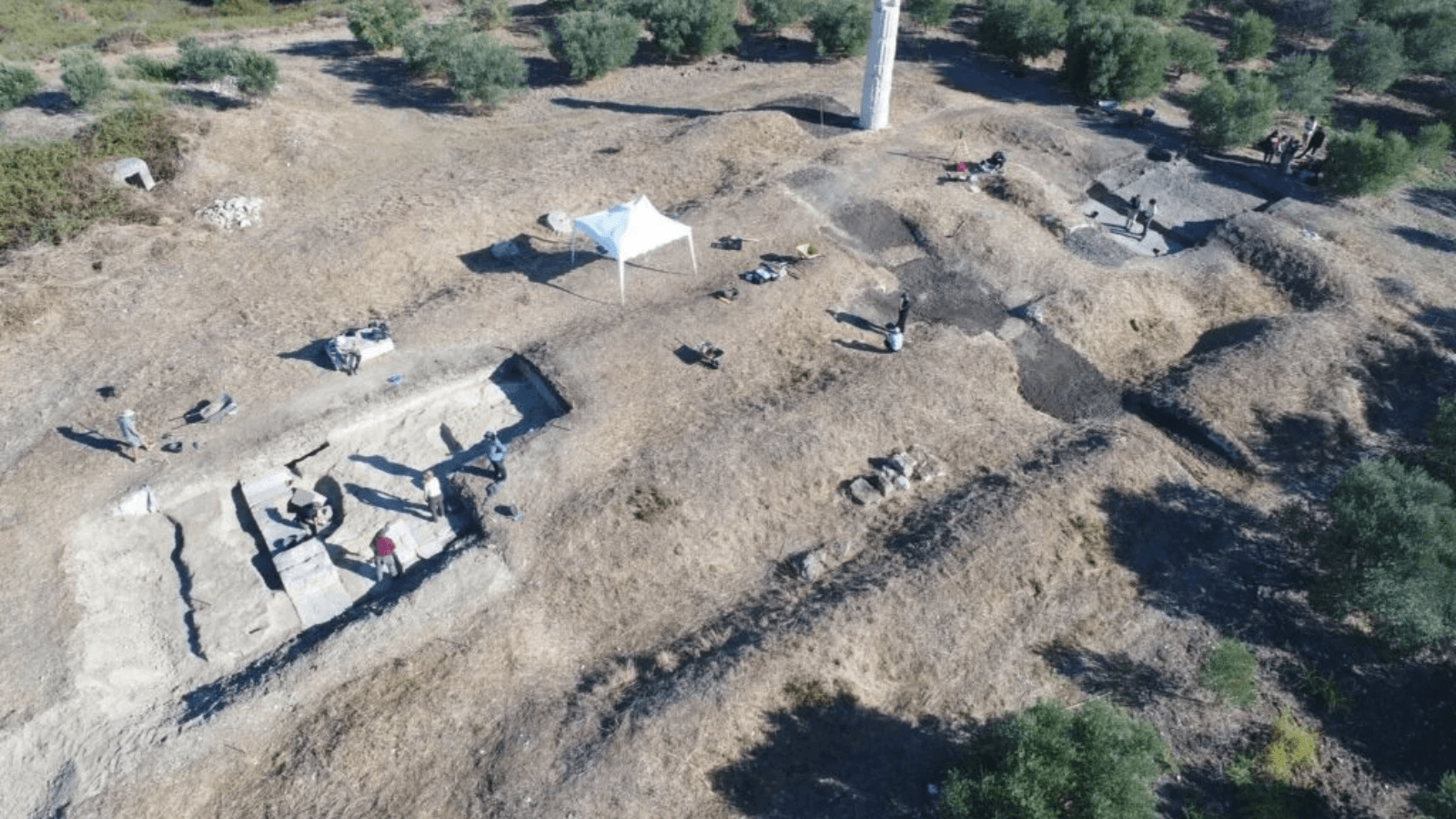
New excavations at Shtyllas have identified roof tiles apparently brought from the Greek island of Paros and from Corinth, offering a clearer picture of a long-vanished sanctuary. Ancient coins, pottery, and sculpture fragments are also helping researchers trace the temple’s changing history.
Only one Doric column stands above the ruins of the Shtyllas temple in Albania. From that slender survivor, it is difficult to imagine the building that once overlooked the harbor of ancient Apollonia. Fragments recovered during the 2026 excavations, however, reveal that its roof included materials transported across the Greek world.
The Albanian-German project, led by Lavdosh Jaupaj of Albania’s Institute of Archaeology and Stephan G. Schmid of Humboldt University of Berlin, carried out its latest fieldwork in September and the first half of October. The team is investigating both the temple’s original architecture and the changes it underwent in later centuries.
Marble from Paros, Tiles from Corinth
Among the most revealing finds are pieces of the temple’s roofing, which researchers date to the second half of the fifth century BC. According to the Institute of Archaeology, preliminary examination indicates that some marble roof tiles came from Paros, while other tiles were imported from Corinth.
Paros was prized in antiquity for its marble, and Corinth was an important center of Greek architectural production. Bringing roofing materials from these locations to the eastern Adriatic required maritime transport and access to skilled builders. The discovery points to the considerable investment behind a sanctuary now reduced to scattered remains.
The roof did not remain unchanged throughout the temple’s history. Archaeologists also found tiles thought to have been made locally, apparently used during later building phases. Comparing these materials may help them distinguish the original roof from subsequent alterations.
Coins and Sculpture Among the Ruins
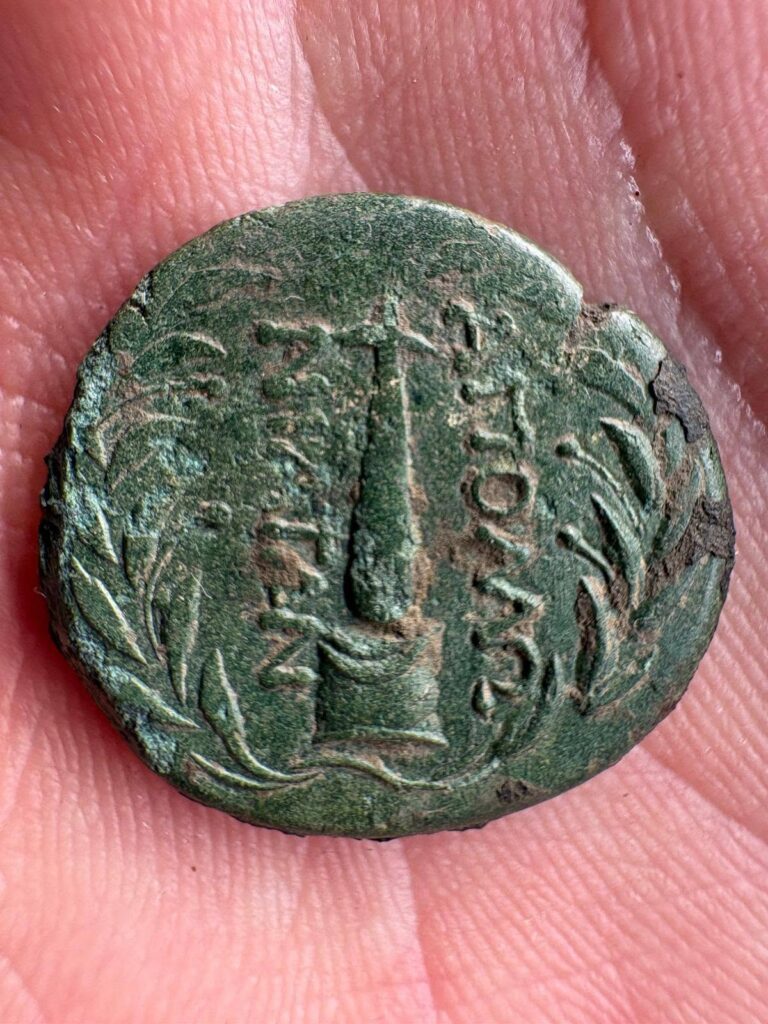
The excavations yielded coins minted by Apollonia, the Greek city near the sanctuary. Apollonia issued its own currency and became known for silver coins depicting a cow nursing her calf, a design that circulated far beyond the city. The newly recovered coins have yet to receive a full published identification, however, so their precise dates and archaeological contexts remain uncertain.
Fragments of sculpture and large quantities of pottery were also recovered. The ceramics span the Classical, Hellenistic, and Roman periods, giving archaeologists evidence for activity at the site over an extended period. Further analysis may reveal whether some objects relate to worship, later alterations, or the temple’s eventual destruction.
A Sanctuary Above an Ancient Harbor
Shtyllas stood outside Apollonia’s urban center, on high ground overlooking its harbor. Founded by Greek settlers from Corinth and Corcyra, Apollonia developed into an important Adriatic trading city. The location placed the temple within a landscape shaped by the settlement’s maritime connections.
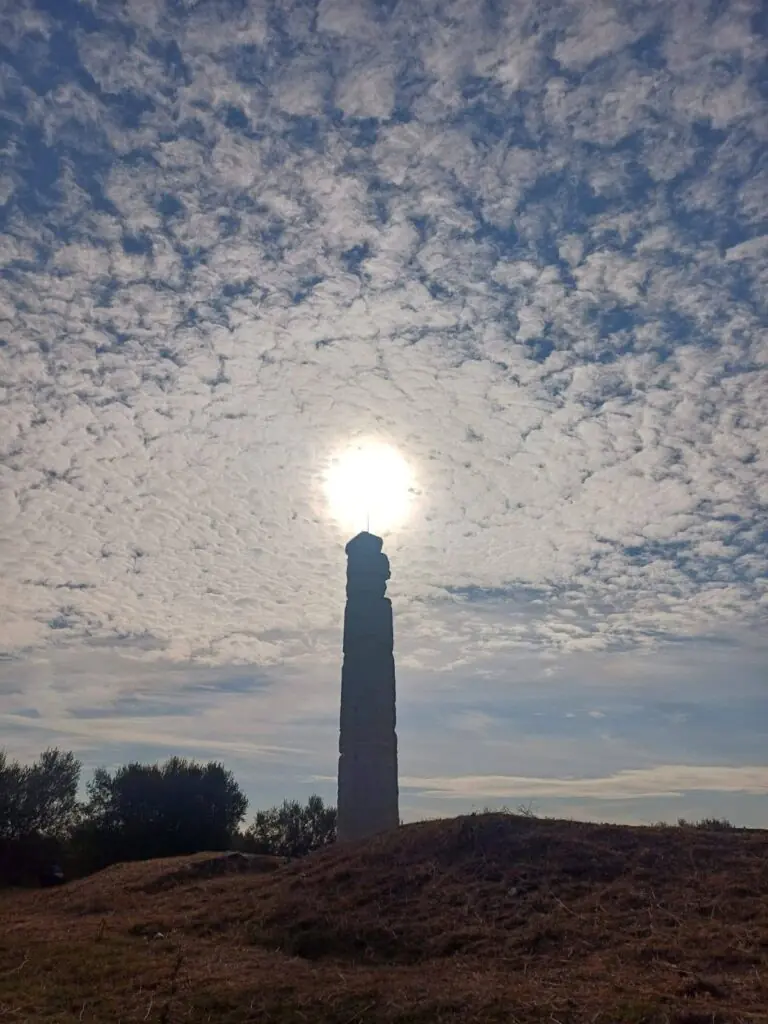
Its surviving column is exceptional: Humboldt University describes it as the only upright Doric temple architecture remaining in Albania and the eastern Adriatic. The column is also at risk of collapse, making conservation a necessary part of the research alongside excavation.
New Excavations Inside the Temple
In 2026, archaeologists opened two trenches inside the temple. One examined the altar area and evidence for successive phases of use and destruction. The other investigated the entrance and the ramp leading into the building, but the results are not yet sufficient to reconstruct that section securely.
Geophysical and geoelectrical surveys searched for structures beneath the surrounding ground. Those results, along with the recovered architectural fragments and artifacts, are still being analyzed.
The work has established new details of the roof, but important questions remain about the temple’s overall plan, the duration of its use, and the circumstances of its destruction. Further analysis may help establish how the entrance was arranged, when the roof underwent alterations, and how the sanctuary eventually fell into ruin.
Cover Image: Aerial view of the 2026 excavations at the ancient Greek temple of Shtyllas in Albania, showing the surviving Doric column and archaeological trenches. Credit: Institute of Archaeology, Albania.