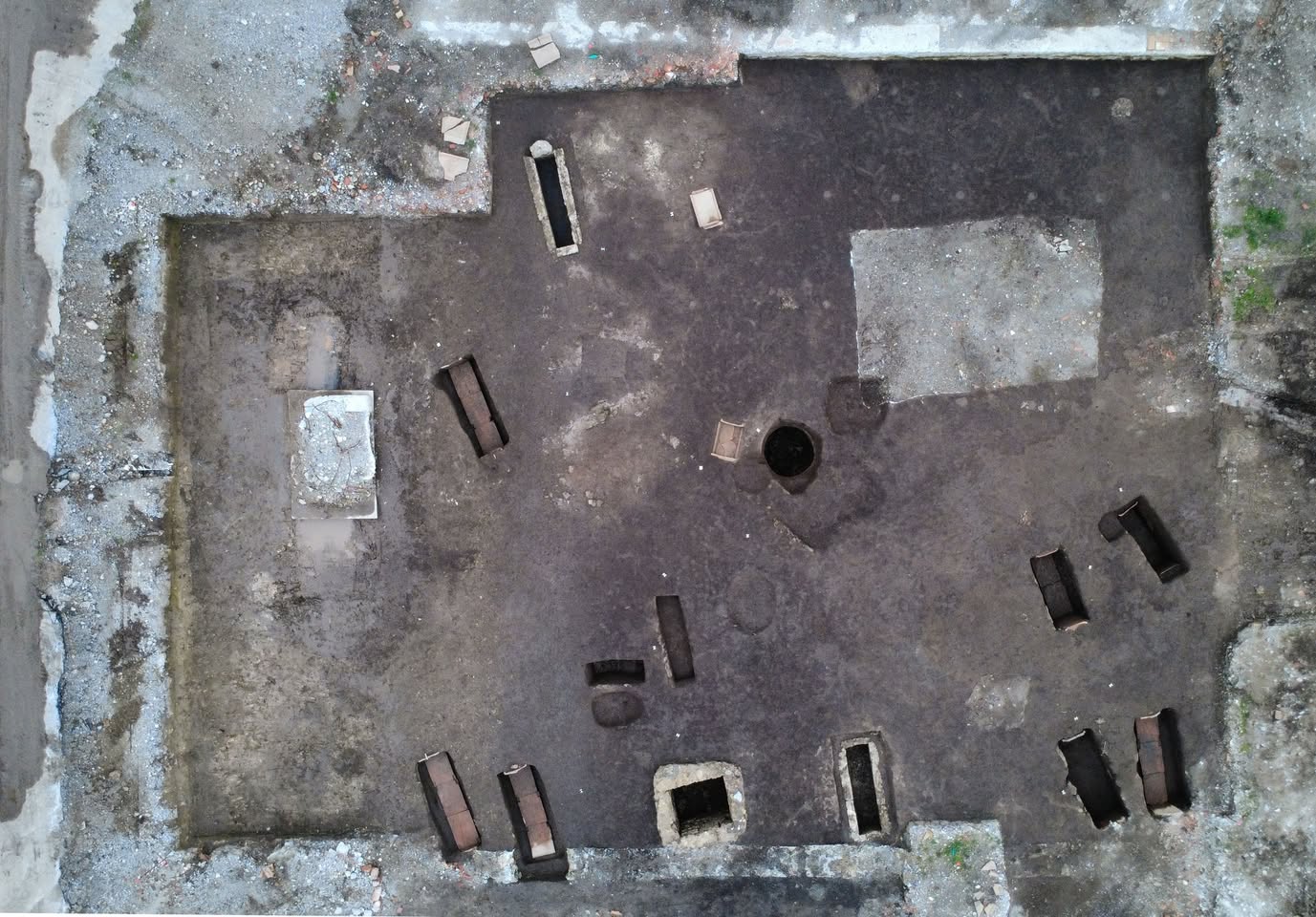
Archaeologists working in Pontecagnano Faiano have uncovered 34 tombs dating to the Samnite period, shedding new light on family organization, funerary customs, and social identity in ancient Campania. The discovery emerged during heritage protection work led by the Soprintendenza Archeologia Belle Arti e Paesaggio di Salerno e Avellino, the regional authority responsible for safeguarding archaeological remains.
The burials were found within the grounds of the former ATI Alfani tobacco factory, an area now identified as part of the southern necropolis of the ancient settlement. Archaeological evidence dates the graves to the 4th–3rd centuries BC, when the Samnites dominated much of inland southern Italy.
What began as standard preventive fieldwork has turned into one of the most informative Samnite funerary discoveries in recent years.
A Landscape Studied for Over Half a Century
Research in Pontecagnano Faiano is far from new. Systematic excavations began in the 1960s under heritage authorities in Salerno, gradually revealing the area as a major Etruscan-Campanian urban center with continuous occupation from the early 9th century BC into the Roman era.
Today, archaeology here continues alongside modern development. Most projects are preventive, conducted before construction reshapes the terrain. Each excavation adds another layer to a settlement whose cemeteries, sanctuaries, and residential zones are still being mapped.
The newly identified burials now extend knowledge of the settlement’s funerary landscape and deepen understanding of its Samnite phase.
Family Clusters and Burial Architecture
The graves belong to a cemetery sector used during the Samnite period and were arranged in family clusters, a funerary pattern typical of inland Campania at the time. The layout suggests kinship-based burial organization rather than random placement.
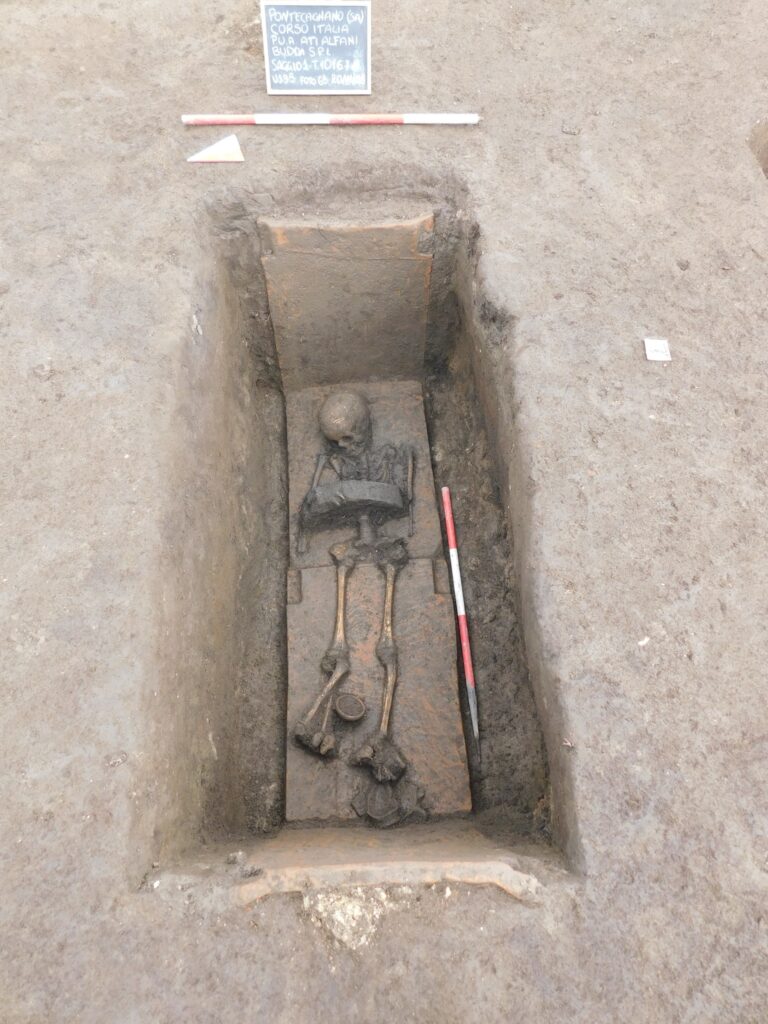
Most tombs follow a simple architectural design: pits cut into the soil and sealed with tiles arranged in a double-sloped, roof-like structure. This practical construction method was widespread across the region.
A small number of burials, however, stand apart.
Archaeologists identified two tombs built as travertine block chambers and another featuring a tufa stone coffin. These more elaborate constructions likely reflect differences in status, wealth, or access to materials within the community.
An Unusual Concentration of Child Burials
One of the most striking aspects of the discovery is demographic.
Fifteen of the 34 graves belonged to neonates and children between two and ten years old. Such a high proportion provides rare insight into population structure and childhood mortality, while also revealing how young individuals were included in formal funerary traditions.
The children were not separated from the community’s ritual sphere. They were buried within the same necropolis system and accompanied by meaningful grave goods.
Weapons, Ornaments, and Identity Markers
Objects placed beside the deceased offer some of the clearest evidence of Samnite social symbolism.
Male burials commonly contained weapons, especially spearheads and javelin points — material expressions of the warrior ethos strongly associated with Samnite identity.
Female graves instead featured personal adornments such as rings and fibulae, the brooch-like fasteners used to secure garments. These items function as recognizable gender markers in the archaeological record.
Two children’s graves, however, challenge conventional expectations.
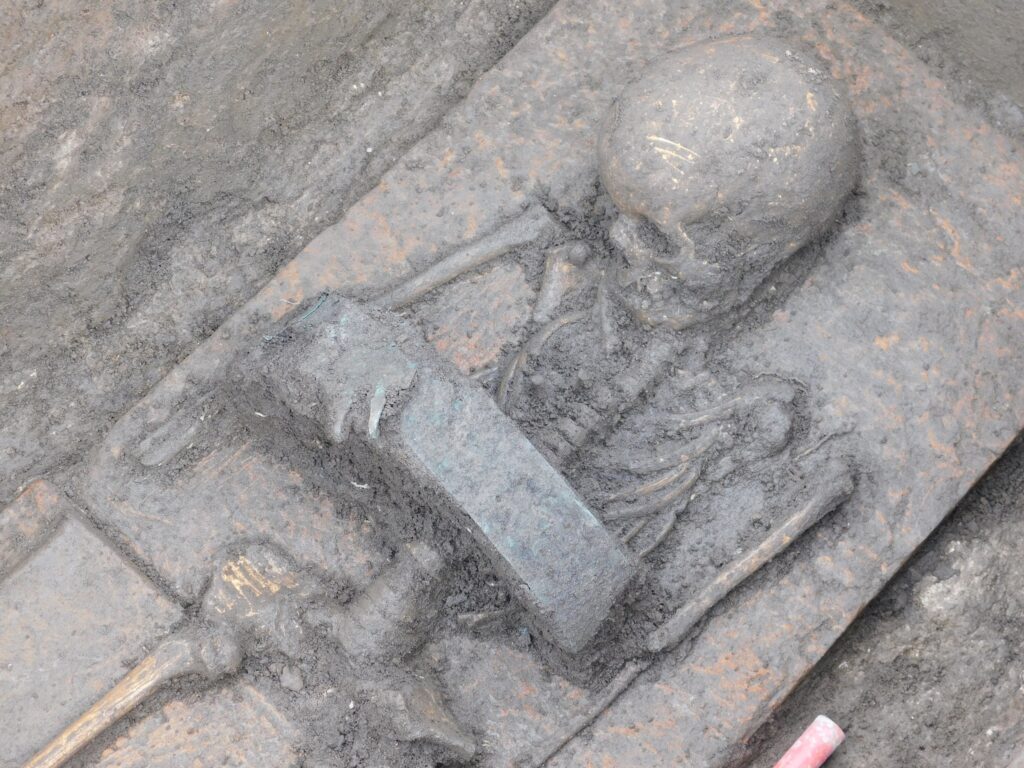
Archaeologists discovered large bronze belts in burials belonging to children aged roughly five to ten. Such belts are typically associated with adult male warriors and are widely interpreted as symbols of rank or social standing.
Their presence in children’s graves raises important interpretive questions. The belts may signal inherited status within prominent families. Alternatively, they could indicate that elements of social identity were assigned from a very early age.
Either explanation points to a society where status and symbolism extended well beyond adulthood.
Ceramics and Ritual Meaning
Pottery assemblages from the graves are modest in quantity but rich in meaning.
Most burials contained only one or two ceramic vessels rather than large sets. The forms are linked to ritual and ceremonial dining practices, including paterae used for libations, skyphoi for drinking, and small cups associated with funerary meals.
Lekythoi — small containers for perfumed oils — were also present, reinforcing the ritual dimension of burial preparation.
The pattern suggests symbolic intent outweighed material display. The choice of objects mattered more than volume.
Ongoing Research and Public Presentation Plans
Excavations continue across multiple sectors of the municipality. According to the Soprintendenza, detailed findings will be fully released only after fieldwork and laboratory analyses conclude, ensuring proper documentation and preservation.
Once research is complete, authorities plan public-facing initiatives that may include exhibitions and educational programs designed to share the discoveries with the local community.
A Clearer View of Samnite Society
The newly uncovered necropolis sector underscores the archaeological depth of the Pontecagnano Faiano territory, a landscape shaped by overlapping Etruscan, Campanian, Samnite, and Roman cultural layers.
The discovery of 34 Samnite tombs — especially the rare child burials accompanied by warrior belts — provides valuable evidence for understanding kinship structures, identity formation, and ritual practice in ancient Campania.
As excavations continue, the site is poised to refine what historians know about the communities that lived, buried their dead, and expressed social meaning here more than two thousand years ago.
Soprintendenza Archeologia Belle Arti ve Paesaggio di Salerno ve Avellino
Cover Image Credit: Soprintendenza Archeologia Belle Arti ve Paesaggio di Salerno ve Avellino