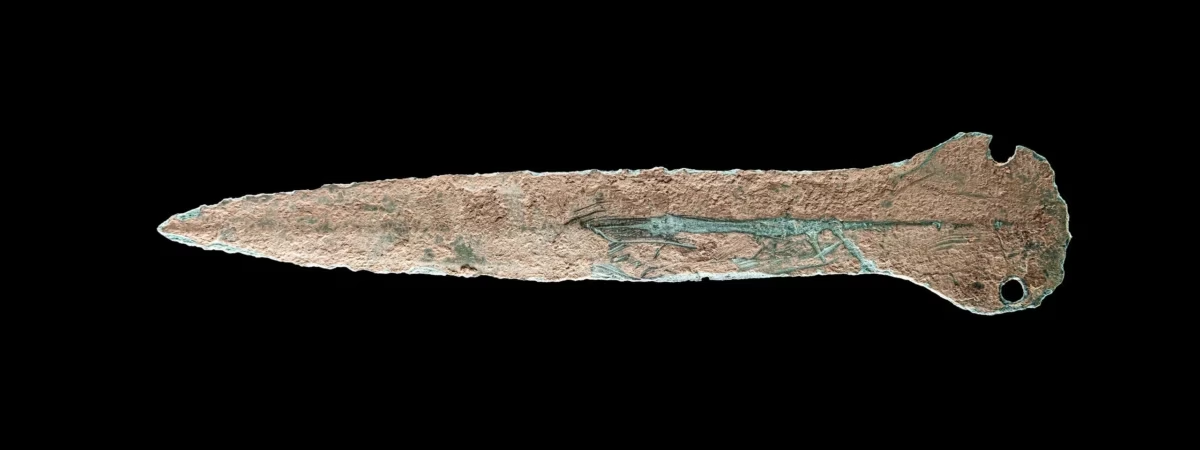
A casual family walk near the village of Gudersleben in Nordhausen County, central Germany, has led to a rare archaeological discovery: a 3,500-year-old Bronze Age dagger lying on the ground. Experts believe the artifact surfaced after heavy rains eroded the soil in the karst landscape of northern Thuringia.
The dagger, identified as a plate-tanged type, is remarkably well-preserved. According to Daniel Scherf, a regional archaeologist with the Thuringian State Office for Monument Preservation and Archaeology, such finds are exceptional:
“Objects like this are not everyday discoveries. To see a Bronze Age dagger so well preserved is something truly special.”
A Rare Glimpse Into the Bronze Age
Plate-tanged daggers, common between 2200 and 800 BCE, were designed with a flat tang to be riveted onto organic handles made of wood, bone, or antler. They were more than mere weapons—they often symbolized status and ritual significance in early European societies. Bronze, requiring copper and tin, was a precious resource, making such weapons prestigious possessions, possibly linked to warriors or elite figures.
From Discovery to Preservation
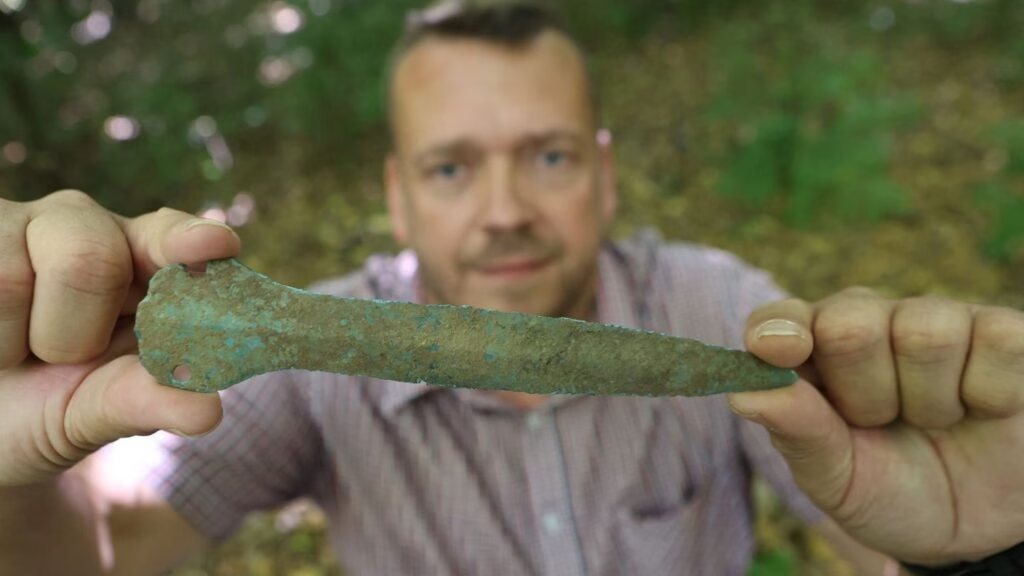
The dagger was found by Maik Böhner, a local resident who immediately reported it to authorities rather than attempting to collect it himself—a move praised by archaeologists as a model of responsible heritage protection. In Germany, unauthorized metal detecting is prohibited to prevent loss of archaeological context.
The artifact is now undergoing conservation and scientific analysis at state workshops in Weimar. After restoration, it will be exhibited at the Local History Museum in Ellrich, offering visitors a rare connection to life in Bronze Age Thuringia.
Natural Forces at Play
The find highlights how geological activity in Thuringia’s karst regions can unexpectedly reveal ancient artifacts. Sinkholes, soil movement, and seasonal rains often bring long-buried objects back to the surface, providing archaeologists with new insights into prehistoric life.
A Chance Encounter That Enriches History
This extraordinary discovery underscores how chance encounters can deepen our understanding of ancient civilizations. From craftsmanship to cultural symbolism, the Gudersleben dagger tells a story of power, prestige, and ritual in a world that existed more than three millennia ago.