
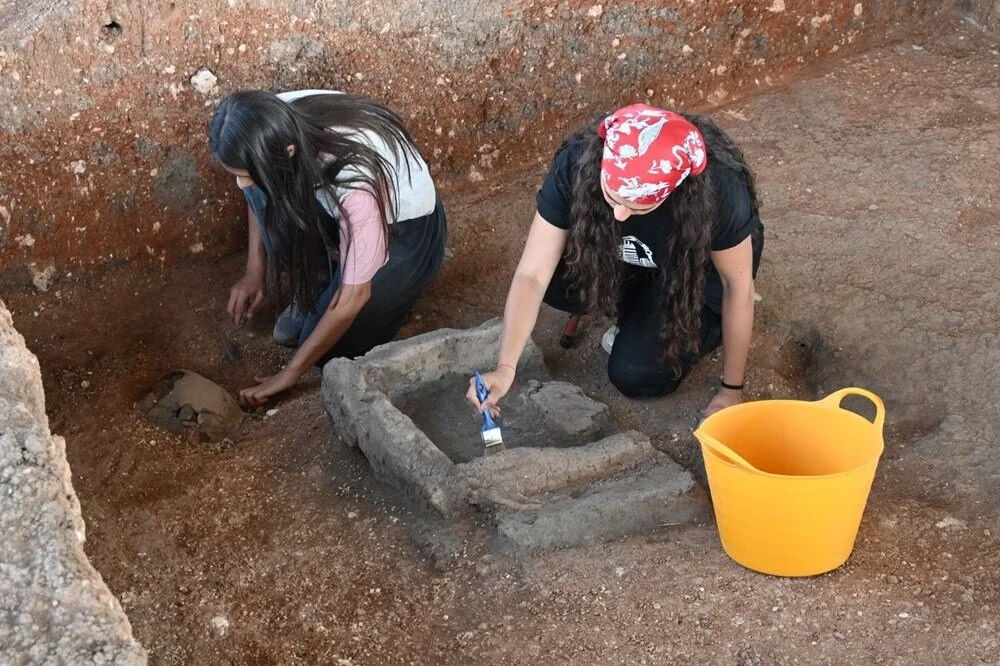
A major archaeological discovery in Eskişehir, central Türkiye, is offering new insight into how ancient communities faced environmental challenges thousands of years ago. At Küllüoba Höyük, researchers have uncovered a remarkably well-preserved Early Bronze Age settlement dating back over 5,000 years—and the findings are rewriting what we know about survival in times of climate stress.
Why Were Entire Houses Buried?
Excavators led by Prof. Murat Türktekin have revealed something extraordinary: dozens of houses were deliberately buried under layers of reddish soil called “caliche.” This large-scale effort, covering an area of nearly 100 meters, has left homes astonishingly intact—with original floors, hearths, storage facilities, and ventilation systems still in place.
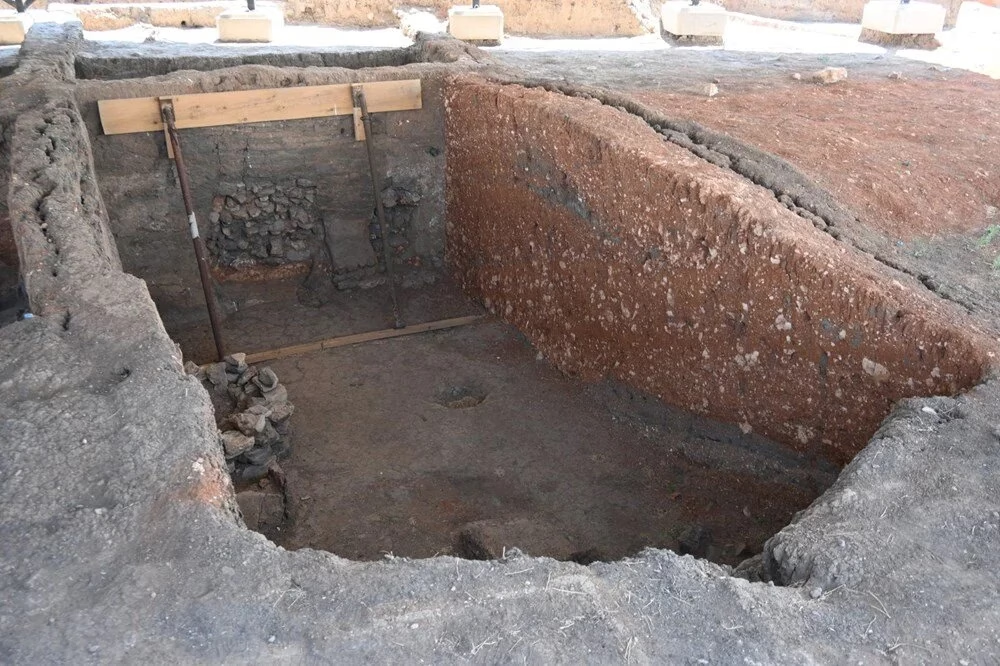
The reason behind this practice remains uncertain. “Was this a protective measure, a response to climate shifts, or tied to symbolic rituals?” asks Türktekin. The frequent use of red pigment on pottery and possibly textiles suggests cultural meaning, adding another layer of intrigue to the site.
Climate-Smart Agriculture in the Bronze Age
Beyond architecture, the excavation is revealing how early Anatolian farmers coped with severe drought conditions. Soil analysis shows they switched from traditional grains like wheat and barley to grass pea (Lathyrus sativus)—a hardy legume well-suited to dry environments. In animal husbandry, they favored goats over sheep, another adaptation for survival.
“This is a lesson in resilience,” Türktekin emphasizes. “Five millennia ago, people adapted their economy to water scarcity—something we still struggle with today.”
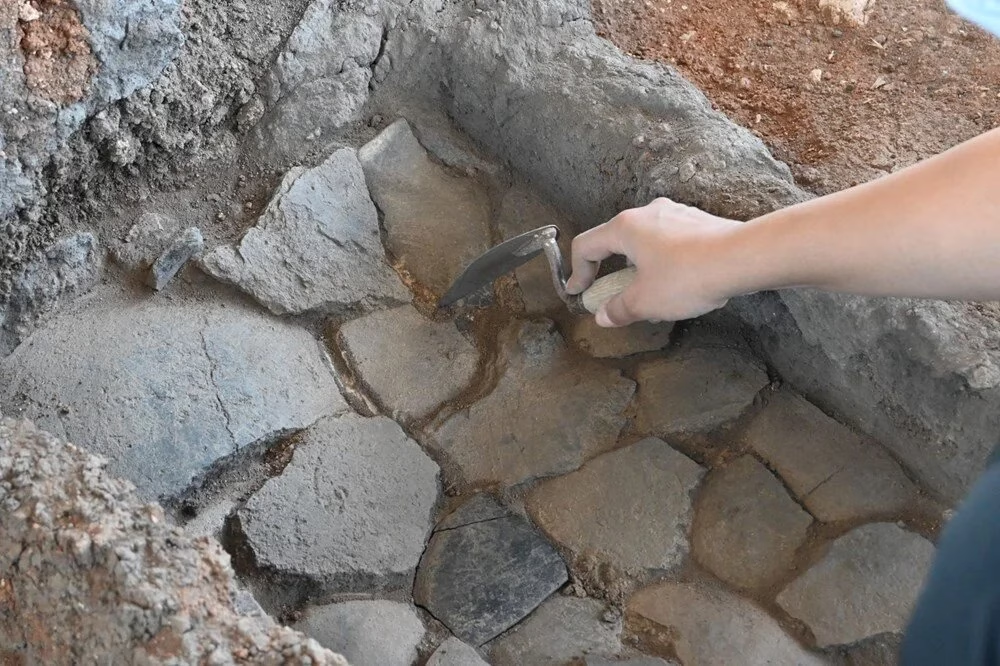
A Glimpse of Urban Planning Before Cities
Küllüoba represents one of Anatolia’s earliest examples of organized settlement planning. The site includes interconnected homes with shared walls, arranged around inward-facing courtyards. Each house served as a multifunctional unit—combining living quarters with workshops for weaving and metalworking, grain storage, and cooking areas.