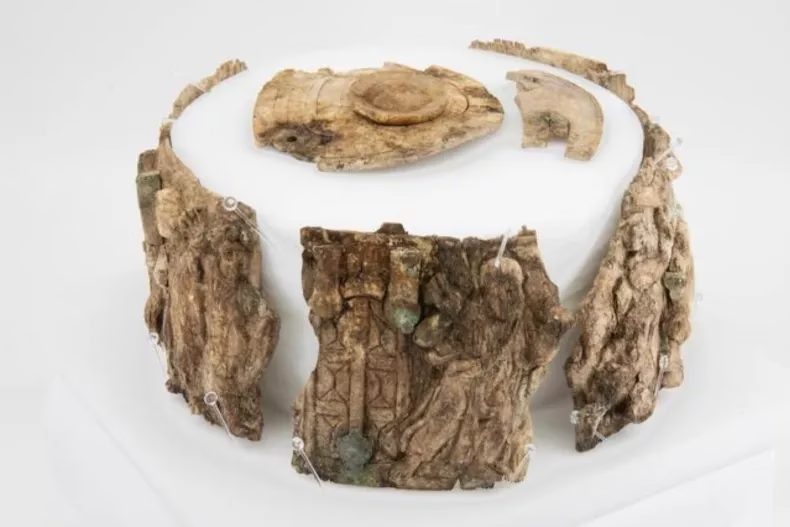
Archaeologists in Austria have uncovered an extraordinary 1,500-year-old Christian ivory reliquary—one of the rarest artifacts of Late Antiquity—during excavations at a forgotten church in Irschen, southern Austria.
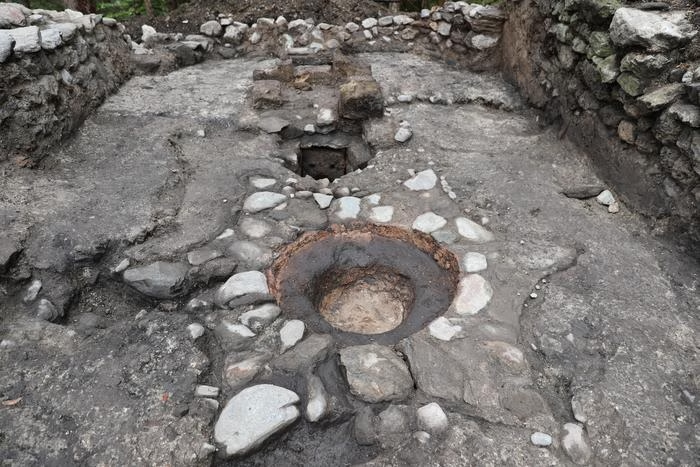
The discovery was made in 2022 beneath the altar of an early Christian church on Burgbichl hill by a team from the University of Innsbruck, led by archaeologist Gerald Grabherr. Hidden inside a marble shrine measuring 20 by 30 centimeters, researchers found fragments of an ornate ivory pyx, a round container traditionally used to store sacred relics.
“We know of only about 40 ivory boxes of this kind worldwide, and the last time one was unearthed during excavations was over a century ago,” said Grabherr.
Unlike most reliquaries, which were removed when churches were abandoned, this one remained buried. Analysis suggests the pyx was already broken in Late Antiquity and deliberately interred, likely because it was considered sacred after coming into contact with relics.
Scenes from the Old and New Testament
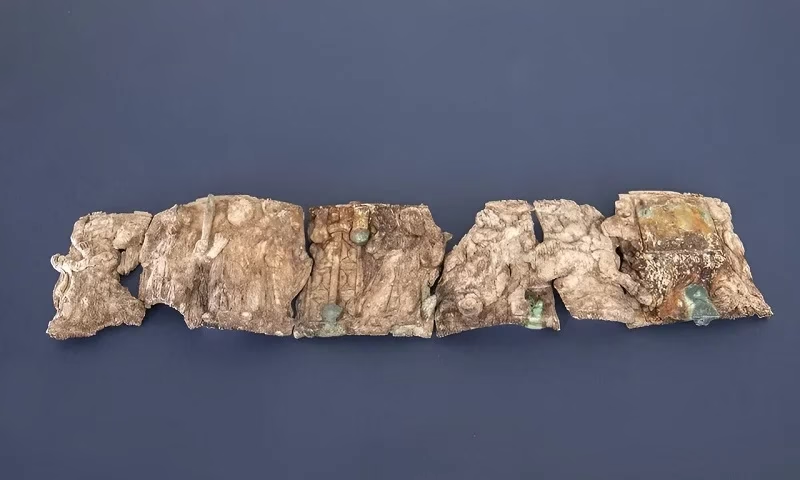
The fragmented ivory panels depict rare biblical imagery. One scene shows Moses receiving the Law on Mount Sinai, with a divine hand emerging from the clouds. Another, previously undocumented in Christian art, portrays the Ascension of Christ on a two-horse chariot (biga)—a unique representation connecting Old Testament covenant themes with New Testament fulfillment.
Such iconographic combinations are typical of Late Antiquity, but the chariot motif makes this pyx exceptional.
Conservation and Digital Reconstruction
Because ivory absorbs moisture underground, the relic required meticulous restoration. “Uncontrolled drying could have caused shrinkage and cracks,” explained Ulrike Töchterle, head of Innsbruck’s restoration workshop.
Over the past two years, experts have stabilized the fragments for analysis. The pyx cannot be fully restored due to deformation, but researchers are developing a 3D digital reconstruction to visualize its original appearance.
This discovery is the first ivory pyx ever found in Austria in an archaeological context, and its unique iconography could reshape understanding of early Christian art in the region.