
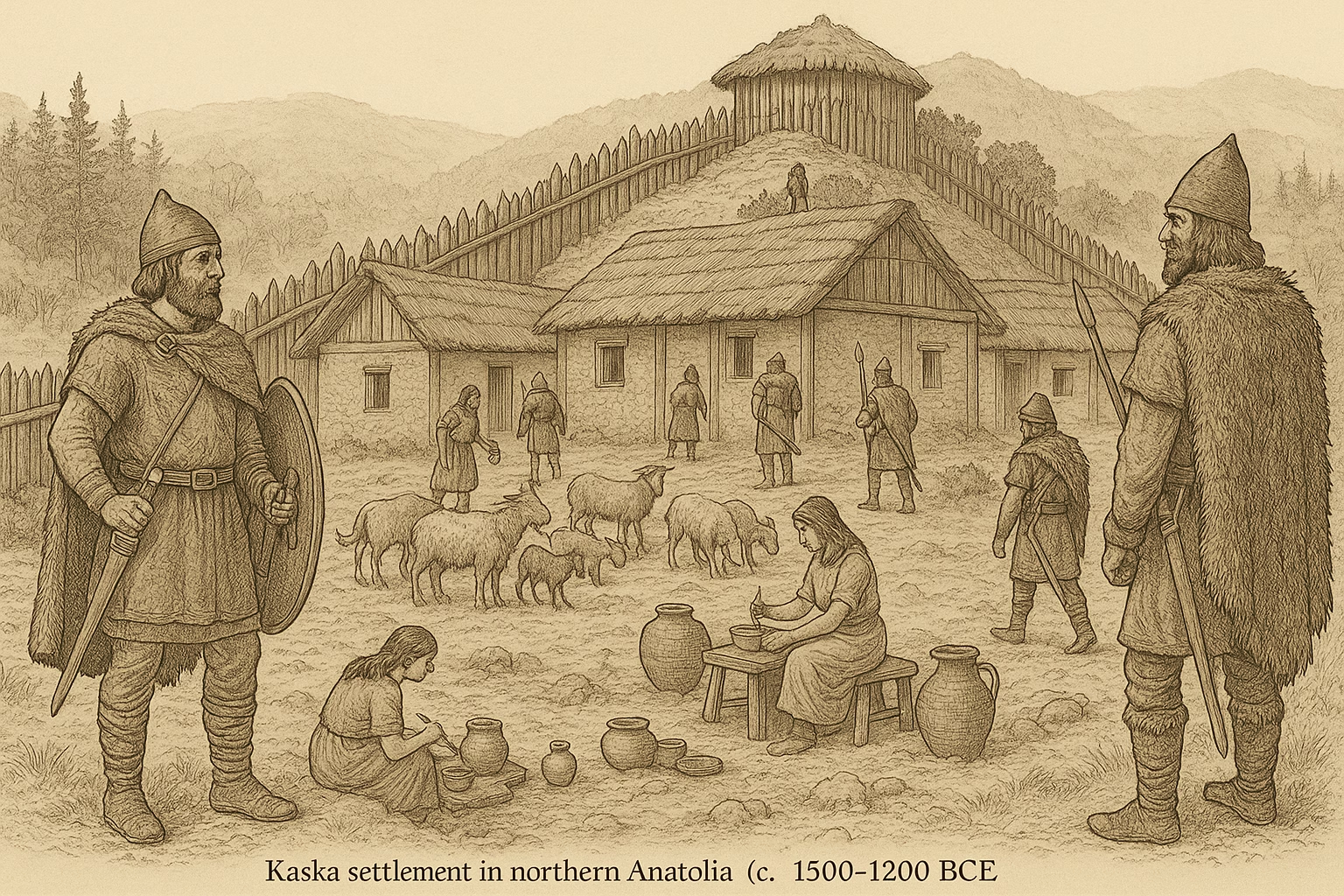
This season at Oymaağaç Höyük (Samsun/Vezirköprü) pushes the story beyond the Hittites’ sacred city of Nerik: Middle Bronze–Iron Age finds consolidate Nerik’s identity and surface the first hard archaeological traces of the Kaska.
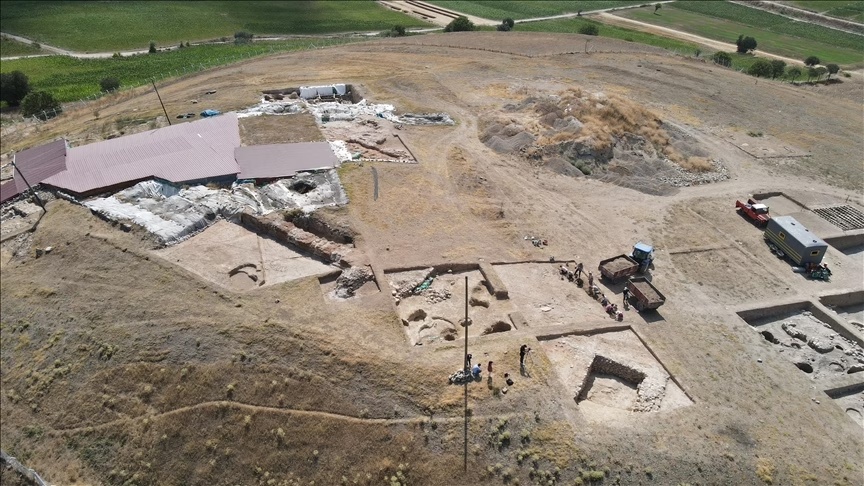
Excavations at Oymaağaç Höyük—conducted since 2005 under Türkiye’s Ministry of Culture and Tourism within the Heritage for the Future Project—had already tied the site to the Hittites’ northern cult centre Nerik, thanks to a Storm-God temple and related structures on the summit. This season, expanded trenches on the north-west slope sharpened the site’s early phases and widened the cultural horizon.
Settlement roots back to ca. 4500 BCE
Stratigraphy and new radiocarbon readings indicate occupation reaching back to c. 4500 BCE. Oymaağaç is therefore not a single-period stop but a long-lived, multi-layered settlement spanning millennia.
Middle Bronze Age: pottery assemblage crosses a critical threshold
The headline gain this year is a diagnostic Middle Bronze Age pottery assemblage (early 2nd millennium BCE). Vessel forms, fabrics, and surface treatments open fresh questions on raw-material sources and production/supply networks—and strengthen expectations for local production within the Kaska geography.
Iron Age architecture: the mudbrick–stone–timber triad
On the north-west slope, Iron Age building groups show the classic mudbrick–stone–timber combination. The package aligns with Hittite building practice and, strikingly, with today’s rural construction traditions in the region—evidence for deep material continuity read through plans, sections, and fabric rather than legend.
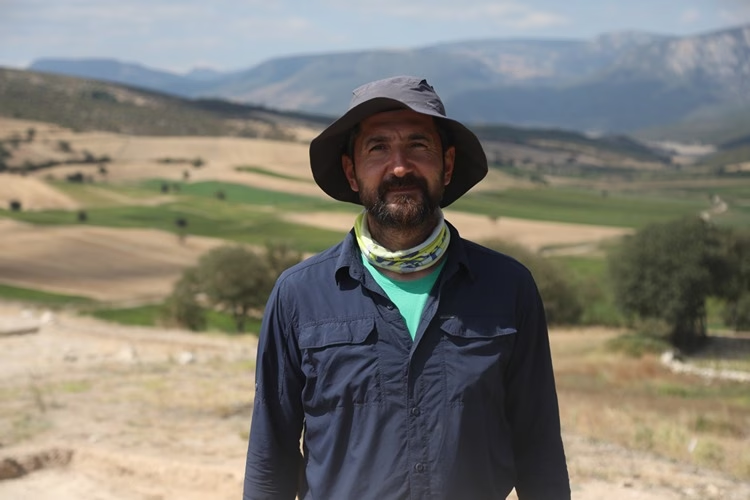
Assoc. Prof. Mehmet Ali Yılmaz (OMU, Deputy Field Director):
“With the temple and associated structures we had proven Nerik’s identity. The Middle Bronze Age finds emerging this season not only anchor the chronology; they also provide the first tangible data on the Kaska.”
The Kaska move from text to trench
Long cast in Hittite cuneiform as relentless adversaries on the empire’s northern frontier, the Kaska (Kaška) can now be discussed on archaeological grounds. Live questions include: How did their settlement model (sedentary/semi-mobile) manifest in architecture? Are ceramics and raw materials local or inter-regional? Where do cult practice and border security intersect around Nerik? Upcoming seasons aim to turn these into datasets.