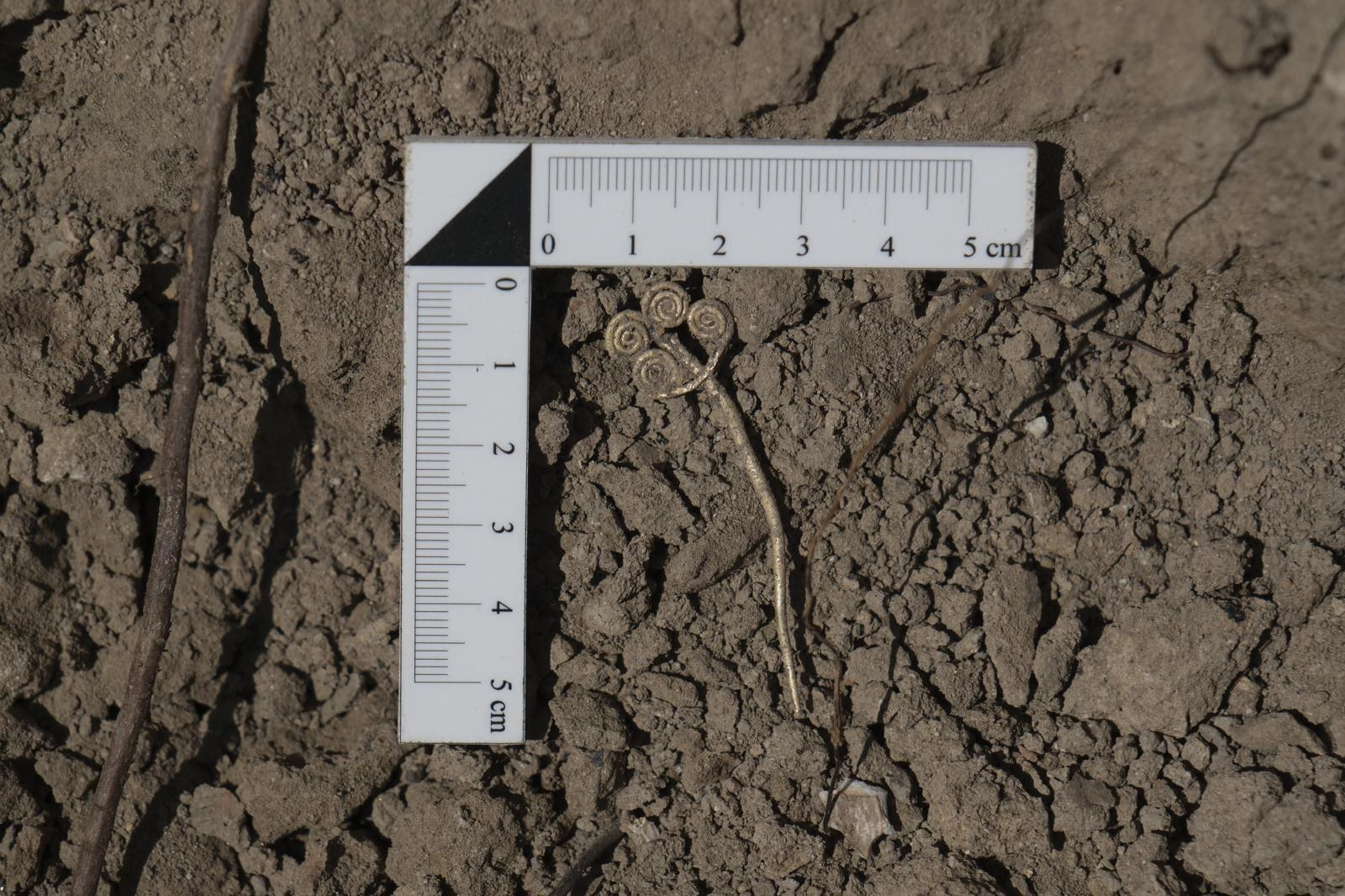
The ancient city of Troy, legendary stage of Homer’s Iliad, has once again reshaped our understanding of early civilization. Archaeologists working at the UNESCO World Heritage Site in Çanakkale have uncovered a 4,500-year-old golden brooch, a jade stone, and a bronze pin—artifacts that experts describe as a breakthrough in Bronze Age archaeology.
A Rare Treasure: Only Three Brooches of Its Kind Exist
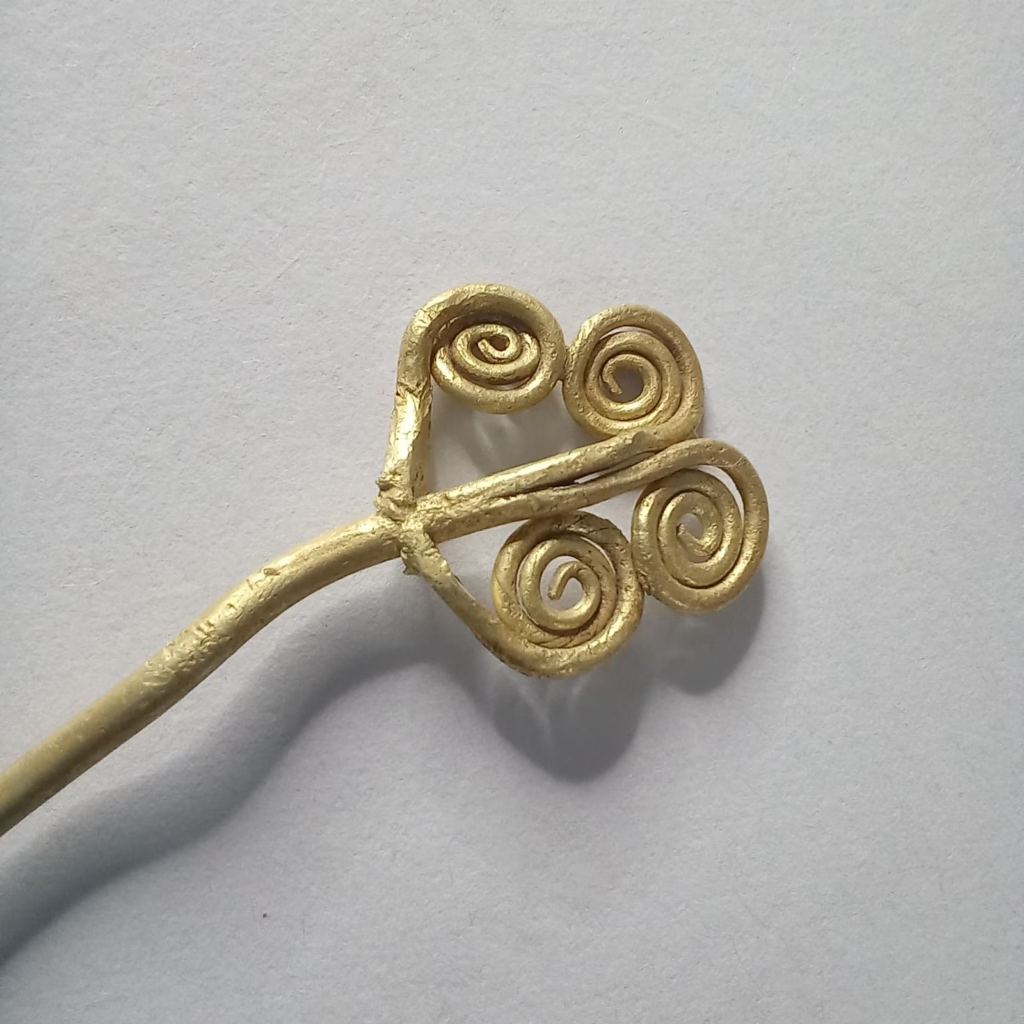
The highlight of the discovery is a ring-shaped brooch made of gold, remarkably intact despite millennia underground. Scholars identify it as one of only three known worldwide and the best-preserved example to date. Far from being a mere accessory, the brooch symbolized power, wealth, and prestige in the Early Bronze Age.
What makes the find even more significant is its stratigraphic context: it was recovered in the layers of Troy II. This evidence firmly establishes the phase around 2500 BCE, ending a decades-long scholarly debate on when Troy entered its flourishing Bronze Age stage.
The Jade Enigma: Exotic Stone in Anatolia
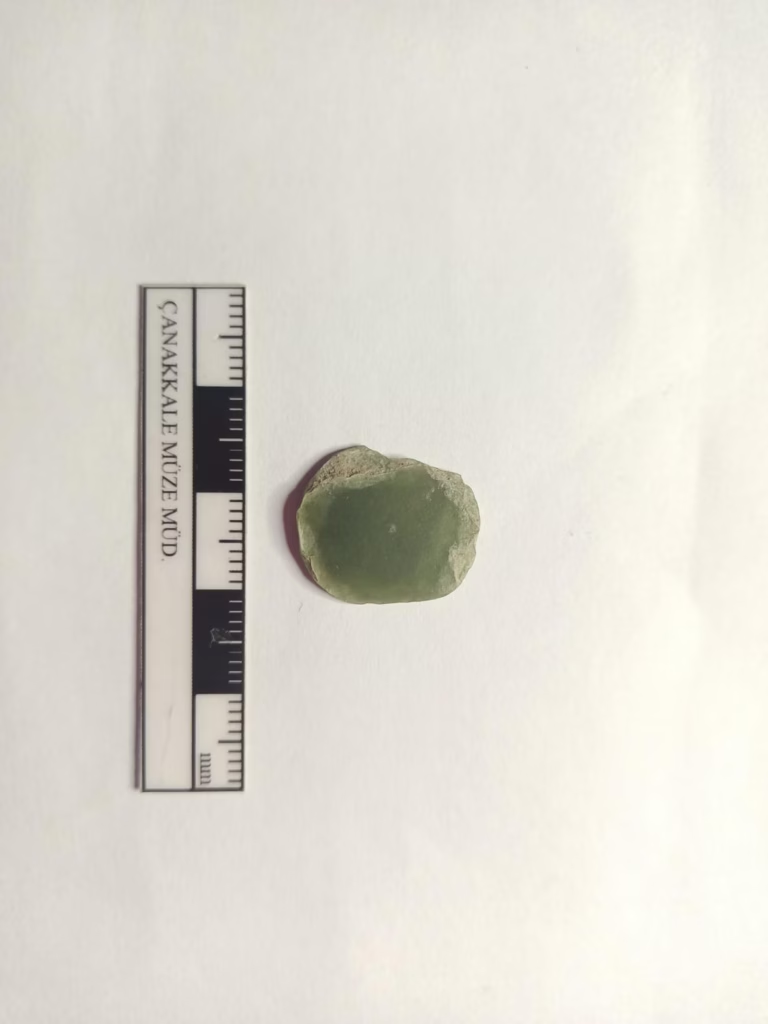
Alongside the brooch, archaeologists unearthed a polished jade stone—an unprecedented discovery for Troy. Jade was not native to Anatolia, which means it must have arrived via long-distance trade. The stone, likely prepared for use in jewelry or ritual objects, underscores Troy’s role as a hub where local culture intersected with luxury networks stretching far beyond the Aegean.
Troy: Between Myth and Archaeology
Excavations at Troy began over 160 years ago, from Heinrich Schliemann’s dramatic digs in the 19th century to today’s scientifically refined methods. Over time, researchers identified nine major settlement layers spanning from 3000 BCE to the Byzantine era. The new finds from Troy II anchor the city’s Bronze Age firmly in global chronology, bridging the gap between Homeric legend and archaeological fact.
From Trenches to Museum Display
Turkey’s Minister of Culture and Tourism, Mehmet Nuri Ersoy, hailed the discovery as “one of the most important archaeological finds of the last century.” In line with cultural policy, the artifacts will soon be exhibited at the Troy Museum in Çanakkale, allowing the public to view these treasures where they were unearthed.
A Landmark for World Heritage
For scholars, the brooch and jade stone redefine Troy’s early history. For visitors, they will become a tangible link to the dawn of urban civilization. And for world heritage, the discovery reinforces Troy’s dual identity—as both a place of epic myth and a cradle of human history.