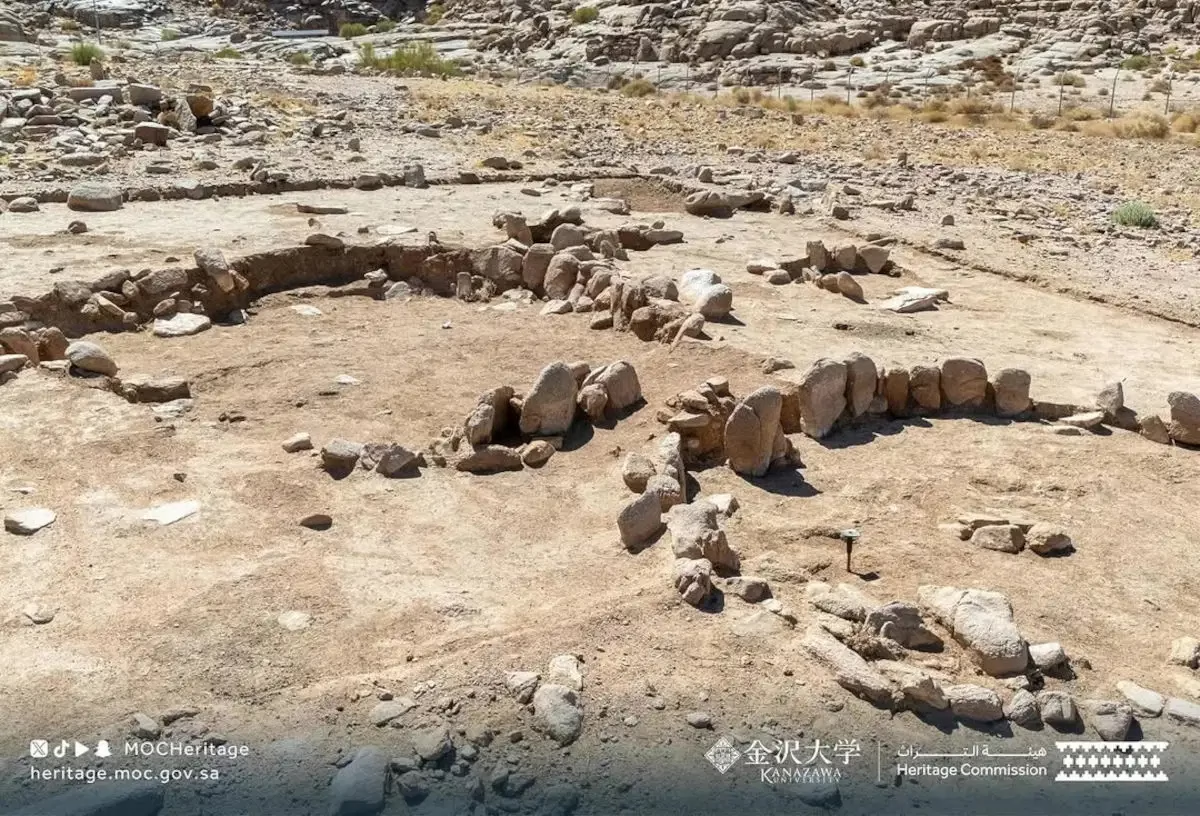
Saudi Arabia has announced the discovery of the Arabian Peninsula’s oldest known human settlement — an 11,000-year-old Neolithic village unearthed in Masyoun, near Tabuk. The groundbreaking find was disclosed by the Saudi Heritage Commission in partnership with scholars from Japan’s Kanazawa University and amplified through the Saudi Press Agency (SPA) and the Commission’s verified Instagram account.
The announcement was delivered by His Highness Prince Bader bin Abdullah bin Farhan Al Saud, Minister of Culture and Chairman of the Heritage Commission, who described the discovery as a milestone for both Saudi archaeology and global prehistory.
The Masyoun Excavation
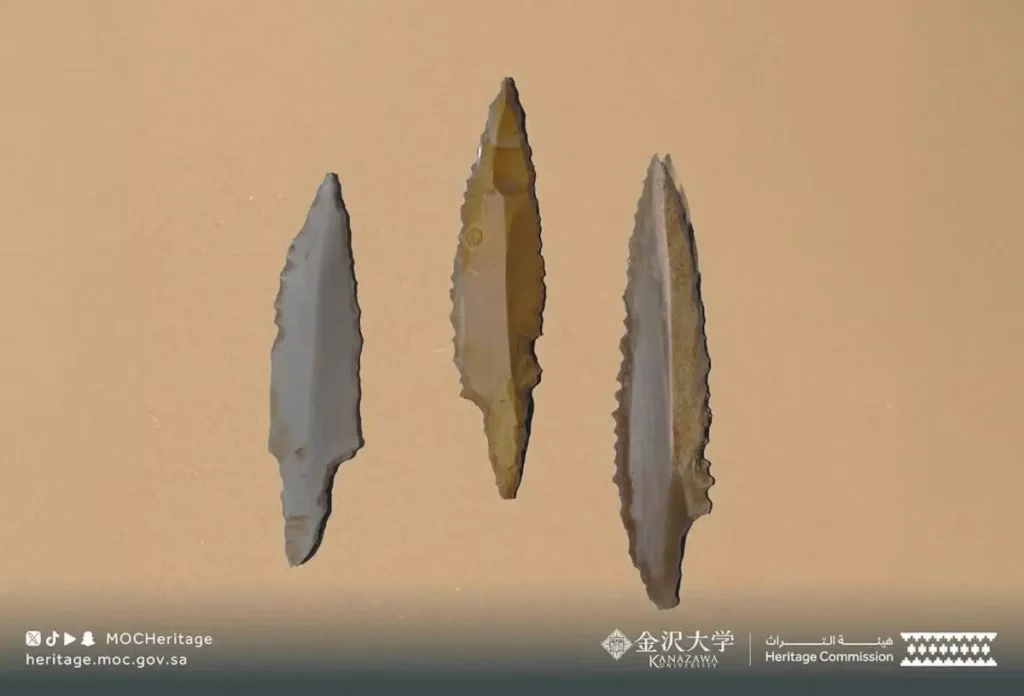
Excavations at Masyoun revealed semi-circular stone dwellings, organized passageways, and hearths — evidence of a permanent community rather than a temporary camp. Storage facilities and food-processing tools, such as grinding stones, point to a society capable of surplus management. Arrowheads, knives, and ornaments made of amazonite, quartz, and seashells further illustrate advanced craftsmanship and long-distance connections, since several raw materials originated beyond the region.
The settlement is located 1,424 meters above sea level on the eastern slopes of Jabal al-Lawz, a mountain range in northwestern Arabia. Archaeologists suggest that abundant water, vegetation, and hunting grounds made this highland an ideal location for early sedentary life.
From 1978 to 2024: A Forgotten Site Revisited
Masyoun was first recorded in Saudi Arabia’s National Antiquities Register in 1978. However, its true importance only emerged after renewed excavations began in December 2022. Over four seasons, concluding in May 2024, experts pieced together the settlement’s layout and established its antiquity as belonging to the Pre-Pottery Neolithic period.
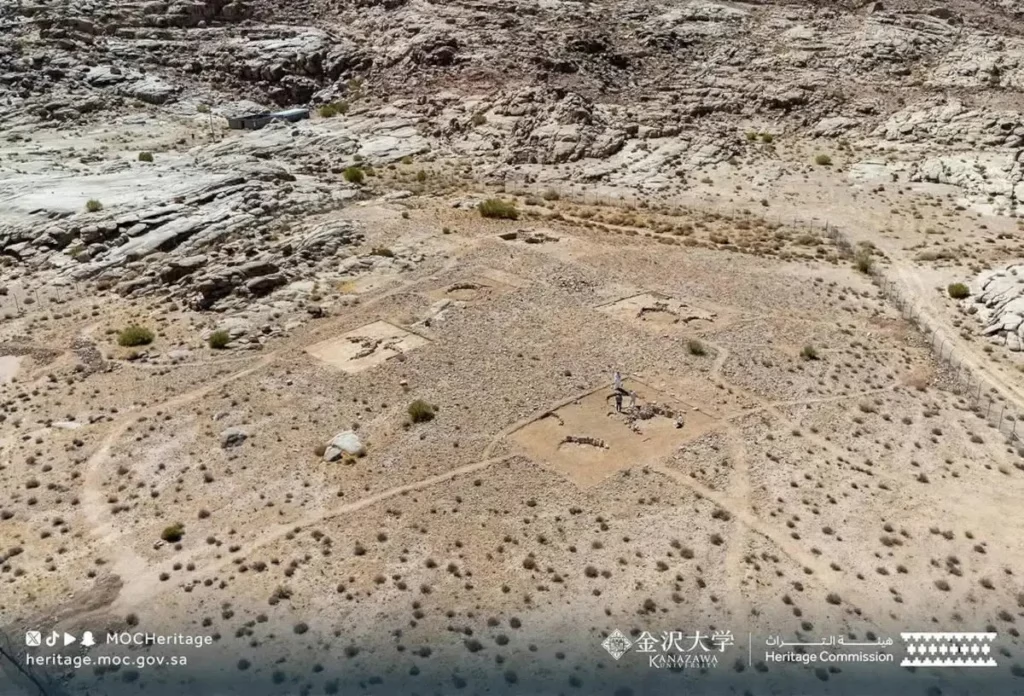
The project is a collaboration between the Saudi Heritage Commission, Kanazawa University, and NEOM, bringing together specialists in prehistoric archaeology, environmental studies, and material sciences. This multidisciplinary approach allowed researchers to reconstruct both the settlement’s social structure and its surrounding ecosystem.
Symbolism and Social Complexity
Beyond architecture and tools, archaeologists documented rock art and inscriptions at Masyoun. These symbolic carvings provide rare insight into the cultural and spiritual world of Arabia’s earliest communities. Together with the settlement’s clear spatial organization — including designated storage areas — the evidence suggests a society that was socially complex and economically stable.
The ornamental finds crafted from non-local materials further imply that Masyoun was part of wider exchange networks stretching across the Levant and perhaps beyond. This challenges older assumptions of Arabia as an isolated desert, positioning it instead as a crossroads of early human innovation and interaction.
Public Engagement Through Instagram
The Heritage Commission paired its SPA press release with a coordinated announcement on Instagram (@heritage_moc). Images of the excavation site and artifacts were shared under the tagline: “the earliest architectural settlement in the Arabian Peninsula.”
By embracing social media alongside official state channels, Saudi Arabia aims to reach global audiences and highlight its archaeological achievements as part of the Vision 2030 agenda, which includes cultural heritage at its core.
Arabia’s Prehistoric Narrative Rewritten
The discovery at Masyoun adds to a growing body of evidence that Arabia was home to complex prehistoric societies. Other recent finds, such as Umm Jirsan cave near Medina, have revealed human activity from 7,000 to 10,000 years ago. Together, these sites demonstrate that Neolithic communities across Arabia developed sophisticated adaptations to varied landscapes, from volcanic caves to high mountain slopes.
According to the Heritage Commission, the Masyoun discovery not only redefines the prehistory of the Arabian Peninsula but also places the region at the heart of global Neolithic studies. Far from being an “empty quarter,” Arabia is now recognized as a vibrant center of human innovation more than eleven millennia ago.
Cover Image Credit: Masyoun site, near Tabuk in Saudi Arabia, identified as the oldest human settlement in the Arabian Peninsula—photo via Minister of Culture Bader bin Farhan Al Saud on Instagram.