
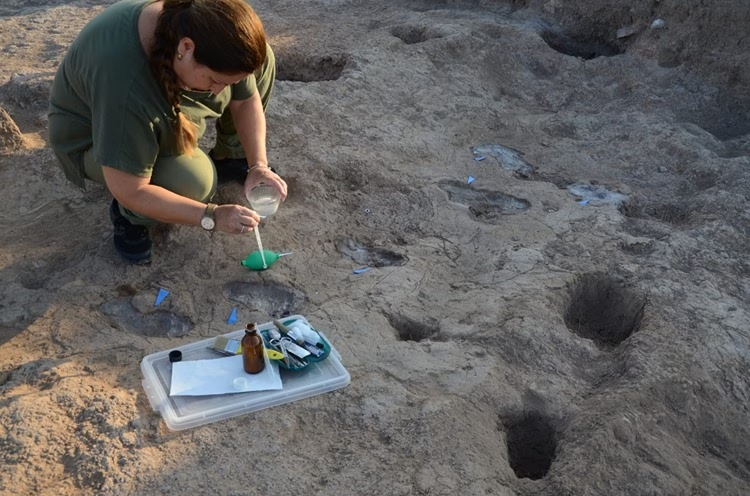
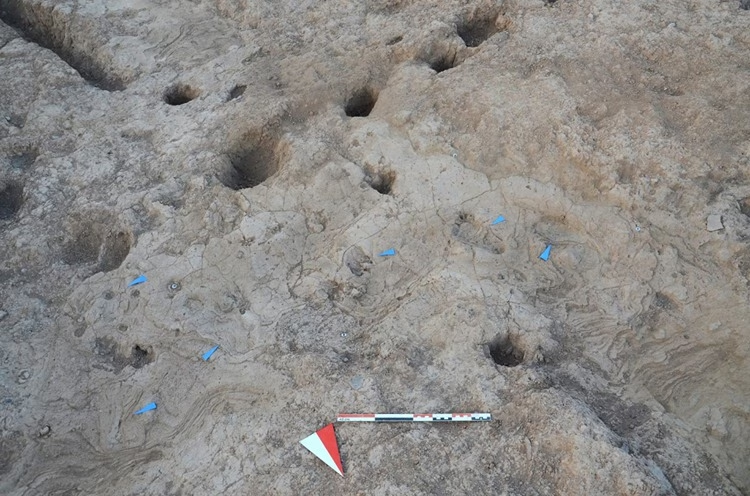
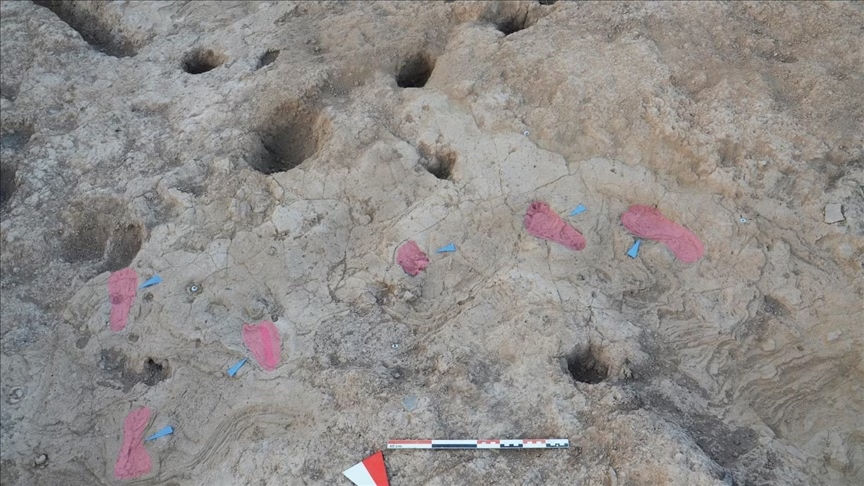
Turkish archaeologists working at Tell Kurdu Höyük in Hatay province have uncovered a discovery rarely seen in Anatolia: five human footprints dating back 7,000 years to the Ubaid period.
The prints were found on August 21, 2025, in trench 8564. Experts determined that they belonged to individuals walking on rain-soaked mud, which allowed the impressions to be preserved over millennia. The find is considered one of the most unusual forms of evidence in archaeology, offering a rare glimpse into daily life rather than material culture.
Tell Kurdu: A Key Link Between Anatolia and Mesopotamia
Located in the Amuq Plain, Tell Kurdu is regarded as a critical site for understanding the interaction between northern Mesopotamia and Anatolia. Excavations reveal layers connected to the Ubaid Culture, which spread northward from southern Mesopotamia between 6500 and 3800 BCE.
The Ubaid period is associated with innovations such as mudbrick architecture, painted ceramics, and emerging social hierarchies, all of which reshaped early communities. Discoveries at Tell Kurdu provide direct evidence of this cultural flow and highlight how it blended with local Anatolian traditions.
A Rare Glimpse of Ancient Steps
Human footprints are exceptionally rare in archaeology, as they require unique environmental conditions to survive. Unlike tools or pottery, they represent direct traces of individuals, frozen moments of life from thousands of years ago.
The 7,000-year-old prints from Tell Kurdu stand as a tangible reminder that the people of the Ubaid world once walked across these lands, leaving behind a testimony more personal than any artifact.
Preserving the Past for the Future
The excavation is part of Türkiye’s “Heritage for the Future” program, which aims to accelerate archaeological work and protect cultural heritage. Authorities emphasized that discoveries like Tell Kurdu not only enrich academic research but also strengthen global awareness of Anatolia’s role in early human history.