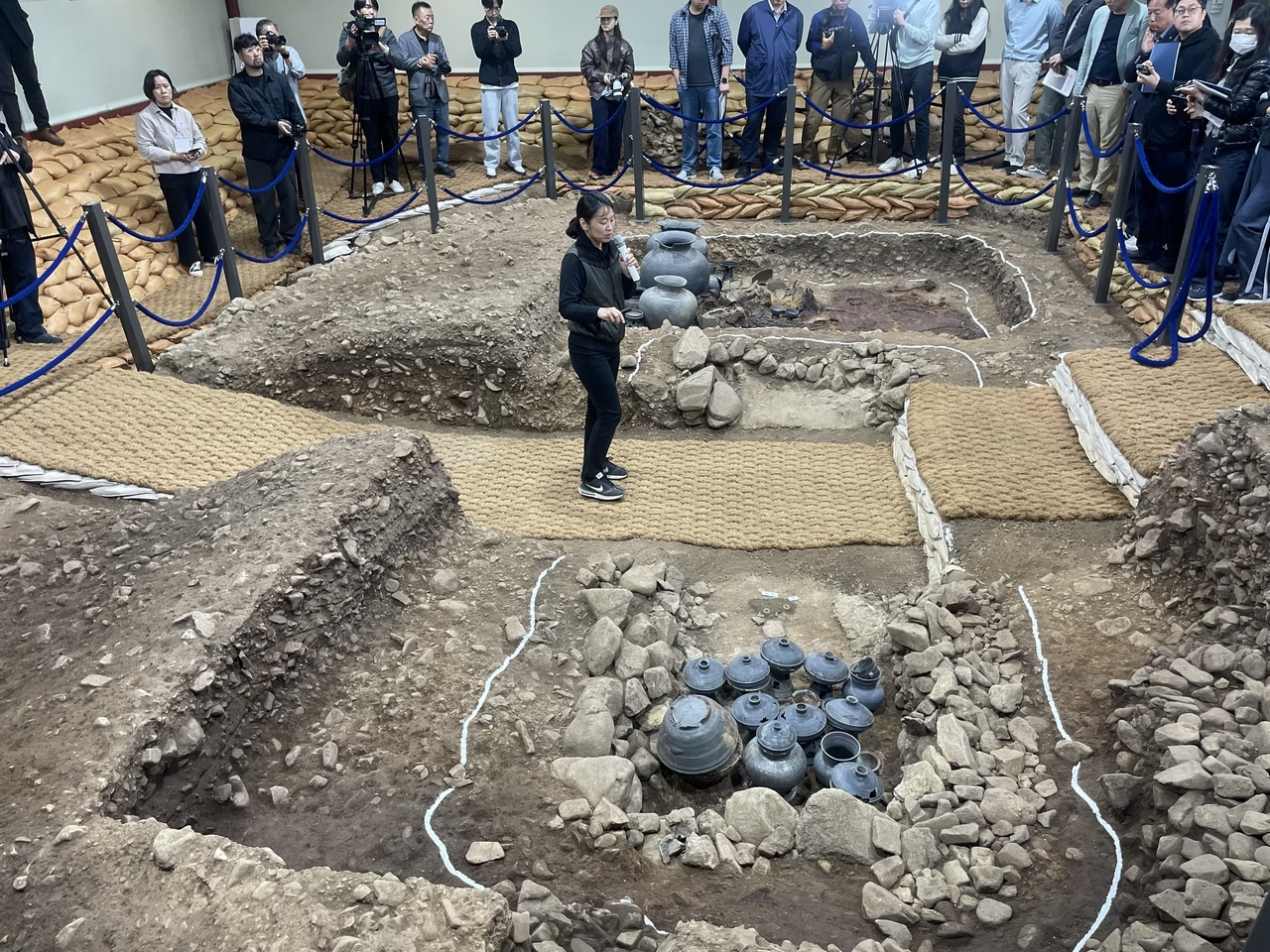
Archaeologists in Gyeongju have uncovered the 1,600-year-old tomb of a Silla military commander — complete with his gilt-bronze crown, body armor, and horse gear — in a discovery hailed as a landmark in early Korean archaeology. The remains, found beneath a royal burial mound in Hwangnam-dong, offer the clearest look yet at the martial elite who built one of East Asia’s most powerful ancient kingdoms.
The excavation, carried out by the Korea Heritage Service (KHS) in collaboration with the City of Gyeongju, revealed an earlier outer coffin tomb beneath the Hwangnam-dong No. 120 mound — a large wooden chamber tomb sealed with layers of stone and earth. Inside, archaeologists found the skeletal remains of a male commander buried with an ornate long sword, signifying his elite rank.
“This is a rare opportunity to see a complete armor set for both man and horse,” said KHS Administrator Huh Min during Monday’s press briefing. “Even the commander’s teeth survived — a vivid reminder of the human story behind the legend.”
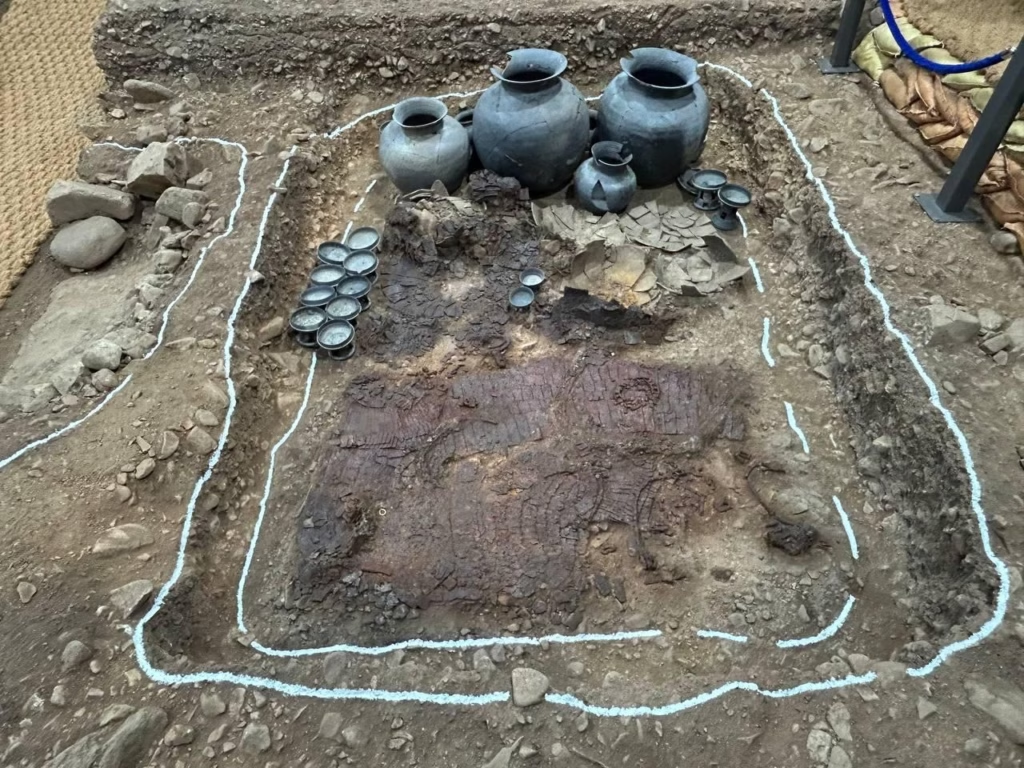
The commander’s tomb dates to the 4th–5th centuries AD, during Silla’s rapid consolidation of the Korean Peninsula. The burial complex includes an adjacent chamber containing another skeleton, believed to belong to a chamberlain or attendant sacrificed to accompany his master — a practice rarely evidenced so clearly in Silla archaeology.
A remarkable highlight of the find is a section of horse armor, only the second known example from the Silla period. Together with the human armor and weapons, it illuminates how the Silla military adopted and refined heavy cavalry tactics that would later define its battlefield supremacy.
According to Lee Min-hyung of the Silla Cultural Heritage Research Institute, the commander was around 30 years old, based on dental wear analysis. Faint traces above the saddle also suggest the possible outline of a horseman figure, preserved only in fragments.
The armor design combines leather and metal plates, differing from the previously known 2009 set. Researchers suggest that this hybrid construction balanced mobility and prestige, marking its owner as one of the kingdom’s top military leaders.
“This is only the second confirmed Silla armor set ever found,” noted one researcher. “Its craftsmanship shows that functionality and symbolism went hand in hand.”
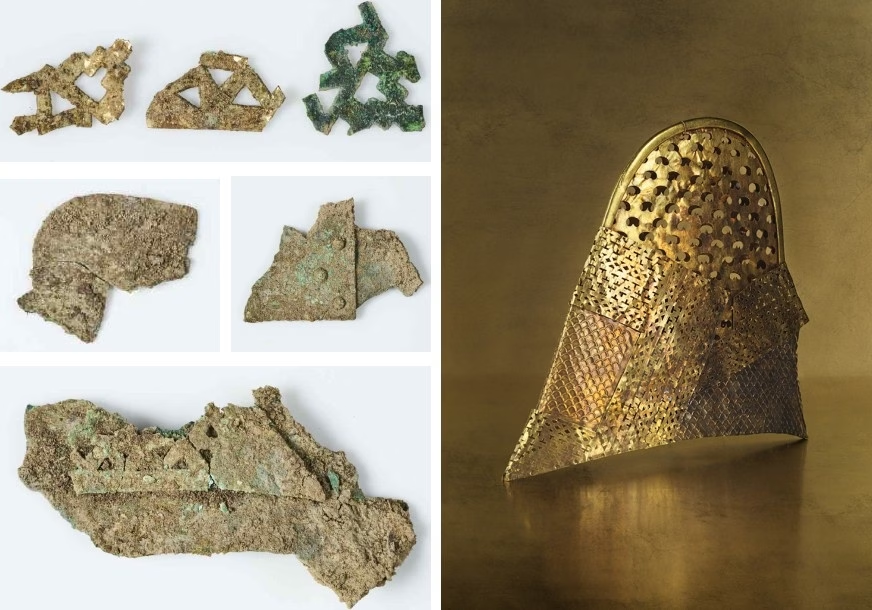
Equally striking are the fragments of a gilt-bronze crown, possibly the oldest yet identified from the Silla era. Its decorative motifs echo those of Goguryeo, a northern Korean kingdom (37 BC–AD 668), pointing to cultural exchange or influence between the two powers.
“When we excavated the Hwangnamdaechong tomb, we found Goguryeo-style earrings in the queen’s burial,” said Kim Hun-suk of the Gyeongju National Research Institute of Cultural Heritage. “This crown continues that story of interaction and artistic dialogue.”
The discovery not only expands the known repertoire of Silla royal regalia, but also marks a pivotal moment in the transition from wooden coffins to stone-covered chamber tombs — a key development in the formation of the kingdom’s elite funerary architecture.
Timed with the 2025 APEC Summit, the burial mound and its artifacts will be open to the public from October 27 to November 1, allowing visitors to witness one of Korea’s most important archaeological revelations in decades.
Cover Image: Lee Min-hyung, a researcher at the Silla Cultural Heritage Research Institute, explains the artifacts unearthed from the No. 1 outer coffin tomb at the Hwangnam-dong No. 120 site during Monday’s field briefing. (Photo by Hong Yoo / The Korea Herald)