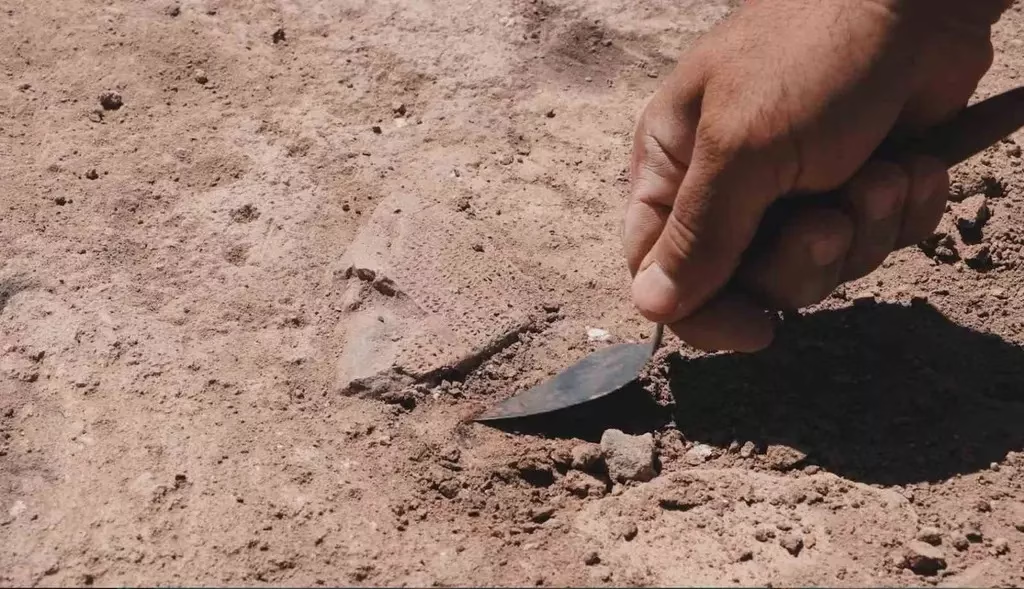
Archaeologists excavating Oylum Mound, a major mound site on Türkiye’s southern frontier near the Syrian border, have uncovered a remarkable new archive from the Late Bronze Age — four cuneiform tablets and five seal impressions dating back more than 3,300 years. The discovery confirms that Oylum Mound served as a provincial administrative hub under the Hittite Empire during the 14th–13th centuries B.C.
The ongoing excavations are directed by Professor Atilla Engin of Gaziantep University, under the “Geleceğe Miras” (Future to Heritage) Project supported by the Ministry of Culture and Tourism of Türkiye and the Kilis Governorship. According to Engin, the 2025 season “has yielded some of the most significant finds ever made at Oylum Mound.”
Tablets in Two Languages, Two Worlds
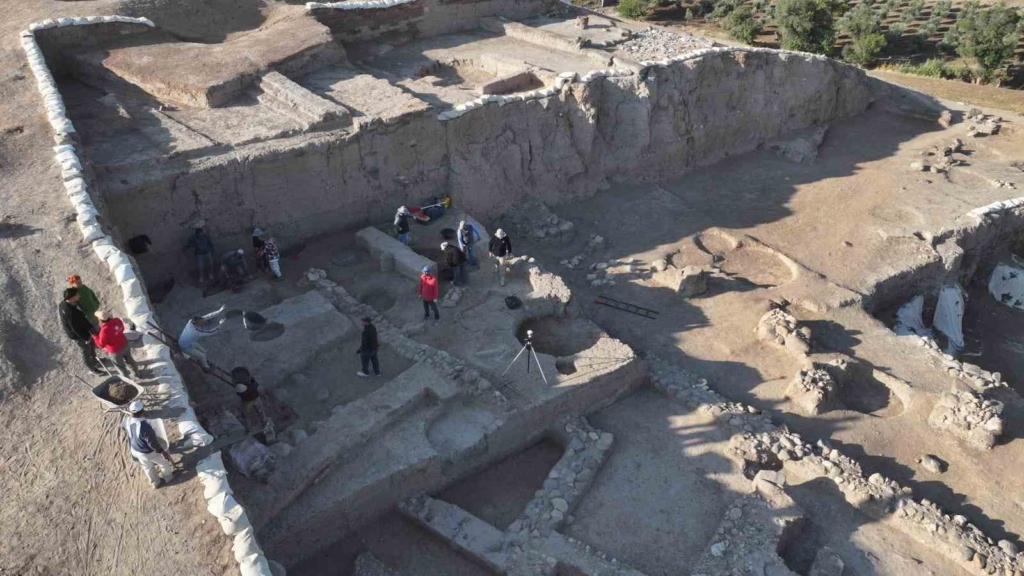
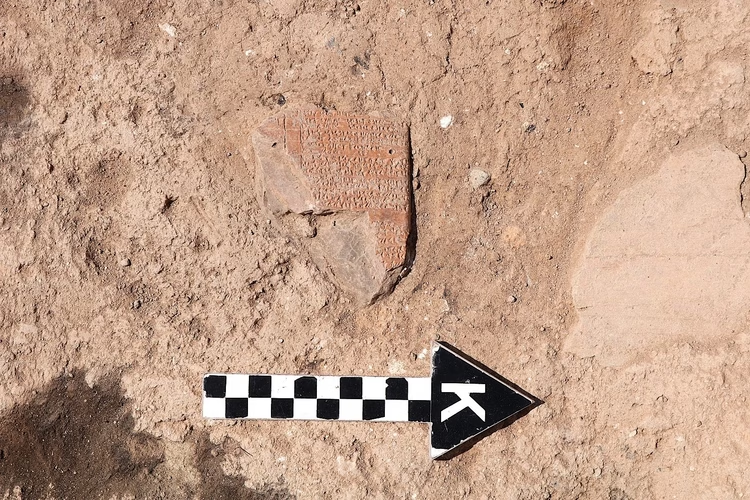
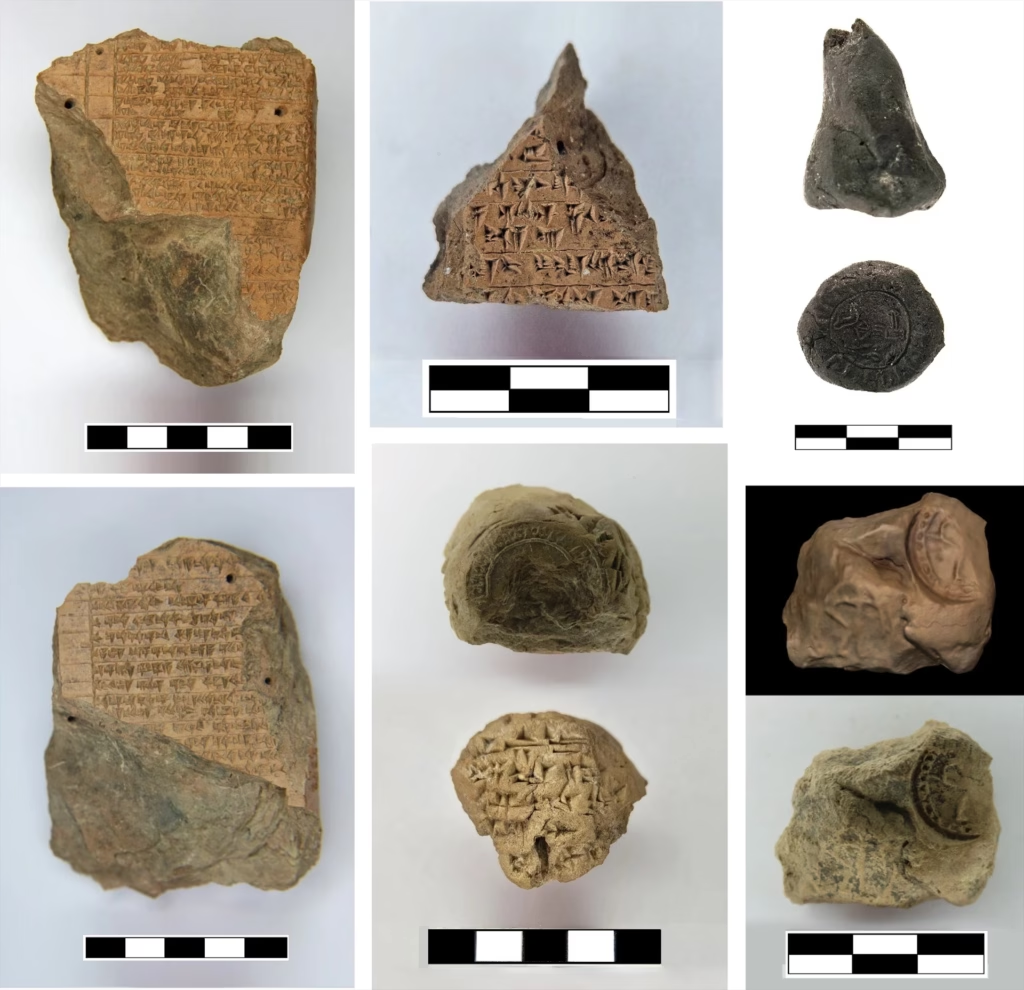
The newly unearthed documents include two tablets in Hittite and two in Akkadian, the diplomatic lingua franca of the ancient Near East. Their discovery beneath Iron Age layers led archaeologists to an earlier monumental building with a central courtyard — a structure interpreted as the residence or office of a Hittite governor.
Philological examination by Hittitologist Assoc. Prof. Metin Alparslan revealed that the Hittite texts contain literary compositions, while the Akkadian ones record economic and construction activities. Together, they illuminate the administrative and intellectual life of the empire’s southern provinces.
“These documents bring us face to face with the bureaucratic mechanisms that once operated along the empire’s frontier,” said Prof. Engin. “The scale of the architecture and the quality of the sealings point to a high-ranking official in direct contact with the royal court.”
Traces of Fire — and Preservation Through Destruction
Evidence of intense burning suggests that the complex was destroyed in a sudden fire — a catastrophe that inadvertently preserved the archive for over three millennia.
Among the charred debris, archaeologists also found five conical clay sealings, likely used to secure goods, correspondence, or storage jars.
Previous seasons at Oylum Mound had already produced royal seal impressions and a single Hittite tablet, hinting at the site’s strategic role. The 2025 discoveries confirm that the mound was far more than a trade post: it was a key node in the Hittite imperial network, linking central Anatolia with the city-states of northern Syria.
Looking Ahead: The Promise of a Larger Archive
Prof. Engin believes further excavations will expose the rest of the monumental complex and perhaps additional documents.
“We may be standing on one of the largest Late Bronze Age administrative buildings in southeastern Anatolia,” he noted. “Every tablet helps us reconstruct how the Hittite state functioned in its most dynamic borderlands.”