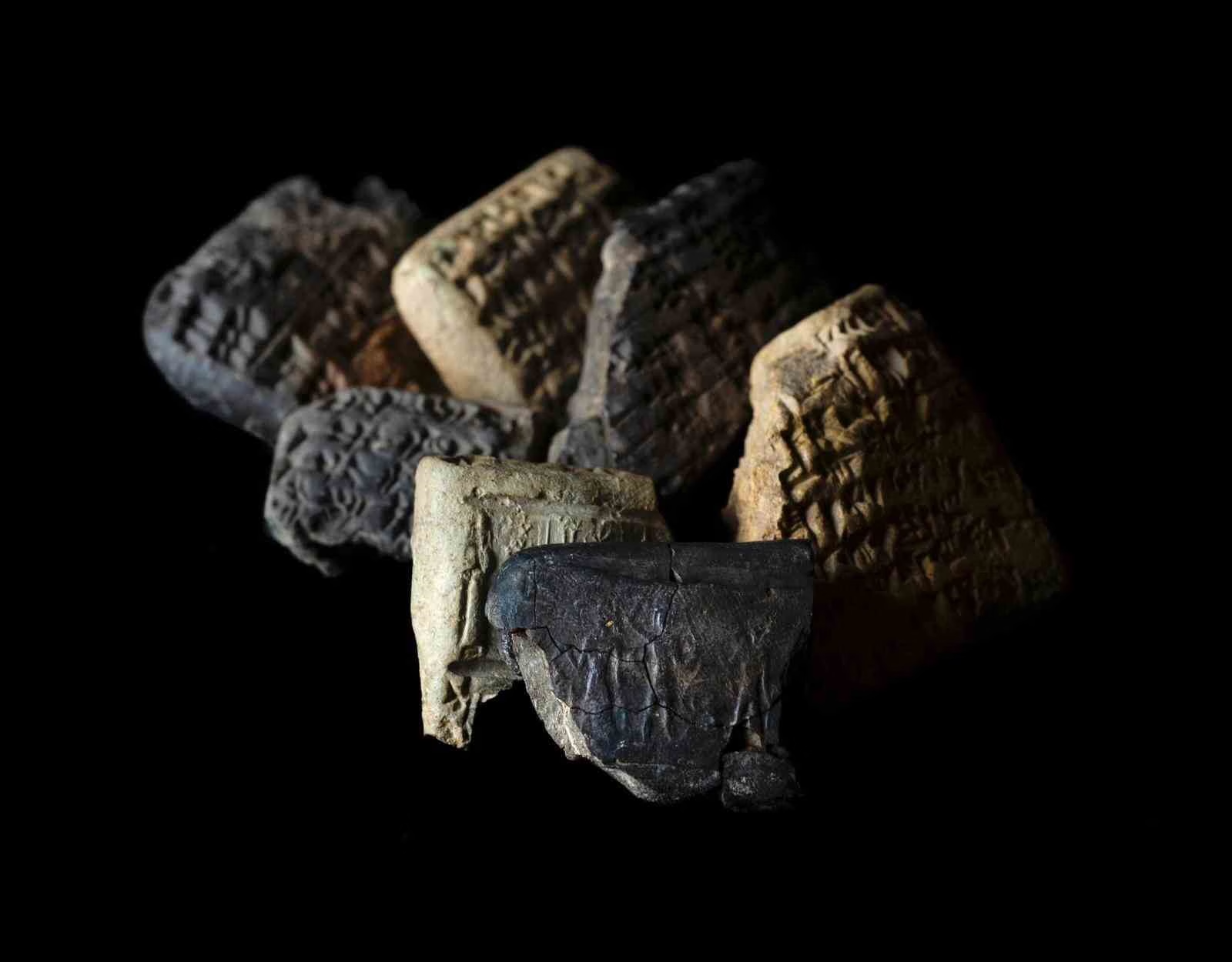
Archaeologists excavating the Alalakh Mound (Aççana Höyük) in Hatay, southern Türkiye, have uncovered a 3,500-year-old state archive written in Akkadian, the diplomatic language of the Late Bronze Age, along with seal impressions belonging to a previously unknown Hittite prince.
The find reveals how two of the Near East’s most powerful kingdoms — the Mitanni Empire and the Hittite Kingdom — intersected in administration, culture, and belief.
Unearthing the Mitanni Bureaucracy
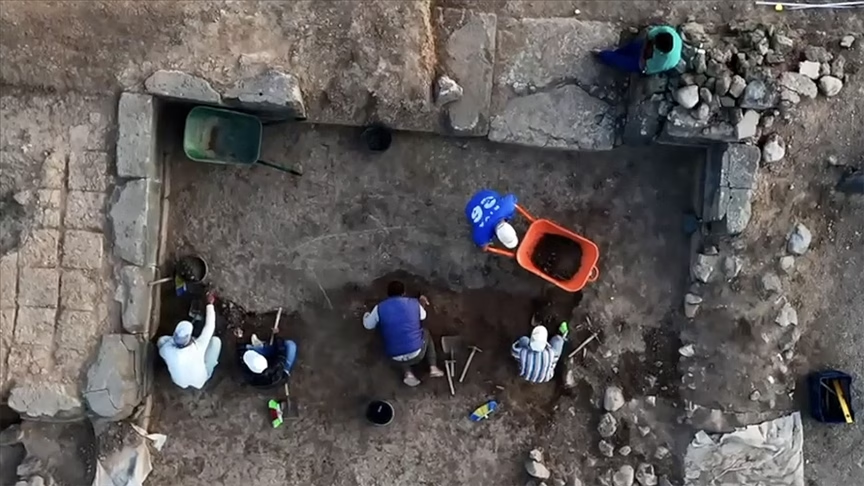
The discovery was made under the Heritage for the Future Project (Geleceğe Miras Projesi), directed by Prof. Dr. Murat Akar from Hatay Mustafa Kemal University.
Archaeologists found dozens of Akkadian cuneiform tablets preserved within a massive destruction layer near the palace complex of the Idrimi Dynasty, rulers of Alalakh during the Mitanni period (ca. 1500–1400 BCE).
These clay tablets record lists of furniture orders, personnel rosters, and commodity distributions, shedding light on the daily mechanisms of Mitanni state administration.
Each entry reflects an empire where scribes tracked every aspect of palace life — from supplies and workforce to ritual allocations — in meticulous detail.
“What we’re seeing is a real bureaucracy in motion,” said excavation director Murat Akar.
“These tablets speak not only of trade or taxation but of the rhythms of an empire’s day-to-day governance.”
A Forgotten Hittite Prince Revealed
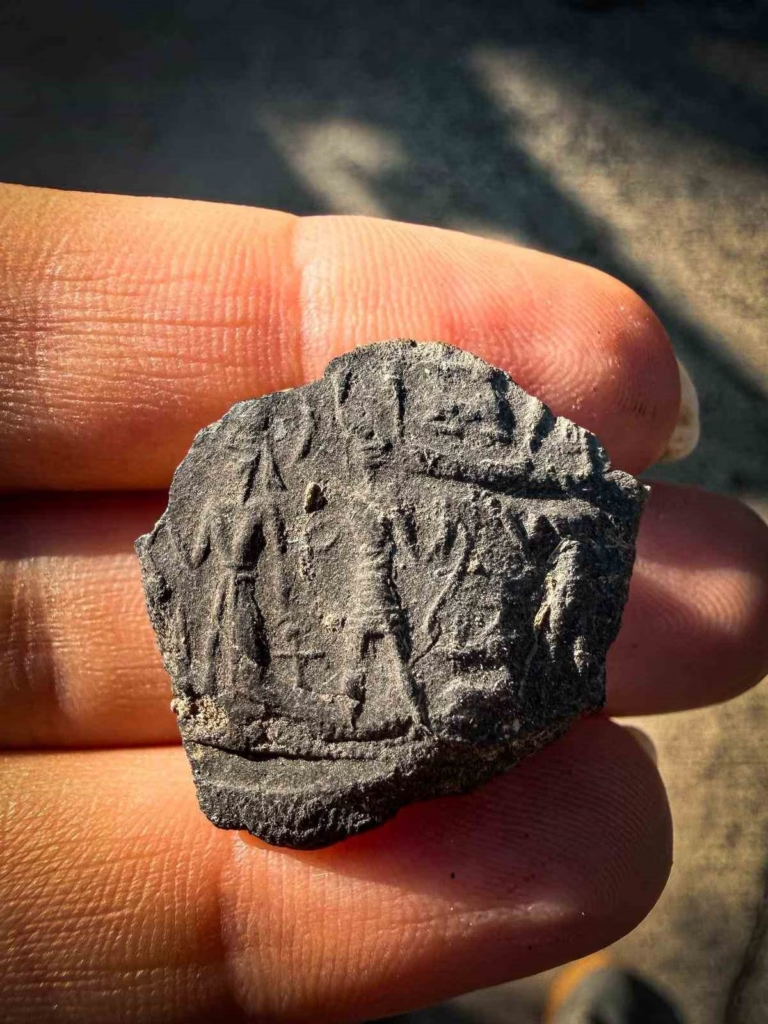
In upper layers dating to the later Hittite occupation of Alalakh, the team uncovered cylinder seal impressions — small yet powerful images pressed into clay to authenticate documents.
Among them, one sealing bears the name of an unknown Hittite prince, a figure absent from all known royal records.
Other seals display striking imagery: the Storm God in combat with winged creatures, a vivid symbol of divine kingship and the eternal struggle between order and chaos.
These motifs, carved in miniature detail, offer a glimpse into how the Hittites used art to project ideology and cosmic legitimacy.
Alalakh: The Crossroads of Empires
Positioned between Anatolia and Mesopotamia, Alalakh was a thriving crossroads of diplomacy and trade during the Late Bronze Age.
Its layered ruins reflect the shifting powers of the Mitanni, Hittite, and later Neo-Hittite worlds — empires that shaped the politics and religion of ancient Western Asia.
The newly discovered archive not only expands knowledge of Mitanni administrative practice but also underscores Alalakh’s enduring role as a political and cultural bridge between civilizations.
“Each seal and tablet offers a dialogue between empires,” Akar noted.
“Through them, we are listening to the bureaucracy, theology, and ambition of the ancient Near East.”
Cover Image: Akkadian cuneiform tablets and seal impressions discovered at Alalakh Mound in Hatay reveal a 3,500-year-old Mitanni archive and the seal of a Hittite prince, highlighting Bronze Age statecraft in Anatolia. Credit: Ministry of Culture and Tourism of Türkiye