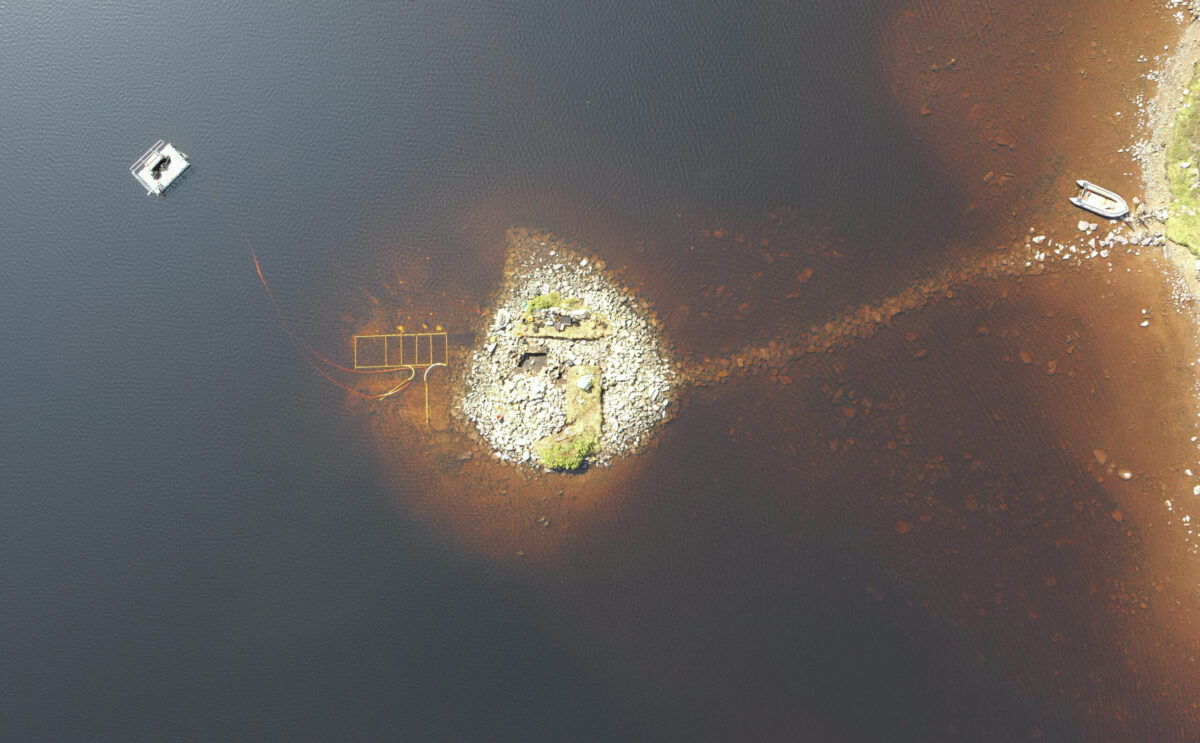
Loch Bhorgastail crannog, a prehistoric artificial island in Scotland’s Outer Hebrides, has revealed the remains of a hidden timber island platform more than 5,000 years old, pushing the story of these mysterious loch-built structures far deeper into the Neolithic past.
Today, the site appears as a small stone island rising from a loch on the Isle of Lewis. But new excavation and digital recording by archaeologists from the University of Southampton, working with the University of Reading, show that the visible stone structure rests above a much older core of timber, brushwood, and organic layers.
The discovery strengthens a growing archaeological picture: some Scottish crannogs were not Iron Age or medieval creations, as once widely assumed. They began as ambitious Neolithic constructions, built by early farming communities around 3500 to 3300 BC.
A stone island with a hidden timber heart
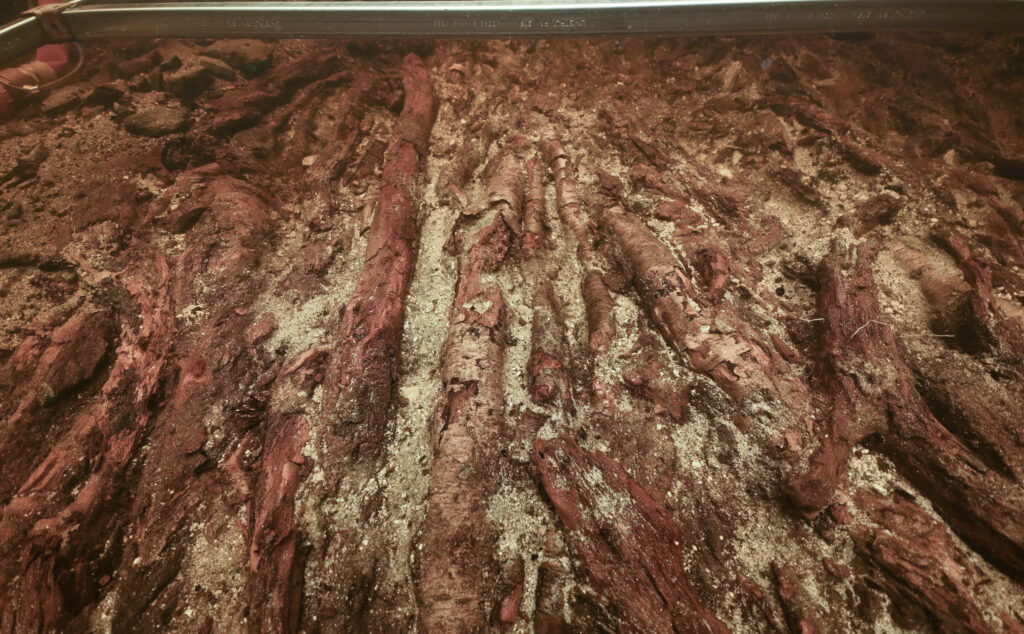
Beneath the later stone cap, archaeologists identified a coherent wooden platform about 23 meters across. This was not a random dump of material in shallow water. It was a planned structure, built with timber and brushwood, then modified over centuries.
Radiocarbon evidence places the earliest phase of Loch Bhorgastail in the Neolithic, making it older than the famous stone circle phase of Stonehenge. At the time, communities across Britain and Ireland were building tombs, ceremonial landscapes, and large communal monuments. Loch Bhorgastail now shows that artificial island-building also belonged to that world.
The crannog continued to attract attention long after its first construction. A later brushwood and stone phase was added during the Middle Bronze Age, while further activity took place in the Iron Age. For generations, people returned to the same small island and reshaped it.
Pottery in the water points to gatherings and ritual
A submerged stone causeway connects the crannog to the shore, showing that access was carefully arranged. The island stood apart from everyday life on land, but it was never fully unreachable.
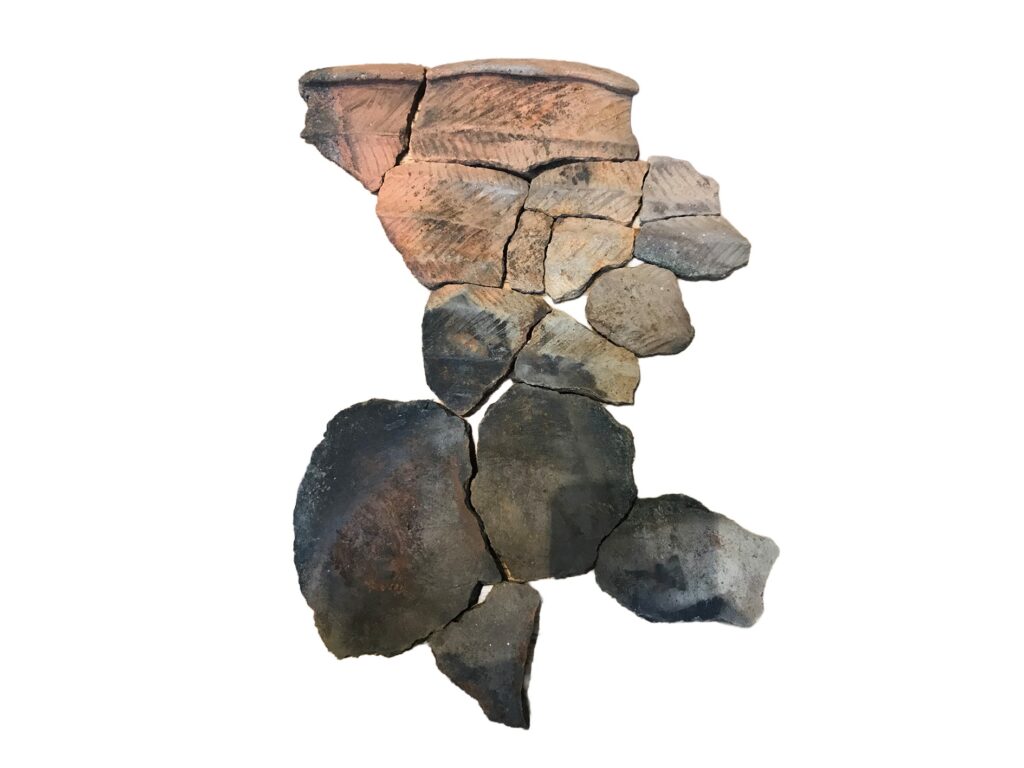
The loch bed around the island has produced hundreds of fragments of Neolithic pottery, including pieces of bowls and jars. Some were found in unusually good condition. Similar finds from other Outer Hebridean crannogs show signs of use before entering the water, including soot and food residues.
That pattern suggests the vessels were not simply lost by accident. They may have been deliberately placed or thrown into the loch after use, possibly during communal meals, gatherings, or ritualized acts.
This makes Loch Bhorgastail more than a domestic platform. Its construction required labour, planning, and technical skill. Its pottery points to food, social activity, and symbolic behaviour. The crannog may have been a place where everyday practice and ceremony met.
New technology reveals the full island
The new study also stands out for the way the site was recorded. Shallow water is difficult terrain for archaeologists. Land survey often ends at the shoreline, while marine methods work better in deeper water.
To solve this, the team used a portable stereophotogrammetry system. Two waterproof cameras captured overlapping underwater images, which were combined with drone and land-based survey data. This allowed researchers to record the exposed island, submerged causeway, and underwater structural remains as one connected site.
The method is described in the paper “At the Water’s Edge: Photogrammetry in Extreme Shallow-Water Environments,” published in Advances in Archaeological Practice. It offers a practical way to document other shallow-water archaeological sites that are often difficult to study.
Scotland’s artificial islands are older than once believed
The wider story began to shift in 2012, when Lewis resident and former Royal Navy diver Chris Murray found remarkably preserved Neolithic pottery near artificial islets in the Outer Hebrides. Later work by Murray, Mark Elliott of Museum nan Eilean, and academic researchers helped show that several crannogs in the region had Neolithic origins.
Loch Bhorgastail now offers one of the clearest examples of that early tradition. Beneath a quiet stone island lies a timber-built platform from more than 5,000 years ago, preserved in waterlogged conditions and surrounded by broken pottery from prehistoric gatherings.
What once looked like a later stone crannog has become something far more revealing: evidence that Neolithic communities in Scotland were not only building houses, tombs, and monuments. They were building islands.
Blankshein S, Pedrotti F, Sturt F, Garrow D. At the Water’s Edge: Photogrammetry in Extreme Shallow-Water Environments. Advances in Archaeological Practice. Published online 2026:1-16. doi:10.1017/aap.2025.10145