
A vast archaeological investigation in southern Russia has revealed an unexpectedly dense landscape of human activity stretching back more than 6,000 years—uncovering ritual spaces, early settlements, metal workshops, and hundreds of burials that reshape what we know about the North Caucasus.
Conducted ahead of the construction of the Novogrozny–Serzhen-Yurt gas pipeline, the excavation—led by the Institute of Archaeology of the Russian Academy of Sciences—has become one of the most extensive archaeological projects ever carried out in the Chechen Republic. Across more than 10,000 square meters, researchers identified 11 previously unknown cultural heritage sites, spanning from the 4th millennium BCE to the late Middle Ages.
But beyond the scale, it is the continuity of life across millennia that stands out.
A Ritual Landscape from the Chalcolithic Period
The oldest traces come from the site known as Tialling-2, near the modern settlement of Kurchaloy. Here, archaeologists identified layers dating to the early 4th millennium BCE, placing the settlement firmly in the late Chalcolithic—or Copper Age.
This period marks a turning point in human history, when stone tools still dominated daily life, yet early metalworking had begun to emerge. Communities were shifting away from hunting and gathering toward animal husbandry and agriculture, reshaping both economy and belief systems.
At Tialling-2, those beliefs appear to have been deeply embedded in the landscape.
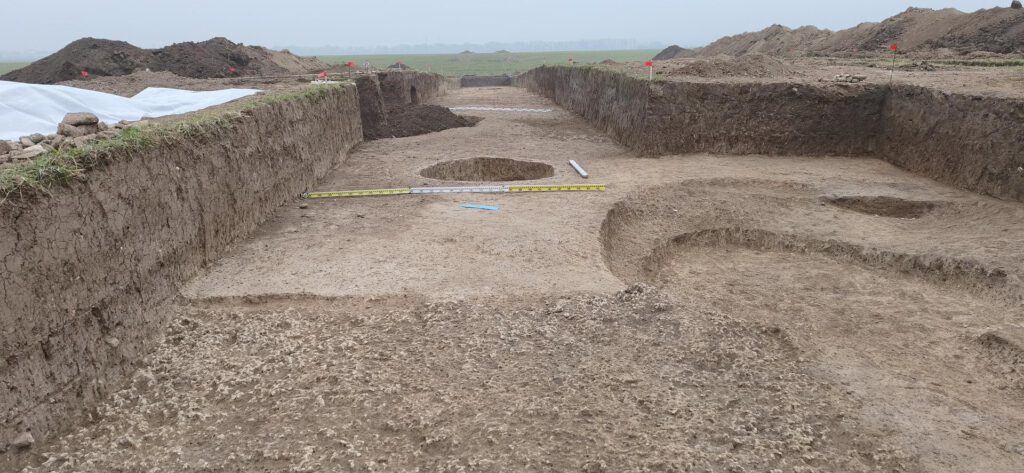
Excavations revealed not only domestic structures and storage pits, but also nine features interpreted as ritual spaces. These included clay-plastered platforms, hearths, and what researchers describe as altars. Some areas contained fragments of ceramic vessels alongside cattle bones—suggesting feasting or funerary ceremonies tied to livestock.
Three burials were also uncovered within the settlement area, reinforcing the idea that daily life and ritual practice were closely intertwined.

The material culture is equally telling. Archaeologists recovered ceramics, bone and stone tools, and a striking collection of symbolic objects: anthropomorphic and zoomorphic clay figurines, along with carnelian beads and bone ornaments. These items point to a community with both practical and symbolic sophistication.
Importantly, Tialling-2 represents the easternmost known site of the Agubekov cultural horizon, extending the geographic reach of this Chalcolithic tradition across the Terek River basin.
Bronze Age Industry Hidden Beneath a Landslide
Further south, near the village of Mayrtup, a very different kind of discovery emerged at the site of Iskrinskoye-1.
Initially believed to be a medieval settlement—due to traces linked to the Golden Horde—excavations revealed something far older beneath a landslide layer: a Bronze Age industrial settlement dating to the late 3rd millennium BCE.
What makes this site exceptional is the direct evidence of metal production.
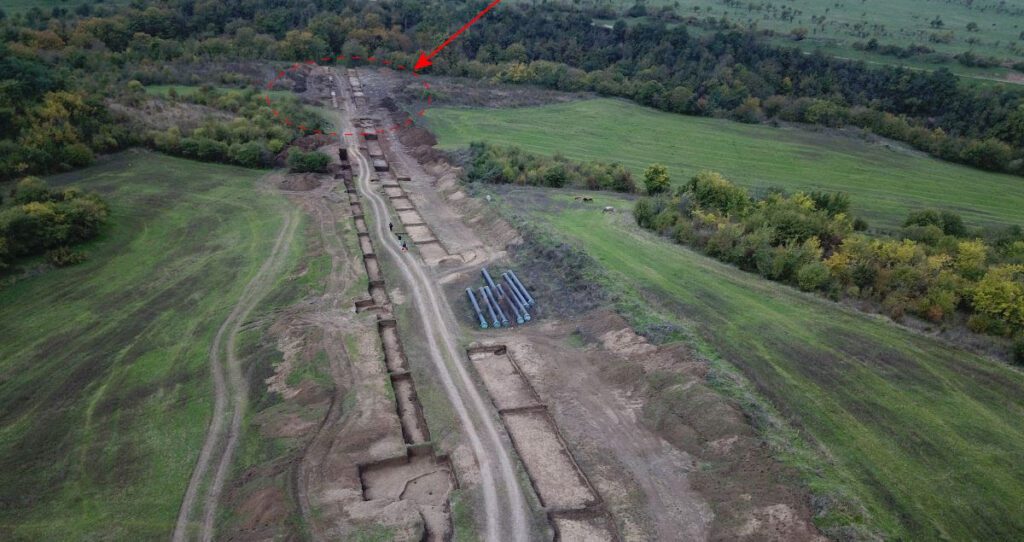
Archaeologists uncovered the remains of seven large structures and a casting workshop, complete with furnace traces, clay nozzles, molds, and crucibles. Scattered across the site were oxidized copper droplets—the byproducts of smelting—providing rare, tangible evidence of metallurgical activity.
Even more intriguing is how closely production and domestic life were connected.
In the largest building, researchers found two different types of furnaces alongside several tandoor-style ovens, suggesting that metalworking was not isolated but integrated into everyday life. Tools, production debris, and domestic artifacts appeared side by side.
Nearby, an auxiliary structure—likely linked to the workshop—adds further weight to the interpretation of a complex, organized production zone.
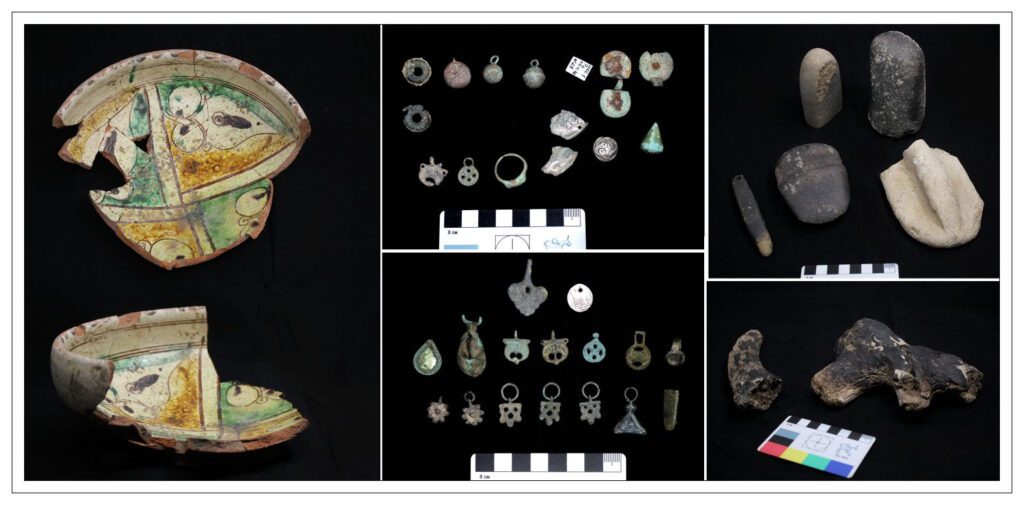
The site also preserves a dramatic moment in time. Collapsed, heat-fused clay walls and roofing debris indicate that the settlement was likely destroyed by a large-scale fire. Under these layers, everyday objects—floors, ovens, and vessels—remained frozen in place, offering a rare snapshot of life interrupted.
For archaeologists, this is particularly valuable. Settlements from this period are far less understood than burial sites, meaning Iskrinskoye-1 provides critical new data on daily life and early industry in the North Caucasus.
Hundreds of Burials Reveal Social Structure and Identity
Another key site, Khumyk-2, shifts the focus to the early Iron Age.
Dating between the 10th and 8th centuries BCE, this cemetery belongs to the early phase of the Eastern Koban culture. So far, archaeologists have examined 160 burials, though the full necropolis may contain as many as 2,000 graves.
The burials are arranged in orderly rows, spaced roughly two to two-and-a-half meters apart. Some graves were lined or covered with stone, hinting at formalized funerary practices.
The grave goods reveal striking social distinctions.
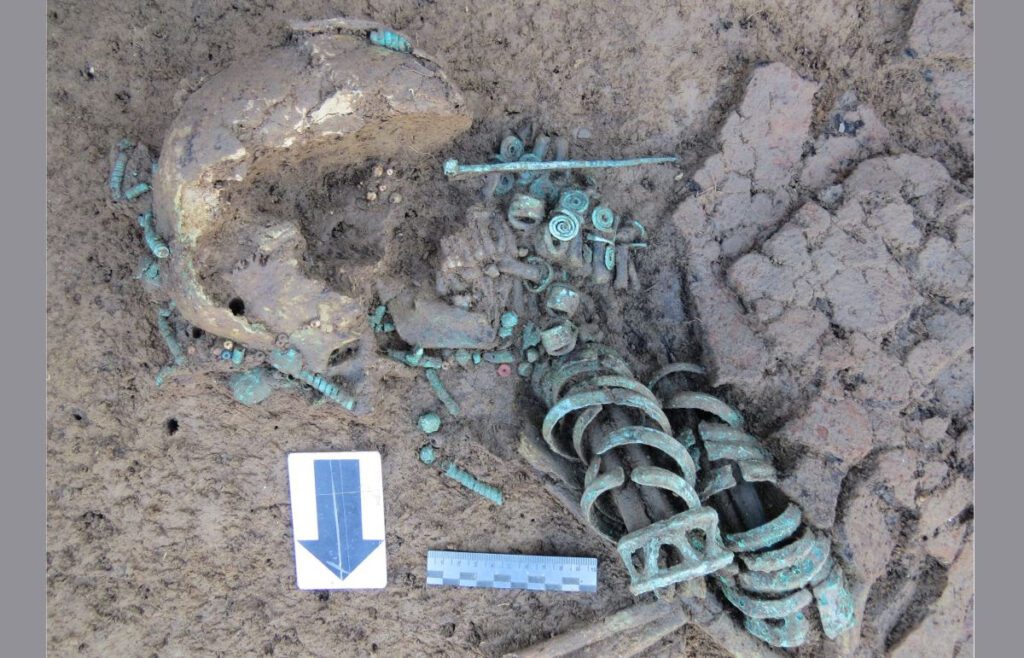
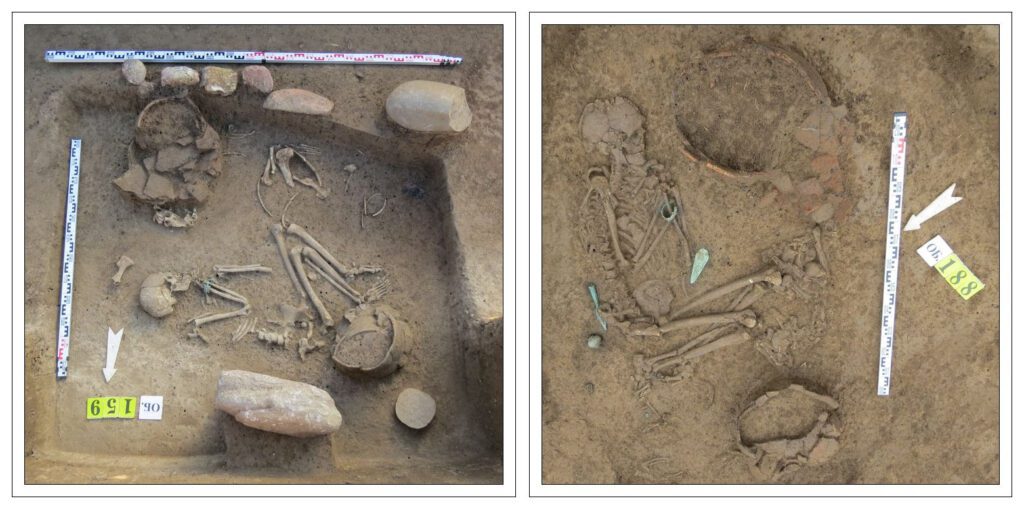
Women were buried with large ceramic vessels and an array of bronze ornaments—temple rings, bracelets, pins, and decorative fittings for headdresses. In one case, a single individual was buried wearing 19 bronze bracelets and eight rings, while some burial assemblages contained up to 60 items.
Male burials, by contrast, included weapons: bronze daggers, spearheads, arrowheads, and stone or bronze maces, reflecting roles tied to warfare or status.
Together, these finds offer a detailed glimpse into identity, hierarchy, and craftsmanship in early Iron Age societies of the Caucasus.
From Alan Warriors to Medieval Farmers
The most extensive excavations took place at the Mayrtup burial and settlement complex, where archaeologists investigated nearly 5,000 square meters and documented 252 archaeological features.
Among them were 122 burial complexes, including catacomb graves associated with the Alan culture of the 6th century CE. These burials, often arranged within square ditch enclosures, show consistent orientation patterns—evidence that may point to migration from the Middle Terek region.
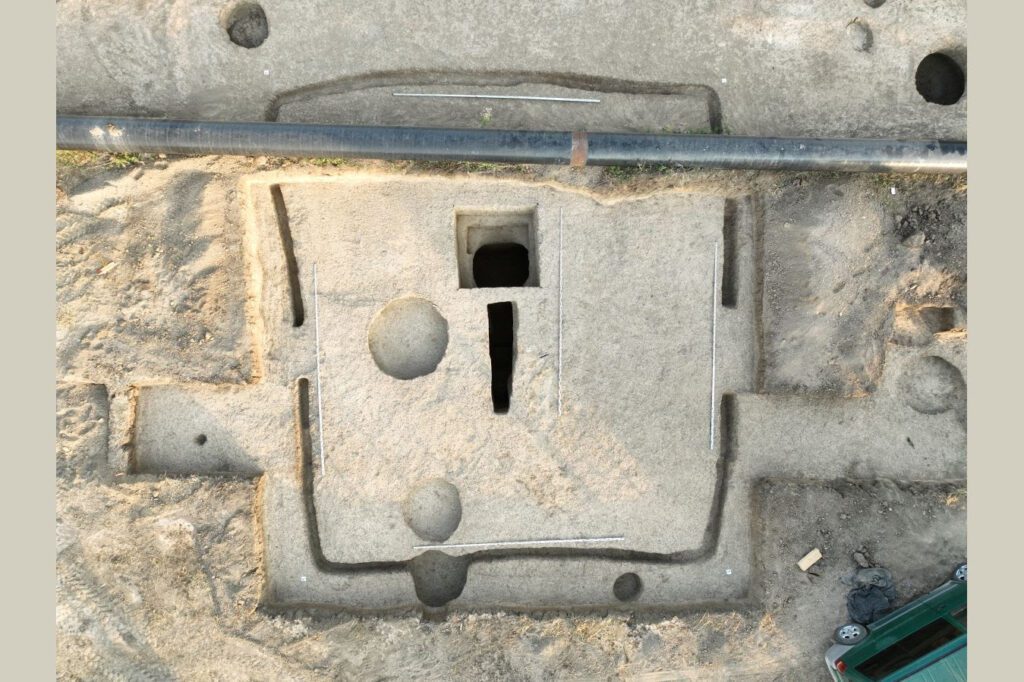
Later phases of the site, dating from the 10th to 13th centuries, include both burial and settlement remains. Archaeologists uncovered semi-subterranean dwellings supported by wooden posts, along with storage pits and tools made from iron and bone.
Signs of fire appear again in this phase, suggesting episodes of destruction and recovery. Life at the site, however, did not end—it adapted and continued.
A Continuous Human Story Across Millennia
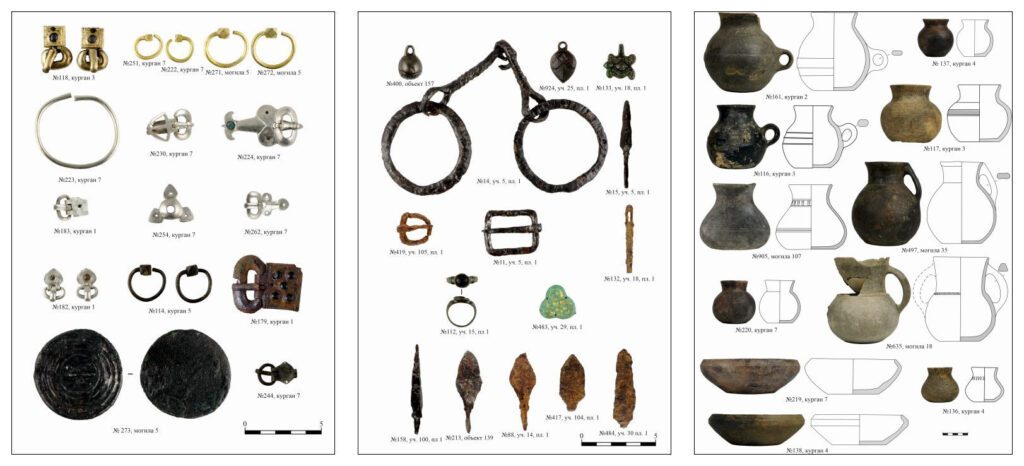
Taken together, these discoveries form more than a collection of sites—they outline a continuous human narrative in the North Caucasus, from early agricultural communities to medieval societies.
“Rescue excavations have allowed us to uncover previously unknown chapters of the region’s history,” said Vladimir Malashev, head of the Caucasus expedition. “These findings are significant not only for Chechnya, but for understanding broader historical processes across the North Caucasus.”
What emerges is a landscape that was never marginal, but persistently inhabited, adapted, and transformed over thousands of years.
From ritual altars shaped in clay to furnaces that melted copper, from richly furnished graves to burned settlements reborn—the ground beneath Chechnya is proving to be a remarkably detailed archive of human resilience.