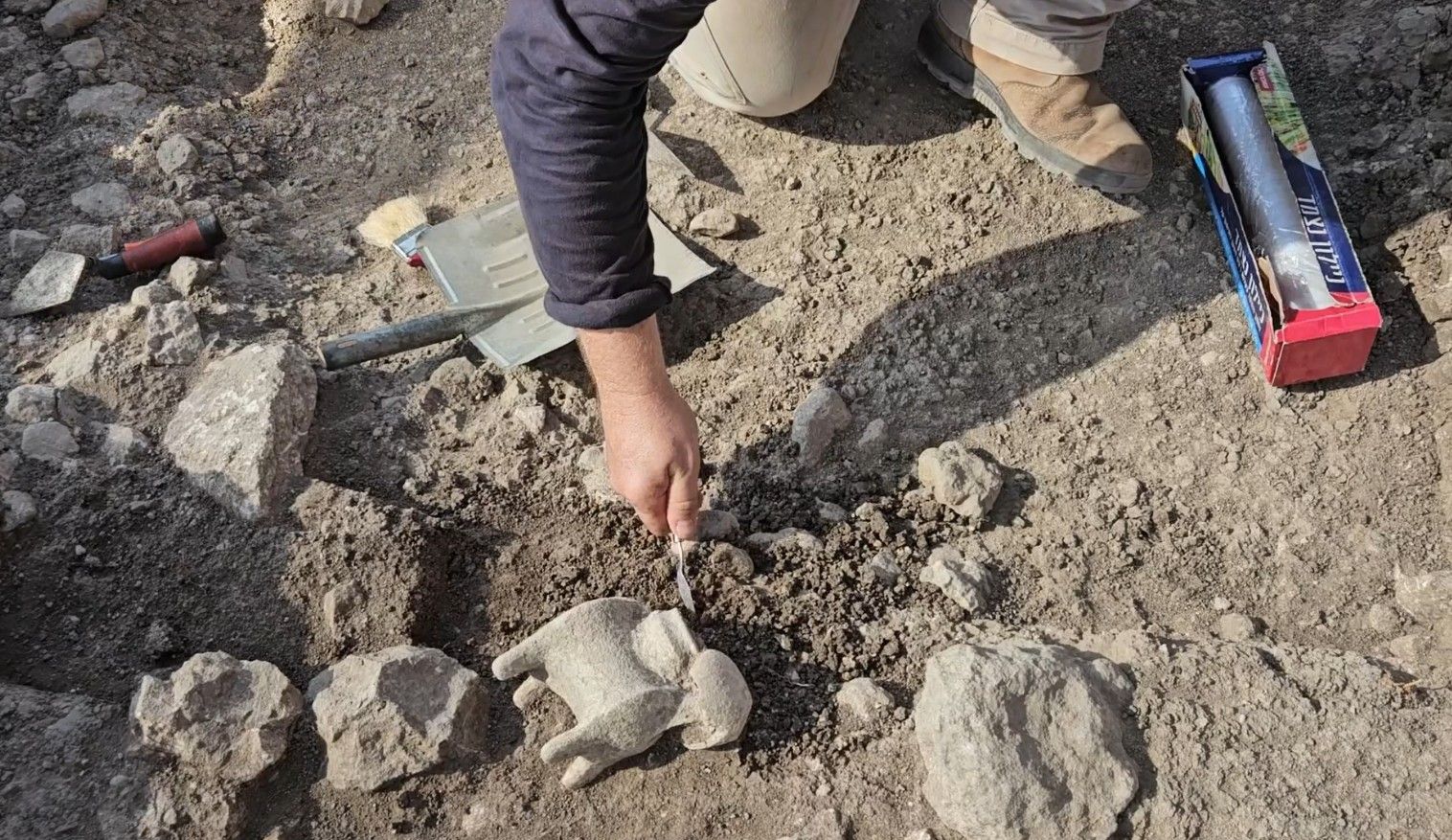
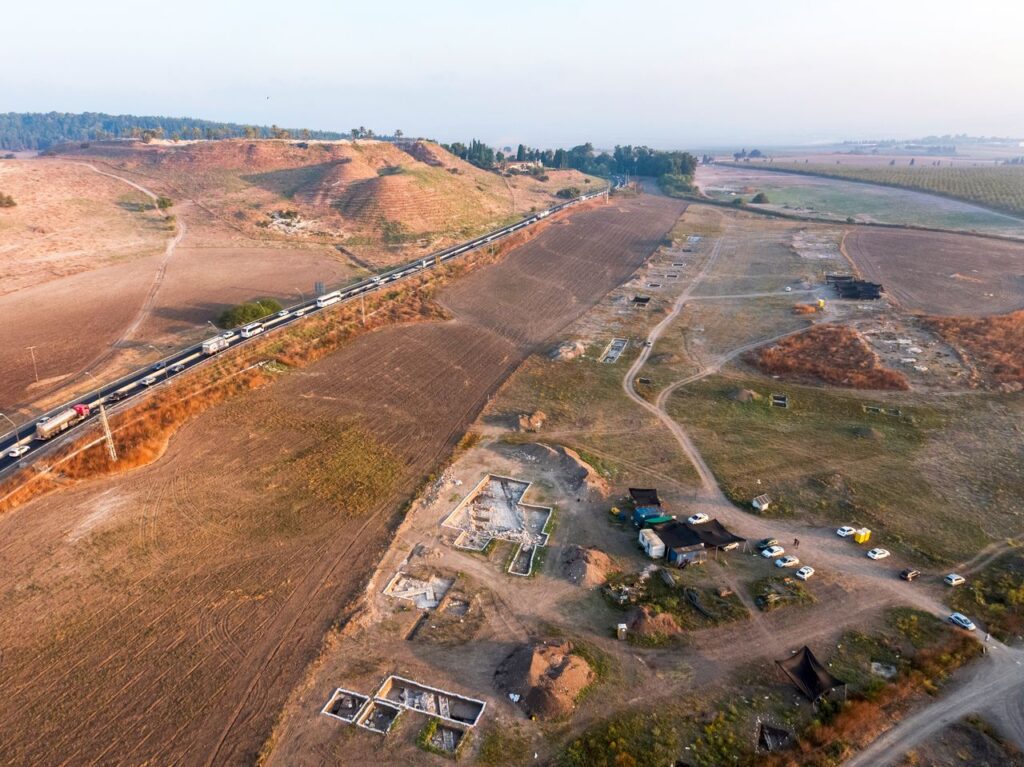
Long before the rise of ancient Israel, people in the Jezreel Valley were already producing wine and performing sacred rituals. Recent excavations east of Tel Megiddo have now brought these forgotten practices to light, exposing a 5,000-year-old winepress and a 3,300-year-old ritual complex tied to the Canaanite cult. The discoveries, announced by the Israel Antiquities Authority (IAA), shed new light on daily life and folk religion in the region at the dawn of urbanization.
The excavations, carried out along the expansion route of Highway 66 by the IAA and Netivei Israel, revealed a small rock-hewn winepress from the Early Bronze Age IB. According to excavation directors Dr. Amir Golani and Barak Tzin, this installation represents one of the earliest direct proofs of organized wine production in the southern Levant. “Until now, we had only indirect clues suggesting winemaking around 5,000 years ago,” they note. “This discovery is the smoking gun that confirms it actually took place here.”
Residential structures clustered around the press indicate the settlement’s economic growth and Megiddo’s expansion beyond its tell.
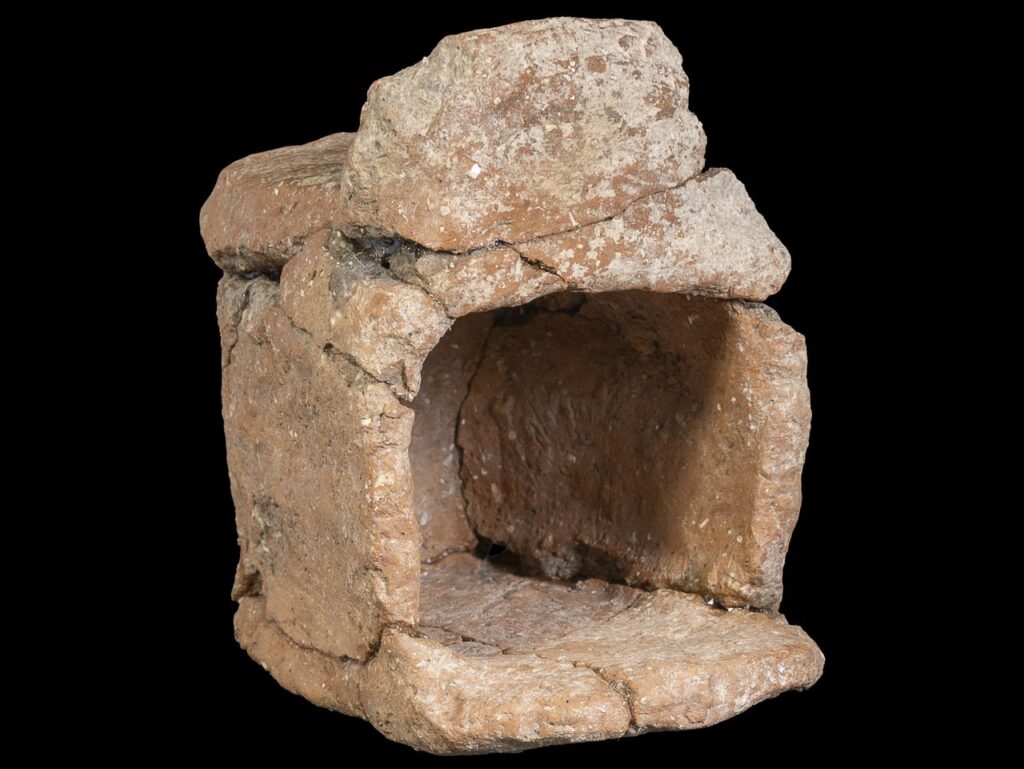
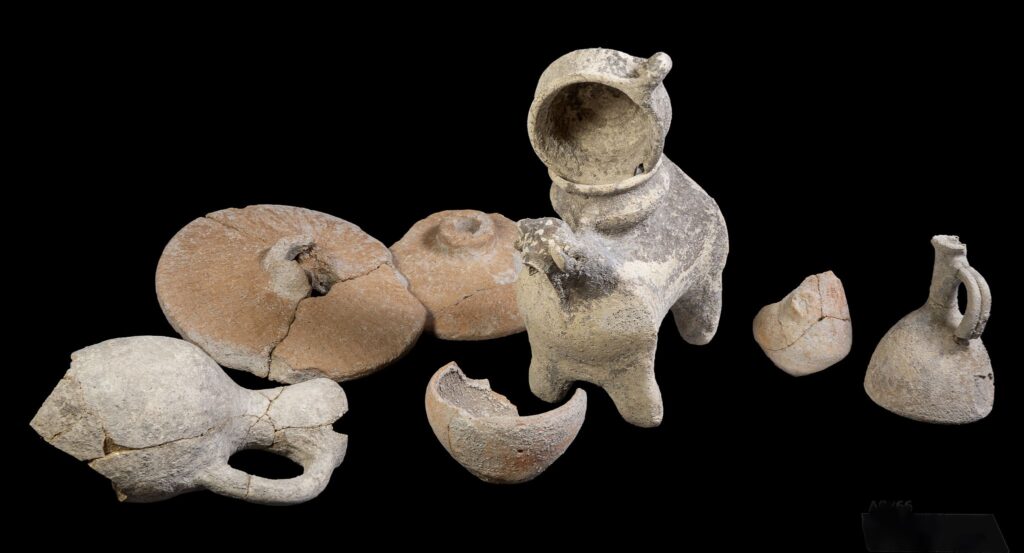
Equally striking are the finds from the Late Bronze Age II—roughly 3,300 years ago—when Megiddo flourished as a Canaanite city-state. Archaeologists unearthed a set of ritual vessels buried deliberately in the soil: a ceramic shrine model, imported Cypriot jugs, and a complete zoomorphic libation vessel shaped like a ram. The animal’s head functioned as a spout, while small bowls attached to its back and side formed a primitive funnel system used to pour wine, oil, or milk during ritual ceremonies. Such objects are typically found only in fragments; here, their intact preservation offers a rare glimpse into the mechanics of Canaanite worship.
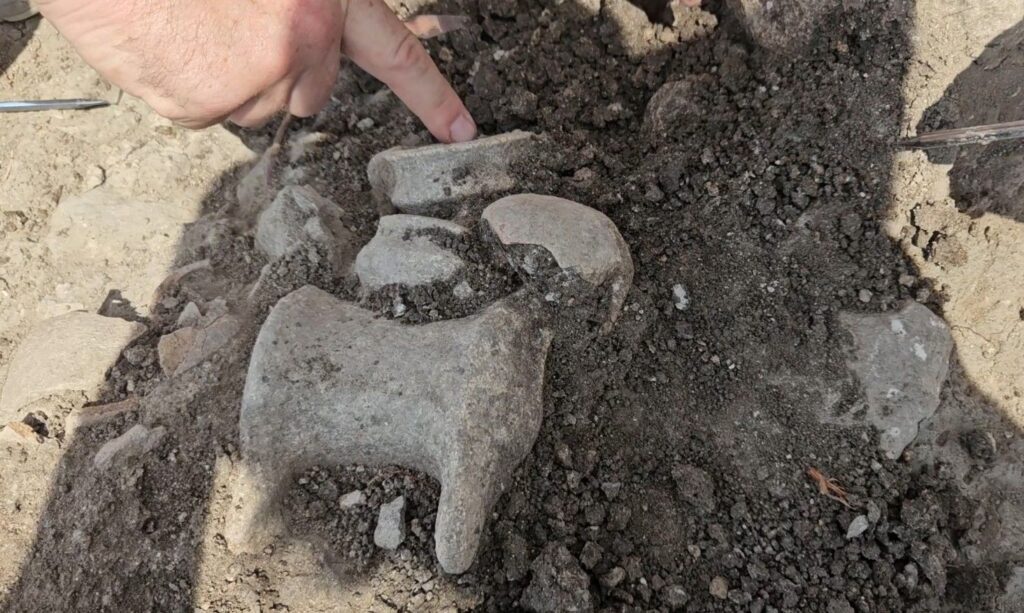
Researchers suggest the vessels were placed near a rock outcrop serving as an open-air altar, directly facing the large temple within the city. This location implies the practice of folk worship outside Megiddo’s walls, likely by farmers offering libations of wine or oil to local deities.
The findings will be presented for the first time on November 6 at the annual Conference on Innovations and Research in Northern Israel Excavations, hosted by the IAA and the University of Haifa. Starting next week, the artifacts will go on display at the Jay and Jeanie Schottenstein National Campus for the Archaeology of the Land of Israel in Jerusalem.
Cover Image Credit: Israel Antiquities Authority