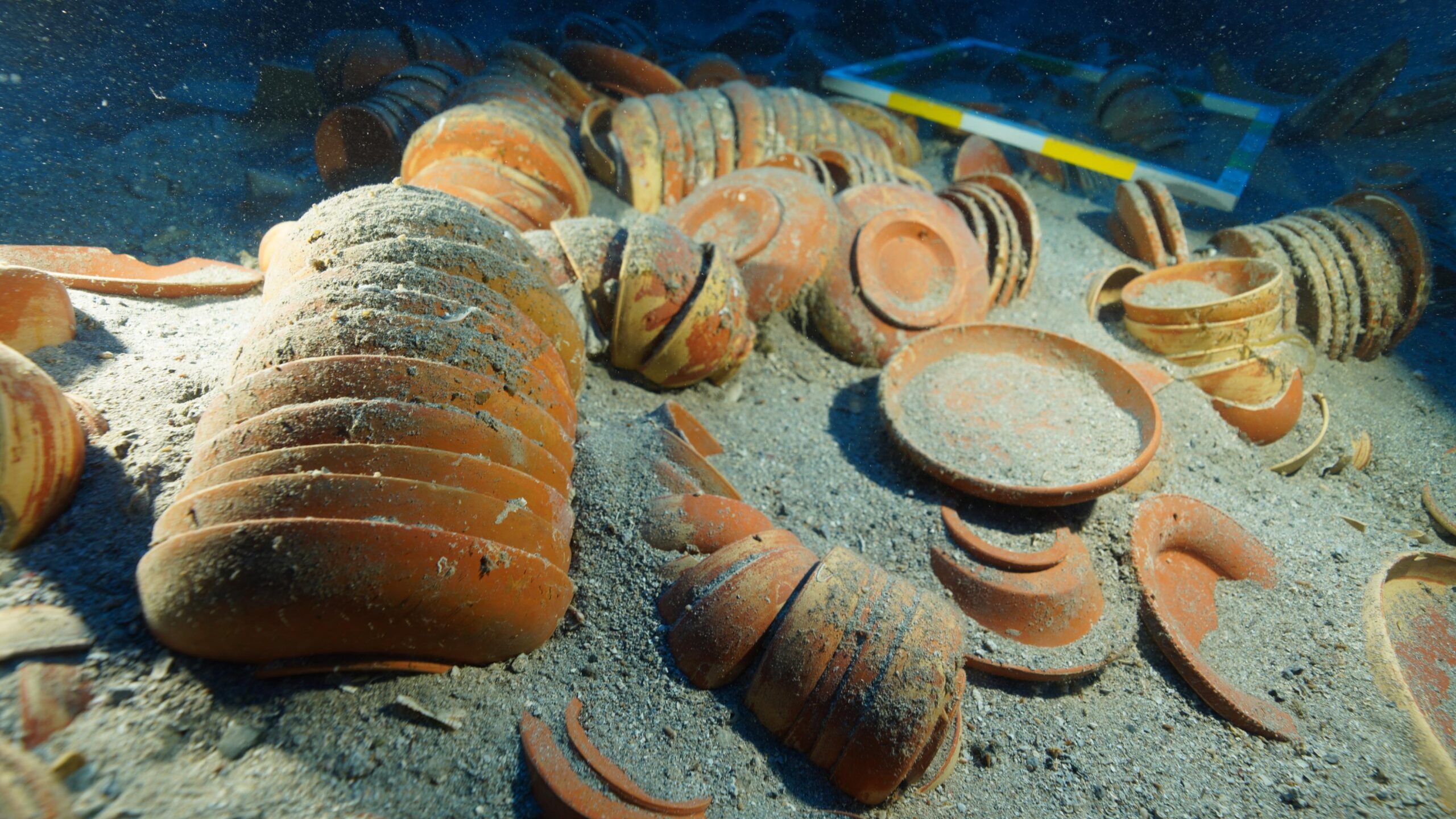
Somewhere in the eastern Mediterranean around 2,100 years ago, merchants loaded thousands of newly made plates, bowls and serving dishes onto a ship and prepared them for a journey that would never reach its destination.
The vessel sank off what is now Adrasan, on Türkiye’s southern coast, taking its commercial cargo to the seabed. More than two millennia later, archaeologists are recovering not simply a collection of pottery, but the remains of an ancient shipment that still preserves clues to how merchants packed, protected and transported fragile tableware across the Mediterranean.
Excavations launched in 2025 have already produced thousands of ceramic objects. Akdeniz University’s Underwater Archaeology Research Center reported that teams recovered 6,511 intact pieces during that season alone, including plates, bowls and trays, while thousands of additional fragments went to conservation laboratories.
The latest work has revealed an even broader range within the cargo. According to Türkiye’s Ministry of Culture and Tourism, archaeologists have identified tableware in 122 different forms and sizes, while excavation continues at depths of roughly 42 to 55 meters.
A shipment rather than a household
What makes Adrasan unusual is the scale and uniformity of the cargo.
This was not a handful of vessels carried for use by a crew. Workshops produced the ceramics in large numbers, merchants organized them for shipment, and crews loaded them aboard a commercial vessel. The wreck therefore captures a stage of ancient trade that archaeologists rarely see so clearly: the moment after production but before the goods reached their buyers.
The variety is striking as well. With 122 forms and sizes represented, the cargo preserves a broad range of tableware intended for different functions, from individual plates and bowls to larger serving vessels.
That makes the assemblage valuable for more than typology. It can help researchers examine production, packaging and distribution together, showing how ceramic workshops supplied customers across the Mediterranean.
How ancient merchants protected a fragile cargo
Transporting thousands of breakable vessels by sea presented an obvious problem, and the merchants who prepared the Adrasan cargo had developed a practical solution.
Workers placed clay between the vessels as they packed them into crates, creating a simple cushioning system that reduced direct contact between plates and bowls during the voyage and helped protect them from movement aboard the ship.
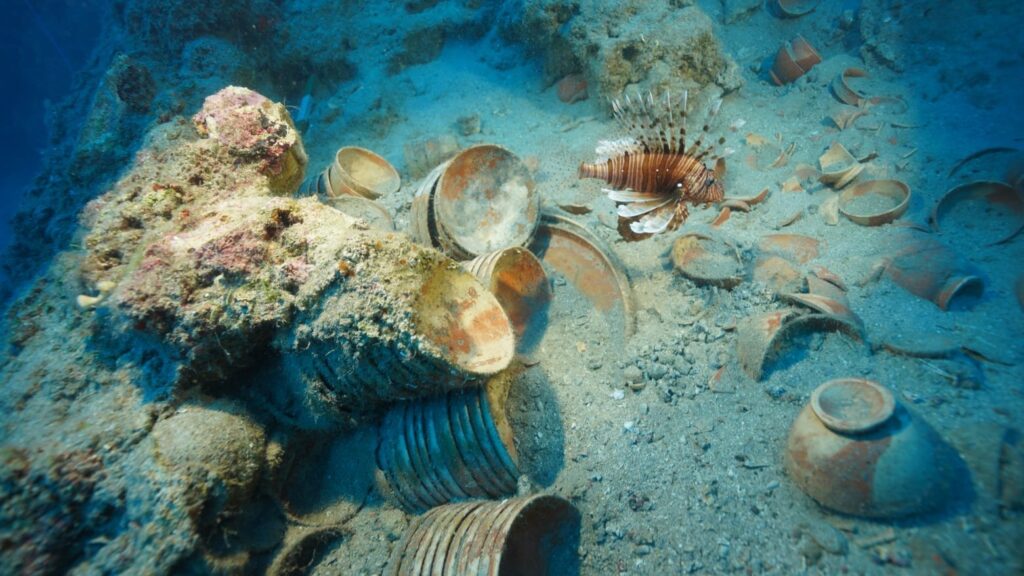
That packing method also appears to have helped preserve parts of the cargo after the vessel sank. Many ceramics remain sufficiently intact for archaeologists to study not only their shapes but also the way merchants nested and prepared them for transport.
The detail is deceptively simple, but archaeologically important. At Adrasan, researchers can examine the merchandise alongside evidence for the logistics that moved it, offering a rare look at how ancient traders handled a large shipment of fragile goods.
A cargo from a famous ceramic landscape
The story of the wreck leads eastward along the Mediterranean coast.
Researchers have linked the cargo to ancient Rhosus, identified with modern Arsuz on the Gulf of İskenderun. The surrounding region was an important center of ceramic production during the Late Hellenistic and Roman periods.
Rhosus even appears in the surviving correspondence of Marcus Tullius Cicero. Around 50 BC, while serving as governor of Cilicia, Cicero wrote to his friend Atticus that he had ordered Rhosica vasa—vessels associated with Rhosus.
That brief reference has intrigued archaeologists because scholars have proposed a connection between Cicero’s Rhosica vasa and Eastern Sigillata A, a widely distributed red-gloss tableware that became prominent across the eastern Mediterranean. Clay analysis and distribution patterns point toward production around the Gulf of İskenderun, while ancient ceramic kilns have also been documented near Arsuz. The identification remains a hypothesis rather than a settled conclusion.
The connection nevertheless places Adrasan within a recognizable commercial world. Regional ceramic products could acquire reputations far beyond the workshops where they were made, circulating through ports and eventually reaching customers across the Roman Mediterranean.
A Mediterranean economy caught in transit
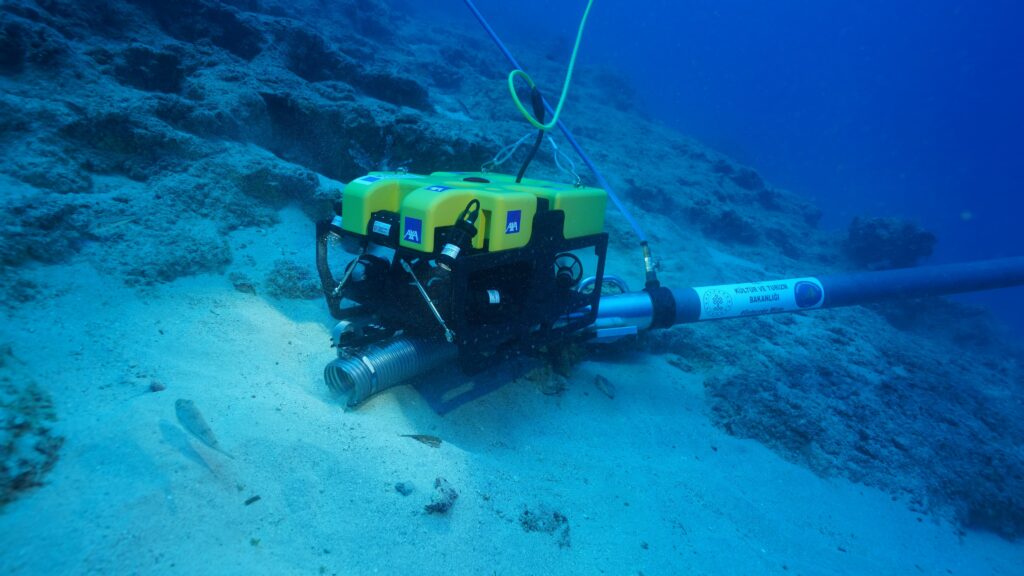
Underwater archaeologists now work on the wreck at depths well beyond ordinary recreational diving, documenting and recovering material from a cargo that spent more than two millennia on the seabed.
The project forms part of a much wider underwater archaeology program along Türkiye’s Mediterranean coast. Akdeniz University reported that its teams documented ten shipwrecks around Antalya and Fethiye during 2025, while excavation also continued at the considerably older Middle Bronze Age wreck off Kumluca.
Adrasan, however, preserves a particularly revealing moment in the life of an ancient object. Archaeologists usually encounter ceramics after people have bought, used, broken or discarded them. These vessels never reached that stage.
Someone had counted them, nested them together, protected them with clay and loaded them for sale. Then the journey stopped, leaving thousands of finished goods on the seabed before they could reach their intended market.
More than 2,000 years later, that interrupted transaction gives the wreck its unusual power. Adrasan preserves not simply an assemblage of ancient tableware, but a Mediterranean delivery still caught between workshop and customer—the remains of a commercial journey that never arrived.
Cover Image: Stacks of ancient plates, bowls and serving vessels remain packed together on the seabed of the Adrasan shipwreck, preserving part of a commercial cargo lost around 2,100 years ago. Credit: Republic of Türkiye Ministry of Culture and Tourism