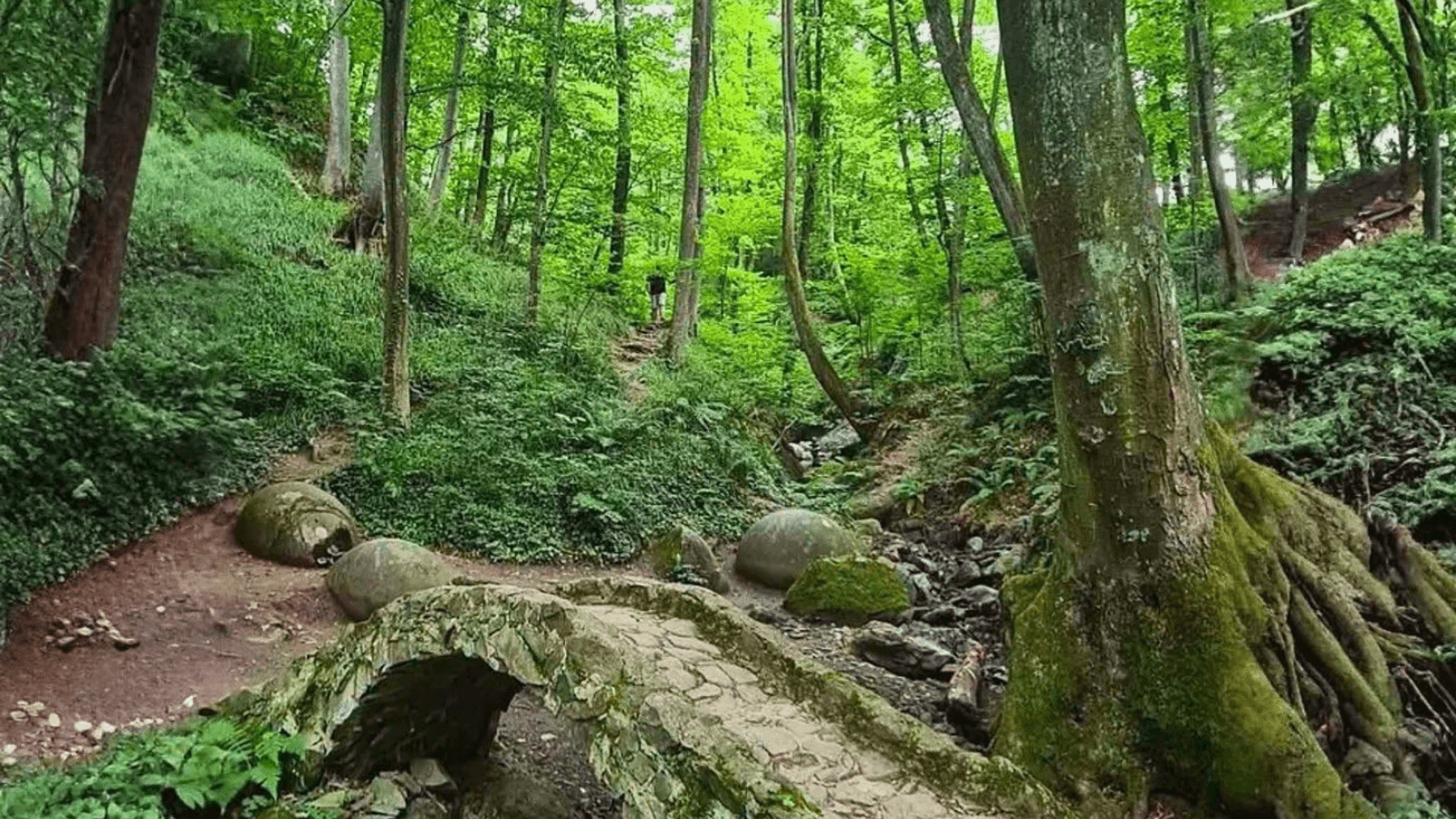
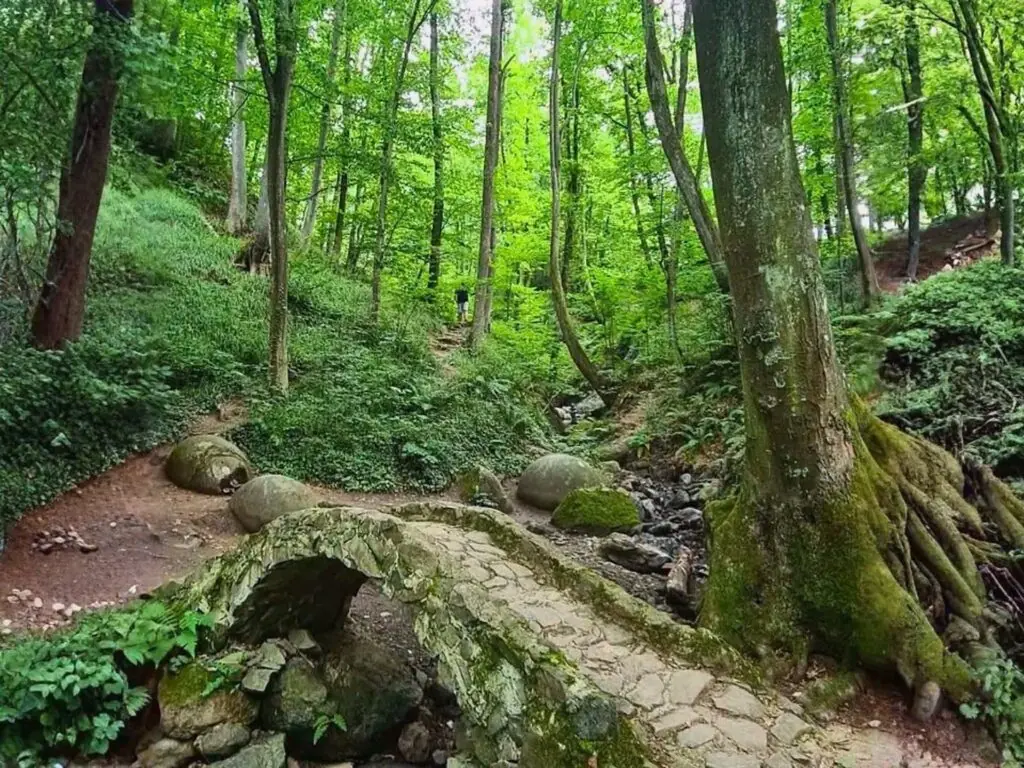
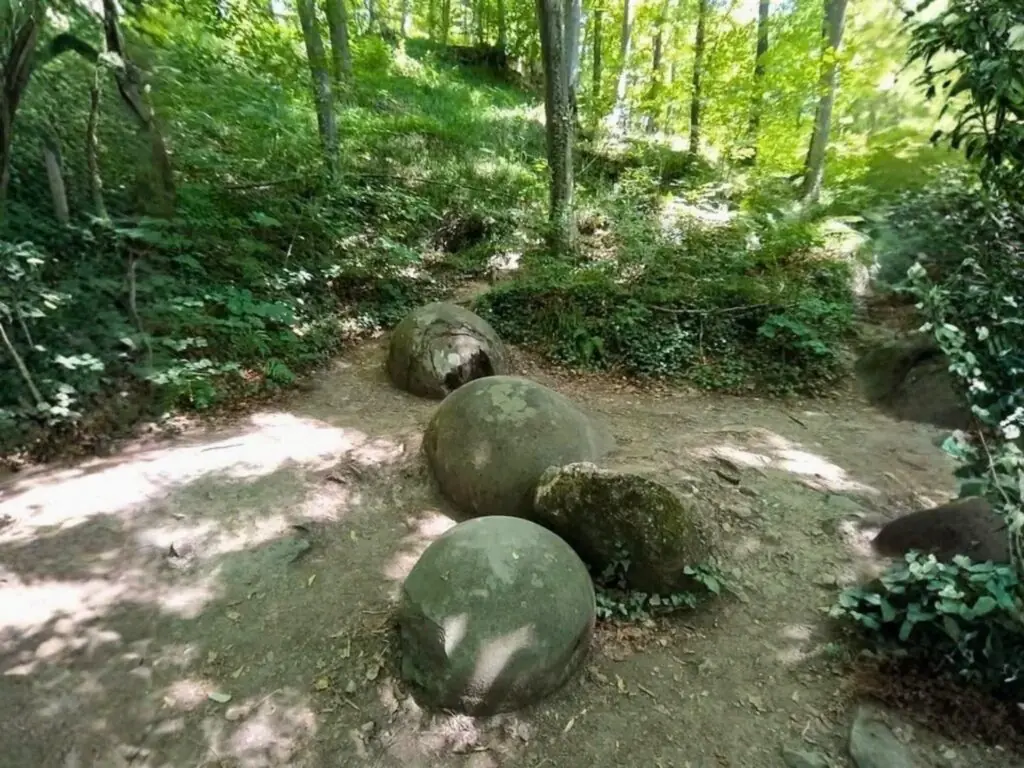
Deep in the forests around Zavidovići in Bosnia and Herzegovina, enormous stone spheres emerge from stream beds, slopes and layers of earth. Some are almost perfectly rounded, giving them an appearance that can seem more engineered than geological.
Around 60 stone spheres have been recorded at 11 locations across the Zavidovići area, according to the city administration. More than 20 have been found around the village of Grab, while the most imposing known example was uncovered at Podubravlje in 2016.
Their unusual forms have generated competing explanations for years. Geologists have described the Zavidovići examples within the broader phenomenon of naturally formed sandstone spheres, while researcher Sam Osmanagich argues that laboratory results point instead to deliberate construction by humans.
A stone sphere weighing tens of tons
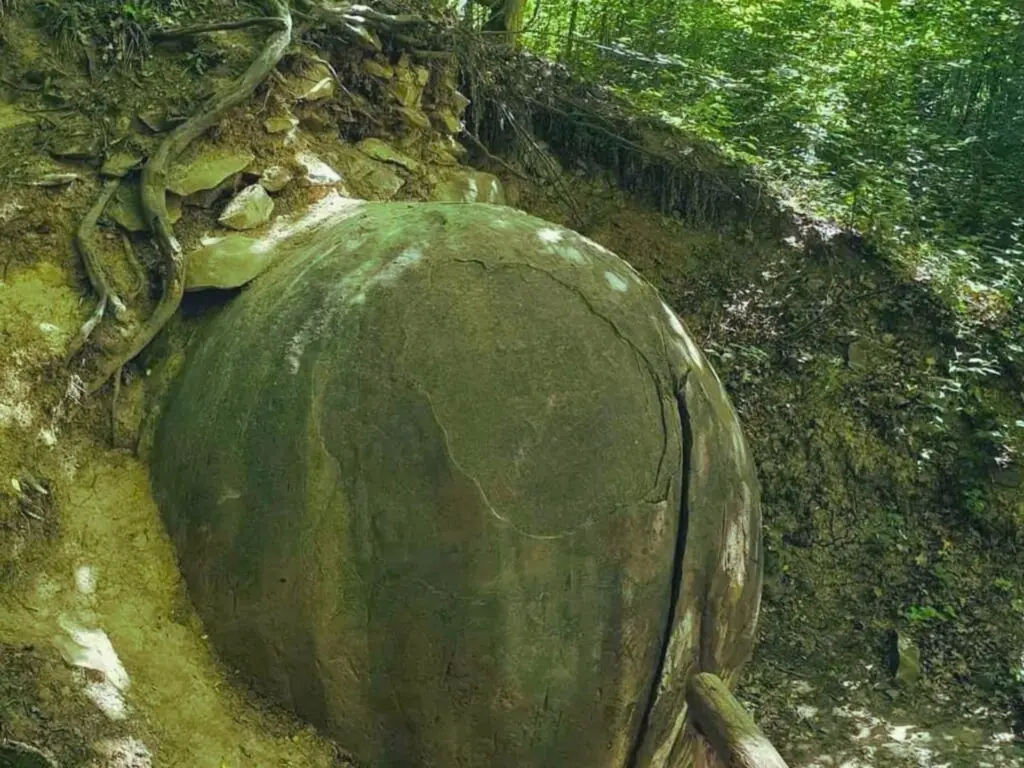
The Podubravlje sphere immediately stands out because of its scale. The City of Zavidovići describes it as weighing approximately 30 tons and says it could be among the largest examples of its kind in the world.
Osmanagich reaches an even higher figure.
In a study published in 2025 in the Journal of Environmental Science, Sustainability and Green Innovation, he estimated the sphere’s mass at more than 37 tons based on its dimensions and the measured density of the material. The paper describes it as the largest stone sphere yet recorded and compares its size with the famous stone spheres of Costa Rica.
The central question, however, is not its size but how it formed.
Laboratory results behind the human-made hypothesis
Osmanagich’s 2025 study brings together analyses conducted during earlier investigations of the spheres.
Petrographic examination identified the material as arkosic sandstone containing minerals including quartz and feldspar. A density analysis cited in the study produced a measurement of approximately 2.64 grams per cubic centimeter, which was then used to calculate the estimated mass of the Podubravlje sphere.
The paper also highlights a chemical comparison between material from a sphere and nearby natural rock. According to Osmanagich, calcium oxide and manganese were detected in the sphere sample but not in the surrounding comparison material.
He interprets the difference as evidence that the sphere may have been artificially produced, proposing that calcium compounds could have served as a binding material while manganese contributed to hardening. On that basis, the study suggests a manufacturing technique resembling an early form of geopolymer technology.
The chemical differences do not, however, establish that people manufactured the spheres. A human origin would require geological processes capable of producing such variations in the sandstone to be ruled out.
Geologists have another explanation
Rounded stones can form naturally, sometimes on a very large scale.
Concretions develop when minerals precipitate within sediment and gradually cement surrounding material together. When growth occurs relatively evenly around a central point, the resulting formation can become remarkably spherical. Later erosion can remove the softer sediment surrounding it, leaving the harder rounded mass exposed.
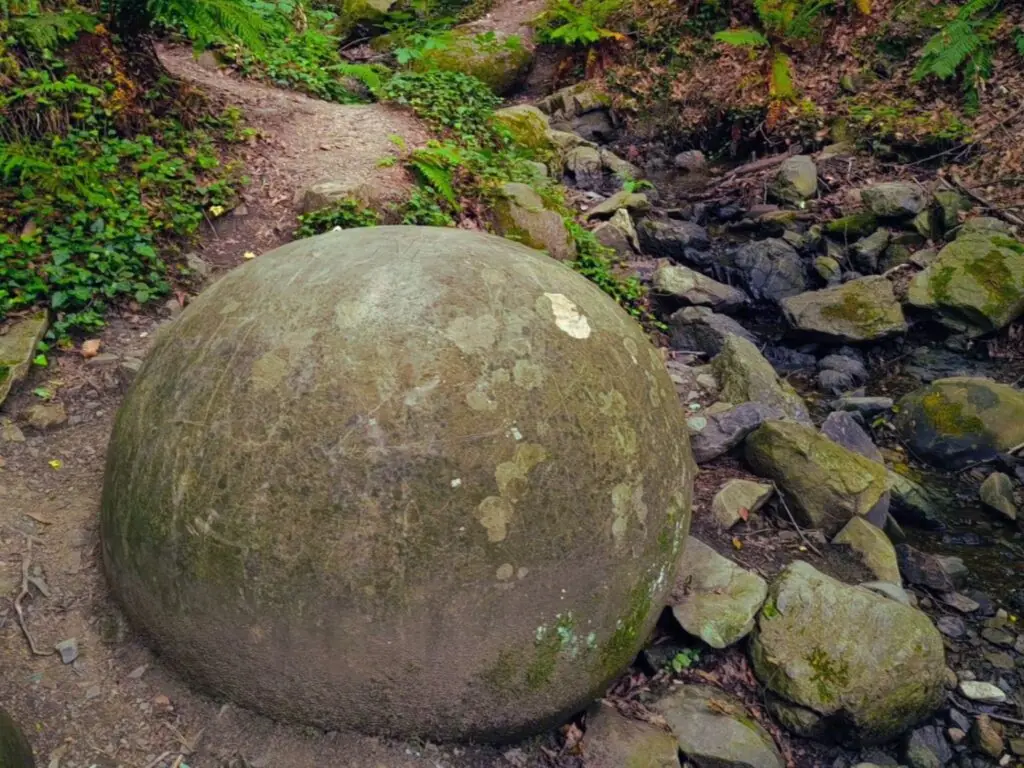
Researchers have specifically discussed the Zavidovići stone spheres within this geological context.
In 2016, geologists Karmen Fio Firi, Vladimir Bermanec and Jasenka Sremac presented research examining the diversity of naturally occurring stone balls in Croatia and Bosnia and Herzegovina. Their study included sandstone spheres from the Zavidovići area alongside other types of geological concretions.
Their work shows that the rounded shape of the Bosnian examples does not on its own require human craftsmanship.
What would prove human involvement?
If the Zavidovići spheres were deliberately manufactured, their archaeological surroundings would be expected to provide additional evidence.
Tool marks, working areas, discarded material from production, associated artifacts or securely dated human activity could substantially strengthen the case. At present, the debate relies heavily on the spheres themselves and interpretations of their geological and chemical characteristics.
There is also no established archaeological culture currently connected with the production of the Zavidovići spheres.
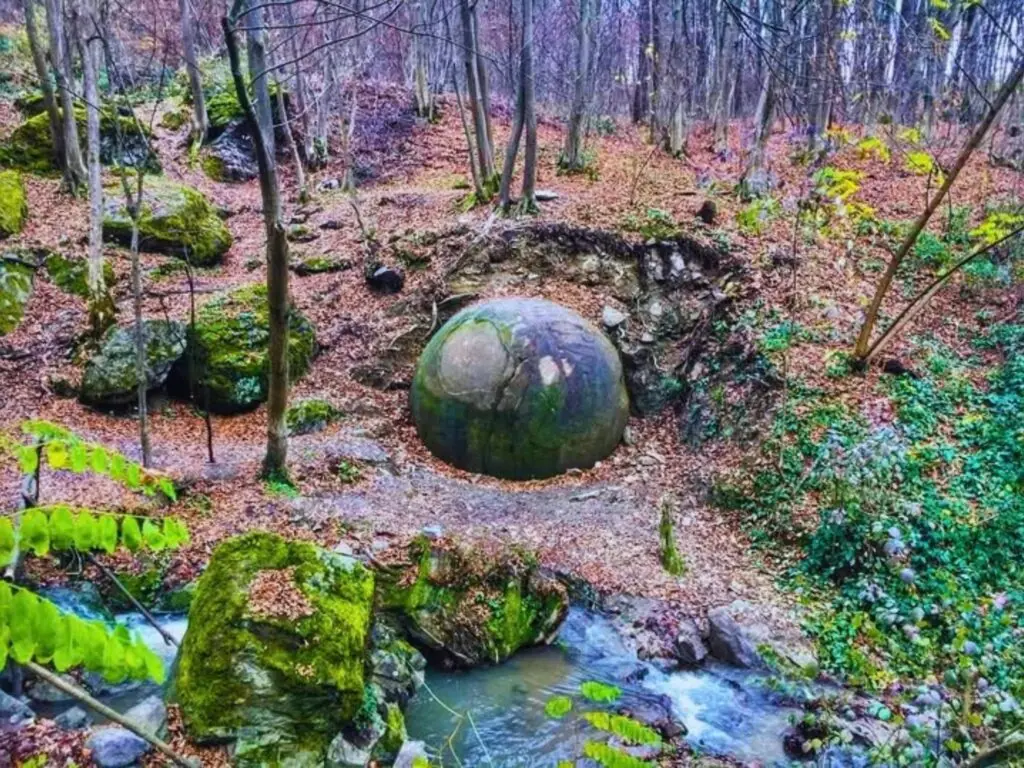
Osmanagich’s 2025 study argues that their composition may contain evidence of technological intervention and describes the Podubravlje specimen as a possible product of prehistoric manufacturing. Geological research, meanwhile, places the same type of sandstone spheres within known natural processes.
For visitors walking through the forests around Zavidovići, the spheres are remarkable regardless of how they formed. For researchers, however, their origin remains the central question.
The geological explanation places them among naturally formed sandstone concretions, while the proposed human-made origin still lacks the archaeological evidence needed to demonstrate deliberate manufacture. Further geological sampling and archaeological context would be needed to determine whether anything beyond natural processes is required to explain their unusual form.
Cover Image: Stone spheres in the forest near Zavidovići, Bosnia and Herzegovina, where dozens of similar formations have been recorded. Credit: PhotoVideoArt