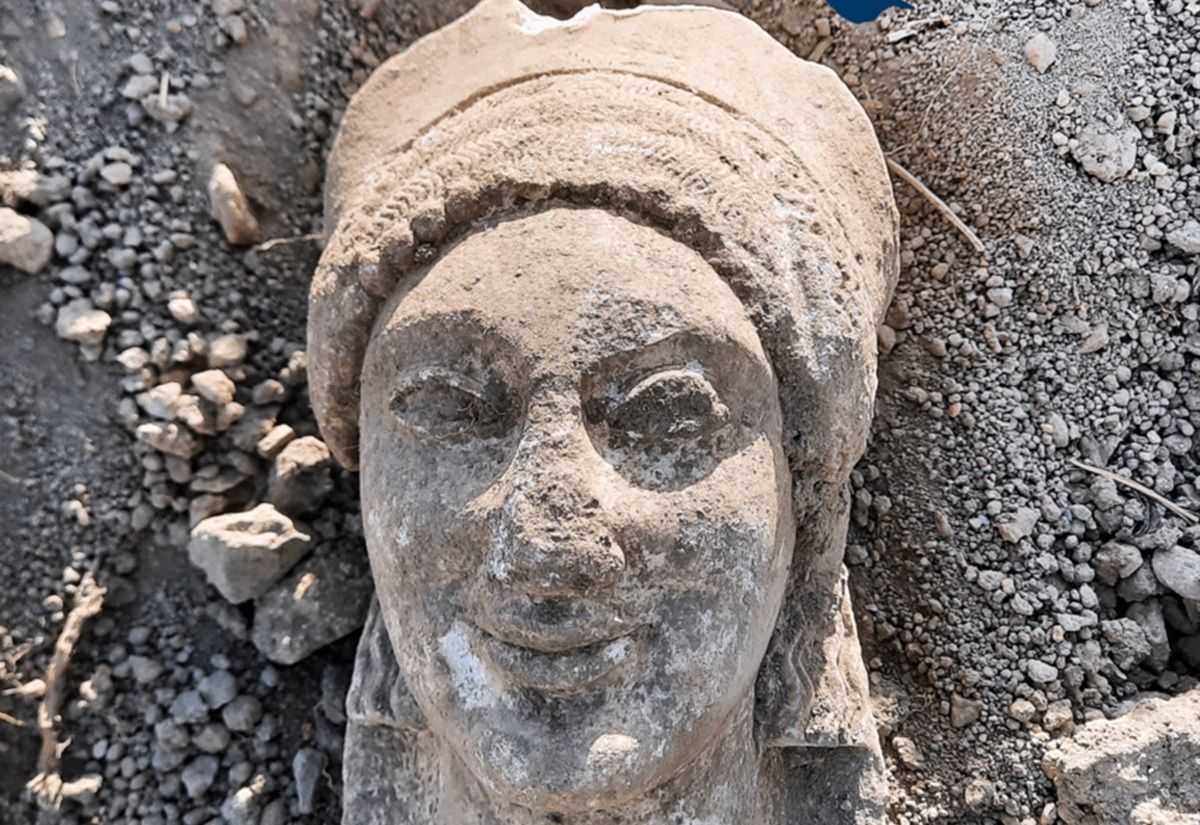
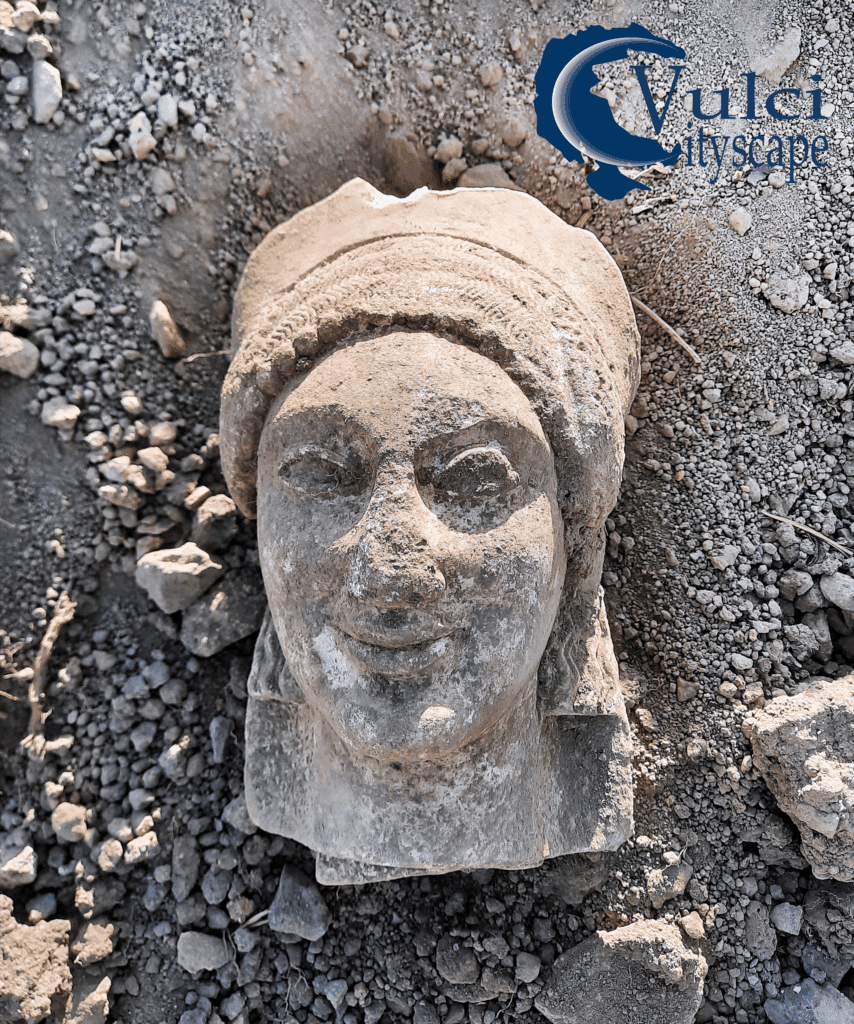
Early morning light filtered across the dusty trench as archaeologists brushed away the final layer of soil. What emerged was a face—calm, youthful, and carved with astonishing delicacy. In that quiet moment, the team at Vulci realized they were looking at something almost unheard of: a large-scale Greek Kore head lying intact in the heart of ancient Etruria.
The discovery, more than 2,500 years old, is not only visually extraordinary—it directly challenges long-held assumptions about artistic and religious exchange across the Mediterranean.
A Discovery That Reshapes the Map of Archaic Cultural Contact
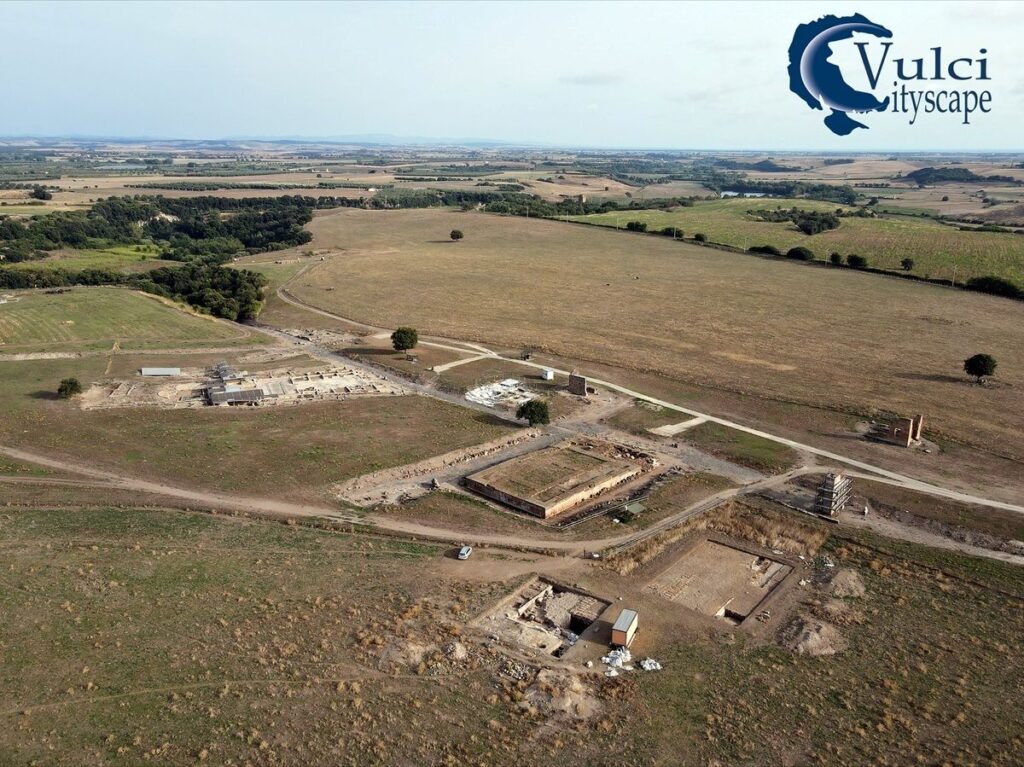
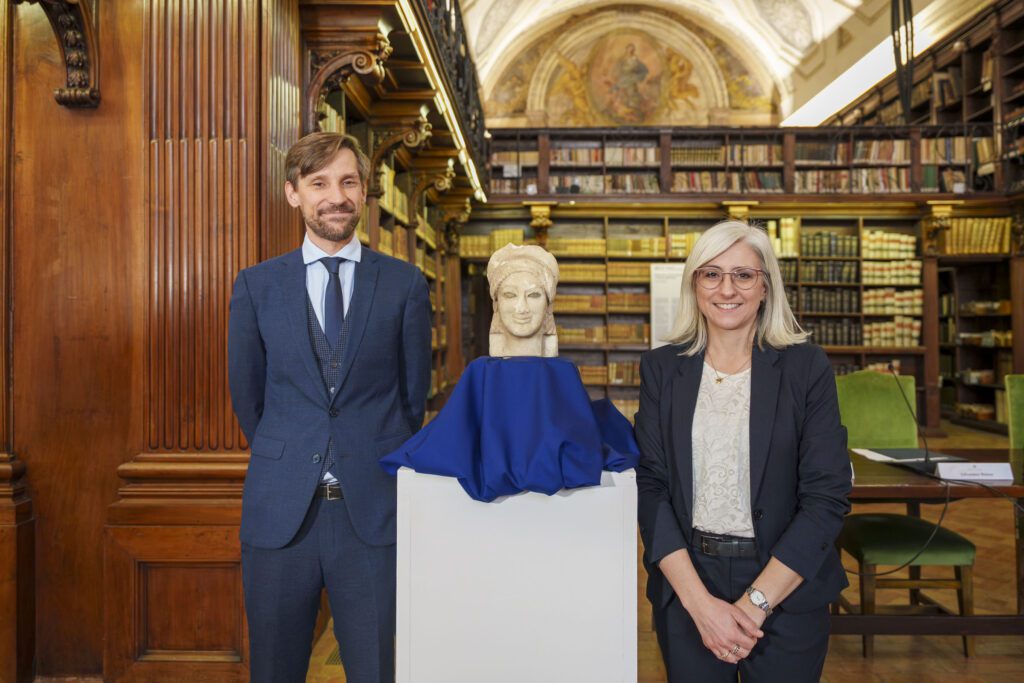
Researchers from the University of Freiburg and Johannes Gutenberg University Mainz revealed the Kore head in a monumental late-archaic temple complex in Vulci, one of the most powerful Etruscan cities. Publicly presented in Rome in the presence of Italy’s Minister of Culture Alessandro Giuli, the find marks a major milestone in the ongoing “Vulci Cityscape” project.
The marble head lay surprisingly well preserved, its features untouched by the millennia. Very few Greek marble sculptures of this scale have ever been found outside Greece—and none in Etruria with this level of craftsmanship.
“Greek pottery has long dominated our understanding of cultural interaction between Greece and Etruria,” said Dr. Mariachiara Franceschini, University of Freiburg. “But this statue reveals a deeper, more sophisticated pattern of exchange, including the movement of high-quality sculpture, artisans, and religious ideas.”
A Kore with Attic Origins and Astonishing Detail
The sculpture is unmistakably Greek in origin. Its refined facial modeling, elaborate hairstyle, and finely carved diadem align closely with the Kore figures of the Athenian Acropolis. Stylistic analysis suggests production by an Attic workshop around the early 5th century BCE.
“We believe it was crafted in Attica and imported to Etruria,”
— Dr. Paul P. Pasieka, University of Mainz.
Such an import implies not only trade but a direct artistic dialogue—perhaps even the presence of Greek sculptors working in Etruria.
Even more exceptional are the faint traces of original pigment preserved on the marble. These remnants will allow researchers to reconstruct the statue’s polychromy, offering rare insight into the vivid colors that once animated archaic sculpture.
A Temple District at the Heart of Etruscan Power
The Kore was found near a monumental peripteral temple dating to the transition between the 6th and 5th centuries BCE. This sanctuary, built in the Etrusco-Italic tradition and standing beside the famous Tempio Grande, formed a dominant sacred district in central Vulci.
Archaeologists believe the Kore may once have been part of a larger sculptural program—perhaps a votive figure connected to temple rituals, or an element of an early religious monument. Its placement in such a context suggests the city’s elites were not merely importing Greek goods but adopting Greek artistic and ideological frameworks.
During the 6th–5th centuries BCE, Vulci controlled major trade routes linking the Tyrrhenian Sea to inland Italy. The city thrived as a cultural crossroads, absorbing influences from Greece, the Near East, and the wider Mediterranean.
The Kore head strengthens this interpretation, placing Vulci squarely within the network of cities that engaged directly with Greek artistic innovation.
Continuing Excavations Reveal a City of Long-Term Significance
The Kore is only the latest discovery in a multi-year investigation of Vulci’s sacred landscape. Excavations have revealed continuous activity spanning the Bronze Age to late antiquity and even the early Middle Ages. During the 2025 season, teams uncovered several late-antique burials—a reminder of Vulci’s enduring role across changing eras.
Advanced techniques such as remote sensing, micro-stratigraphic excavation, and digital reconstruction will guide the next phases of research, refining our understanding of how the city evolved over centuries.
The Vulci Cityscape Project is a collaborative initiative bringing together:
- University of Freiburg
- Johannes Gutenberg University Mainz
- Soprintendenza Archeologia Belle Arti e Paesaggio per la provincia di Viterbo e Etruria Meridionale
- The Archaeological Park of Vulci
Major funding comes from the Fritz Thyssen Foundation, Gerda Henkel Foundation, and the German Research Foundation (DFG), which has committed support through 2027.
A Find With the Power to Rewrite Histories
The Kore head from Vulci stands among the most significant archaeological discoveries of recent decades. It bridges two major ancient cultures, challenges long-standing scholarly assumptions, and illuminates a previously underestimated level of interaction between Greece and Etruria.
As restoration continues at the Istituto Centrale per il Restauro in Rome and researchers prepare the first academic publications, one thing is already clear: this statue promises to reshape our understanding of archaic Vulci—and to reveal that its links to the Greek world were far stronger, and far more dynamic, than historians once believed.
Johannes Gutenberg University Mainz
Cover Image Credit: The Kore statue head at the time of discovery. Mariachiara Franceschini