
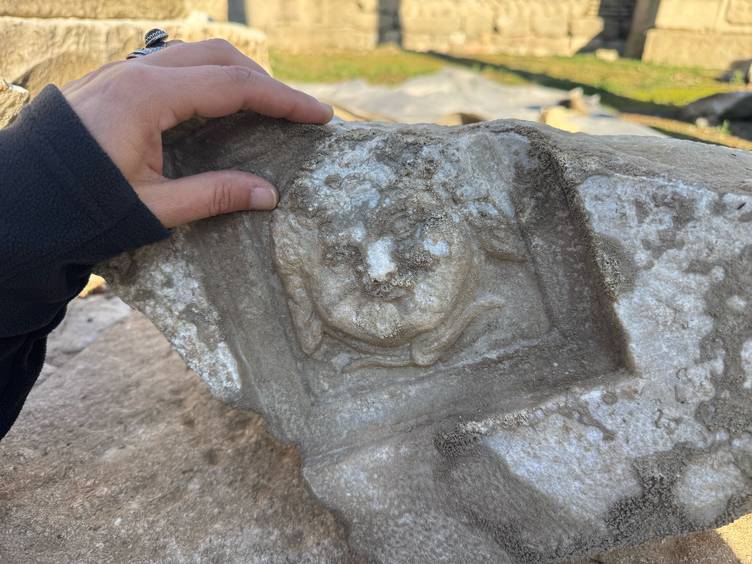
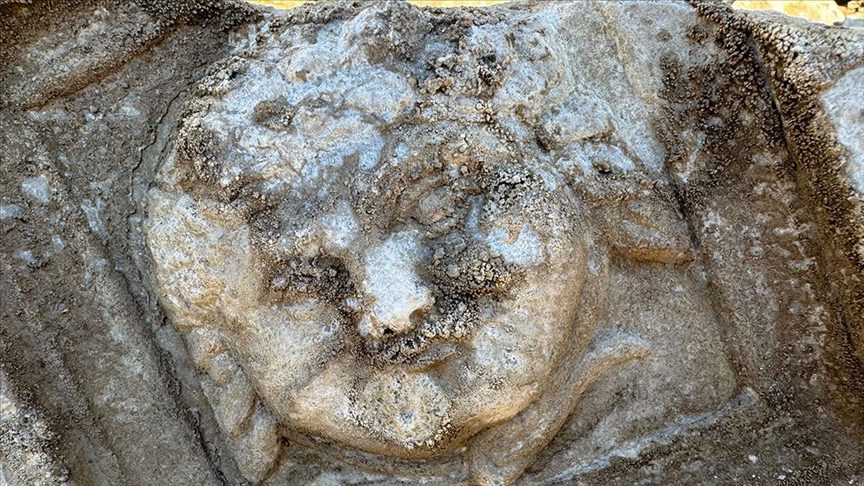
The carved face should have been terrifying. Instead, it was quietly smiling. During the latest excavations in Amasra’s ancient city of Amastris, archaeologists uncovered a rare and unexpected portrayal of Medusa—one that breaks from two millennia of monstrous tradition. The mythical guardian, usually depicted with serpentine hair, glaring eyes, and a grimacing jaw, appears here with the soft expression of a child and the faint hint of a smile.
For researchers, the discovery is unlike anything they have seen across the Roman world.
A Monumental Stoa and an Untold Artistic Decision
The smiling Medusa emerged atop the ceiling coffers of a monumental stoa currently being reassembled in the heart of ancient Amastris. Excavations, led by Prof. Dr. Fatma Bağdatlı Çam of Bartın University, have been slowly revealing a vast public space—likely part of the city’s agora or forum—where trade, civic life, and daily interactions once unfolded along the Black Sea coast.
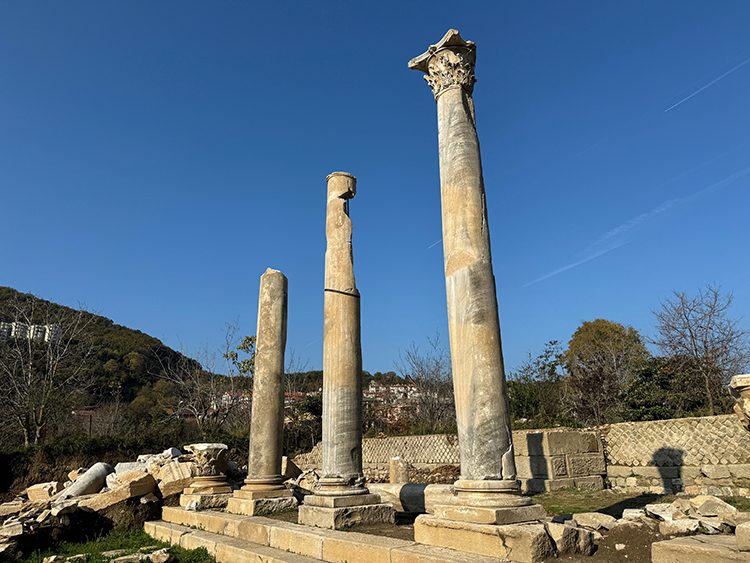
Spanning 2,850 square meters, the stoa was constructed in the Corinthian order and originally carried nine-meter marble columns. Centuries of earthquakes toppled the structure, scattering the architectural blocks. Today, using an anastylosis program supported by Turkey’s Ministry of Culture and Tourism, archaeologists are painstakingly restoring the monument with its original stones.
Three columns have already been raised. Four more are scheduled to stand by the end of the year, transforming the excavation area into one of northern Anatolia’s most impressive Roman ruins.
A Medusa Unlike Any Other in the Roman Empire
Medusa is not a rare figure in ancient architecture—she appears frequently on shields, pediments, and decorative friezes as a protective emblem. But she almost never smiles.
The example from Amastris is therefore extraordinary. Rather than projecting menace, the figure looks serene, almost playful, reminiscent of a youthful Eros rather than a guardian meant to petrify enemies.
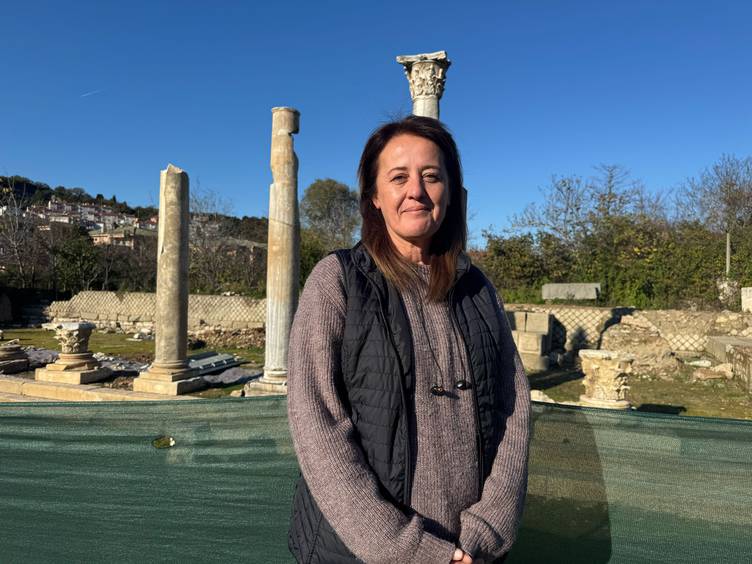
Prof. Bağdatlı Çam describes the moment the team realized what they were looking at:
“Medusa traditionally embodies fear, power, and apotropaic strength. But this one has a gentle face, a childlike softness. It reflects peace and prosperity rather than warning or threat. Such a portrayal is extremely rare.”
This striking artistic reinterpretation may signal a local sculptural tradition or a deliberate choice to represent the city’s stability during the Roman period. It also raises new questions about how mythological imagery was adapted to express civic identity.
Revealing the Grandeur of Amastris, the City of a Queen
Founded by Queen Amastris, a Persian-descended noblewoman of the Hellenistic era, the ancient city was a flourishing regional center long before the Roman stoa rose over its public square. Recent excavations have exposed numerous elite artworks, including a head of Alexander the Great, statues of Nymphs and Lares, amulets, and coins from multiple periods.
The smiling Medusa may now be the most significant discovery of all—an image capable of reshaping how scholars understand the visual language of the region.
Work continues on the broader complex, and if restoration proceeds on schedule, parts of the agora may open to visitors by late 2026 or early 2027. For archaeologists, the goal is clear: to bring the ancient city back to life stone by stone, allowing visitors to experience the world Queen Amastris once ruled.