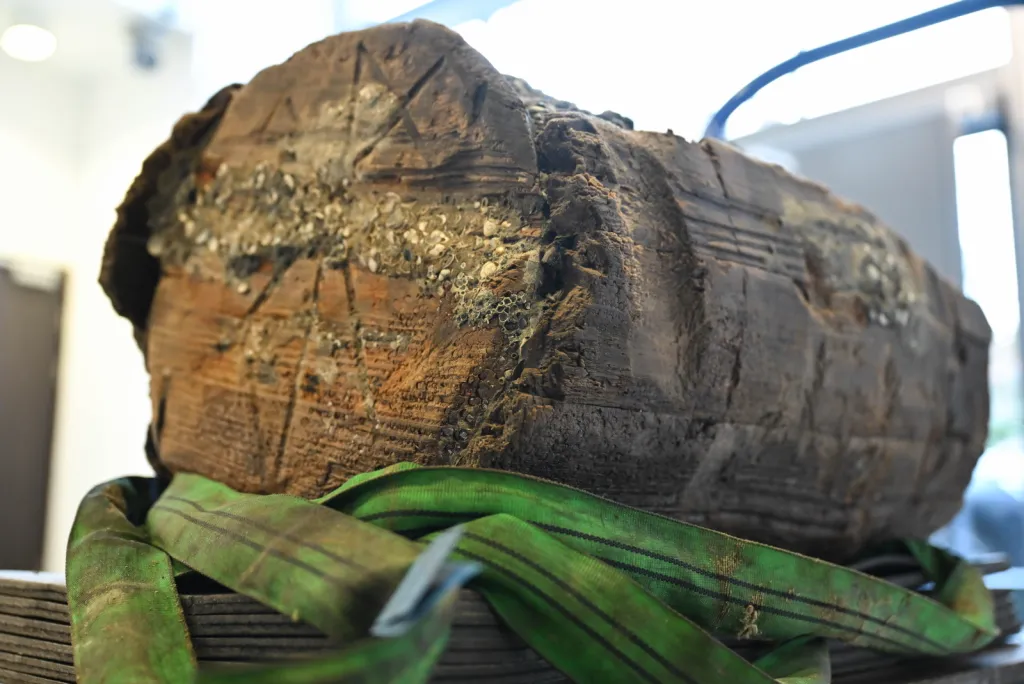
Medieval Iron sealed inside a wooden barrel has been recovered from the floor of the Baltic Sea, offering archaeologists a rare glimpse into the cargo that once moved through northern Europe’s maritime trade routes.
The barrel was discovered off the coast of Pomerania during underwater survey work connected to the construction of Poland’s first nuclear power plant. Divers found it at a depth of about 18 meters while searching for unexploded ordnance in the investment area. The recovery was carried out under archaeological supervision, and the object has now been taken to the National Maritime Museum in Gdańsk for conservation and study.
At first glance, the find appears simple: a wooden barrel filled with metal. But its contents, weight and markings suggest something far more valuable to historians. Researchers believe it may be part of a merchant cargo from the 15th to 17th centuries, a period when the Baltic Sea was one of northern Europe’s most important commercial corridors.
A heavy cargo from the Baltic trade
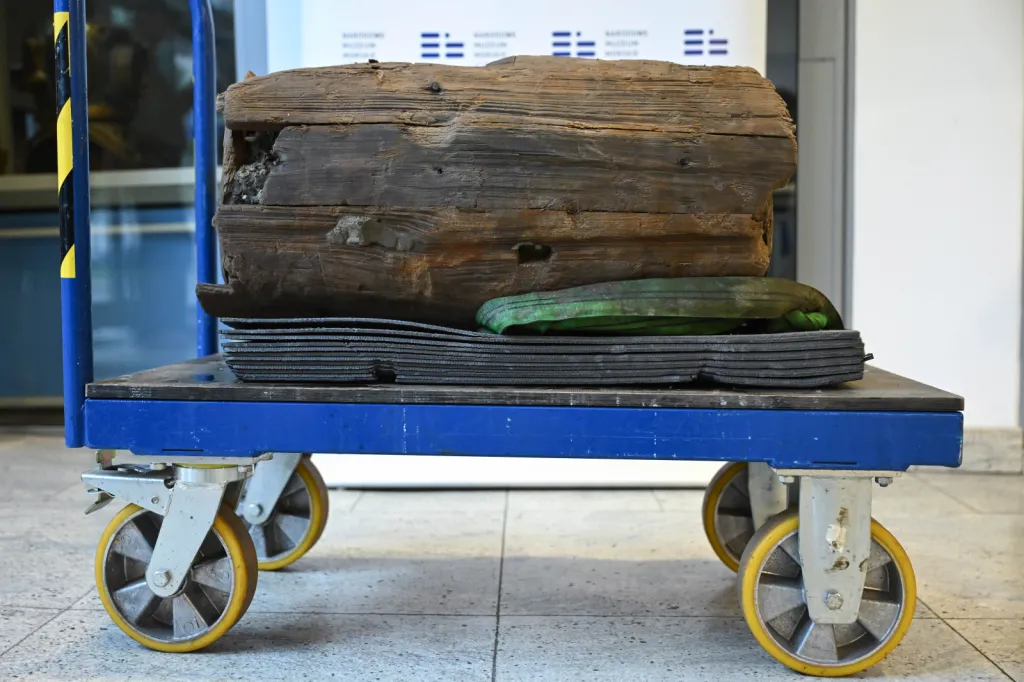
The barrel measures about 70 centimeters in height and 40 centimeters in diameter. It weighs more than 216 kilograms. Inside, experts believe it contains lumps of osmund iron, a semi-finished iron product widely linked to Scandinavian and Baltic commerce.
This was not decorative metal. It was practical, portable and economically important. Packed into barrels, iron could be shipped across the Baltic and sold into markets that needed raw material for tools, weapons, construction and craft production.
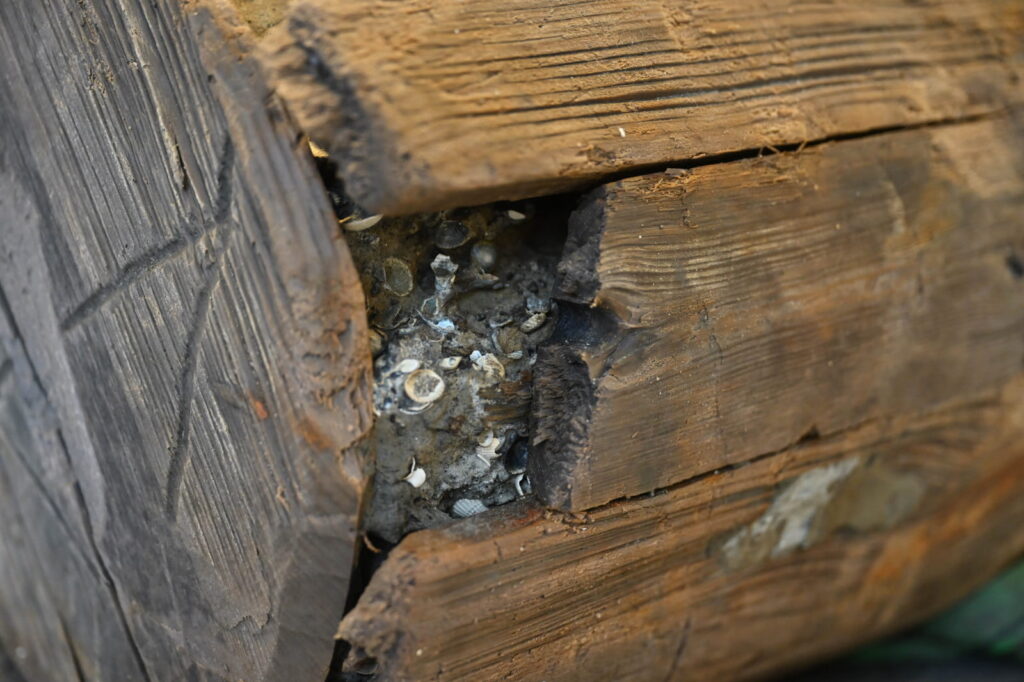
A Swedish origin has not been confirmed, but researchers say it remains possible. Sweden was one of the major iron-producing regions of the period, and the Baltic Sea connected its raw materials with ports, merchants and consumers across northern Europe.
Merchant marks may hold the answer
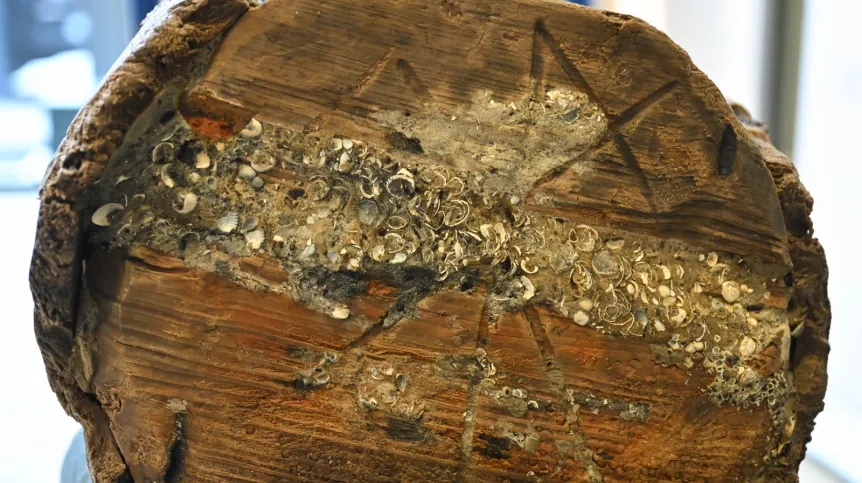
One of the most important clues is preserved on the bottom of the barrel. Archaeologists identified merchant marks, known in Polish as merki. These signs were used to mark goods transported by sea and remained in use until the end of the 17th century.
Such marks can turn an ordinary object into a historical document. They may help researchers trace ownership, trade connections or the commercial route the cargo followed before it disappeared beneath the sea.
Dr. Marcin Westphal, deputy director for research at the National Maritime Museum in Gdańsk, said the object has strong research potential. He noted that the preserved signs may eventually help determine who sold or bought the cargo.
That possibility gives the barrel unusual significance. It is not only a recovered object from the seabed. It may also preserve a fragment of a forgotten trade system, written in wood, iron and saltwater.
A possible trace of a lost ship
Researchers do not yet know how the barrel reached the bottom of the Baltic Sea. It may have gone down during a shipwreck, or a storm may have forced cargo overboard. So far, no other clear remains of a wreck have been found in the area, but archaeological monitoring is continuing.
The next stage will be conservation. The wooden parts and metal cargo must be treated separately because each material requires a different process. Conservators plan to freeze-dry the wood, while the iron will undergo detailed elemental analysis.
The metal also contains harmful chlorides from centuries in seawater. If these salts are not removed, they can continue damaging the cargo even after recovery.
For now, the barrel stands between two very different stories. One belongs to modern Poland’s energy future. The other reaches back to a world of wooden ships, marked cargo and Baltic merchants moving iron across cold northern waters. A single barrel cannot reconstruct that world by itself. But this one may preserve enough to reopen a lost chapter of medieval maritime trade.
Cover Image: An artifact dated preliminarily to the 15th–17th centuries is shown at the Maritime Culture Centre in Gdańsk after being recovered during work for Poland’s first nuclear power plant project. Experts say it may provide new evidence for Baltic trade in the late medieval and early modern periods. Credit: PAP / Adam Warżawa