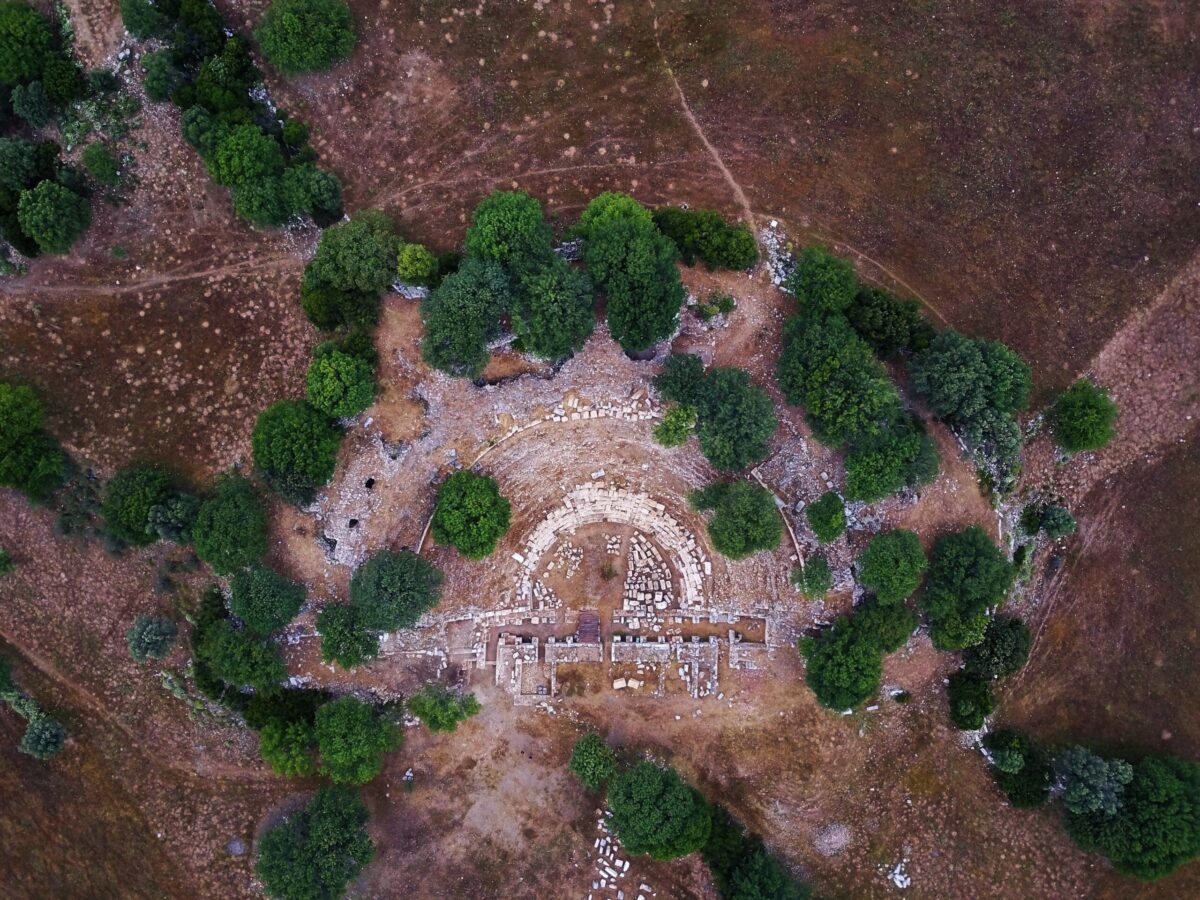
Two inscriptions found in the Sanctuary of Dionysos show that Roman commercial power reached Teos not through conquest, but through markets, marble and civic life.
Rome did not always enter Anatolia with armies. Sometimes it arrived through contracts, ships, market officials and businessmen who knew how to turn local connections into lasting influence.
In the ancient city of Teos, on Turkey’s Aegean coast, two newly studied inscriptions now reveal one of those quieter moments of Roman expansion. Discovered during excavations at the Sanctuary of Dionysos in 2021, the inscriptions provide the first direct evidence for Roman businessmen operating in ancient Teos during the 1st century BC.
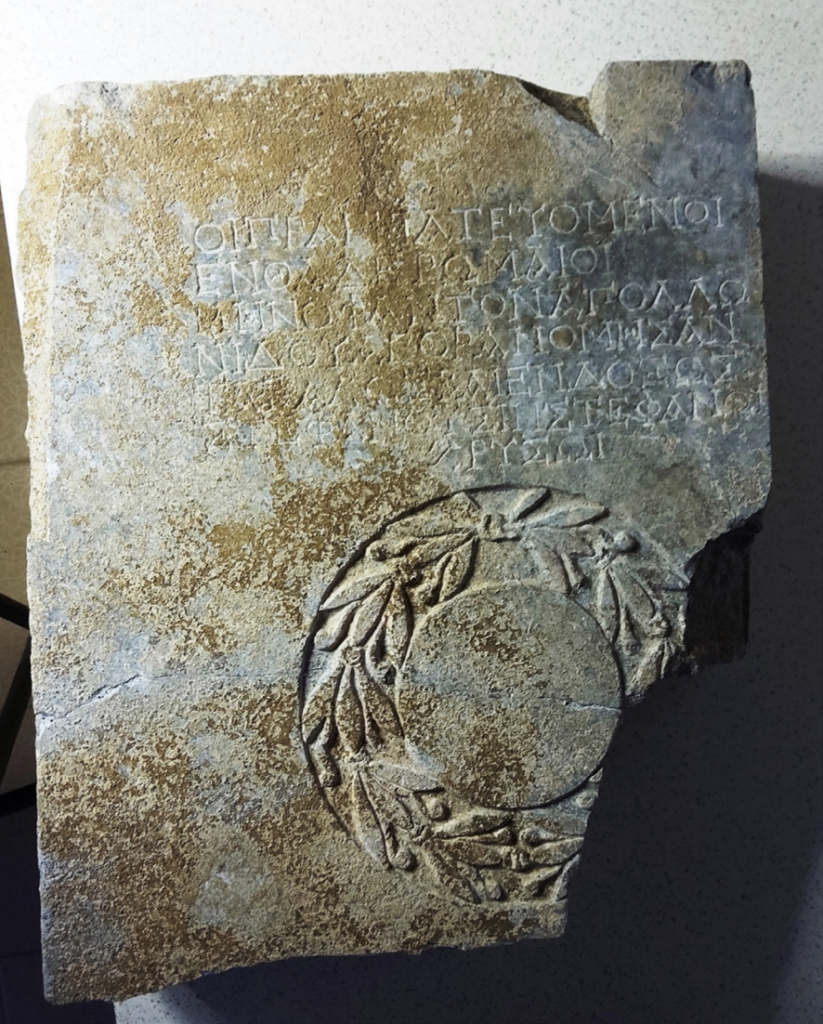
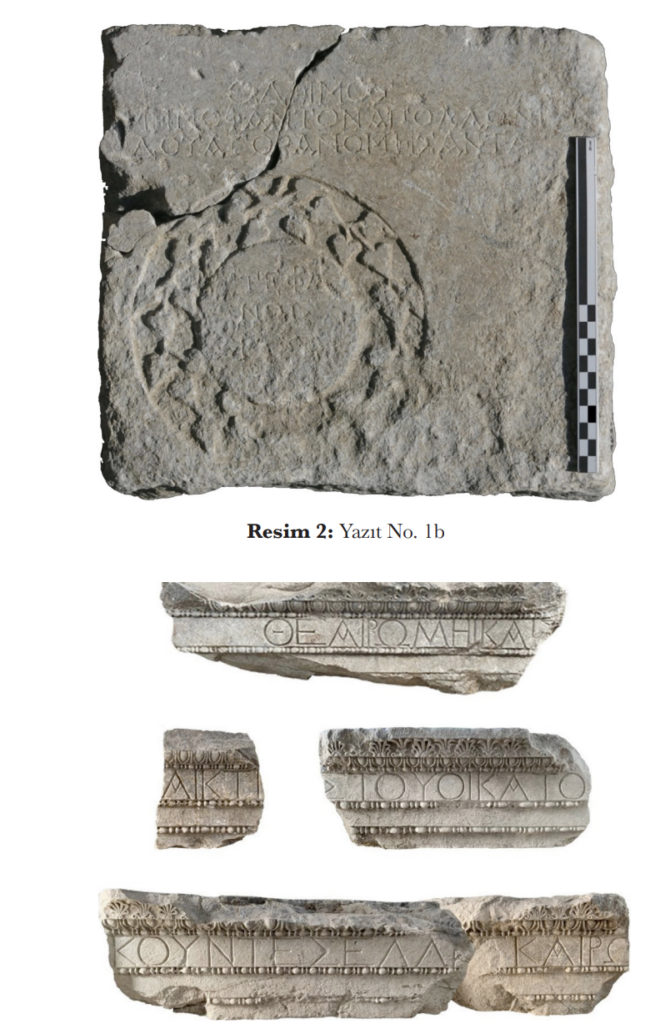
The texts do not describe a battle or a governor’s decree. Instead, they record an act of public honor. A group of Romans “doing business here” crowned a local official named Menophantos, son of Apollonides, with a golden wreath. At first glance, it may seem like a formal civic gesture. But behind that carved line is a larger story about trade, power and the slow integration of western Anatolia into the Roman economic world.
Roman businessmen in an Ionian city
Teos, located near modern Seferihisar in İzmir Province, was one of the historic cities of Ionia. It was known for its Sanctuary of Dionysos, its festivals and its close association with the Artists of Dionysos, a famous guild of performers and musicians in the ancient Mediterranean world.
But Teos was not only a city of cult and culture. It also had a strong economic life. Its prosperity was connected to agriculture, wine, olive oil, wool, timber and marble. Its coastal position placed it within the wider Aegean network, where goods, people and ideas moved between Anatolia, the islands and the Roman world.
The inscriptions show that Roman businessmen were already part of that world. They were not presented as isolated individuals passing through the city. They appear as an organized group, acting collectively and publicly. That detail matters. It suggests a structured Roman commercial presence in Teos, similar to groups known from other cities in western Anatolia.
A golden wreath for the man who kept the market working
The man honored by the Roman businessmen was Menophantos, who served as agoranomos. In Greek cities, this was not a decorative office. The agoranomos helped maintain the order of the marketplace. His responsibilities could involve prices, weights, measures, commercial disputes and the general functioning of trade.
For foreign businessmen operating in Teos, such an official would have been essential. A smooth relationship with the person responsible for the marketplace could mean easier transactions, fewer disputes and better access to local goods.
The inscription says Menophantos carried out his office well and honorably. In response, the Roman businessmen awarded him a golden wreath, one of the most prestigious forms of public recognition in Greek civic life.
A second inscription shows that the people of Teos also honored Menophantos with a golden wreath. This parallel honor places him at a revealing intersection. He was respected by the local civic community and by Roman commercial actors who depended on the city’s economic institutions.
Not ordinary merchants
The study identifies these Roman businessmen with the world of negotiatores. In Roman usage, this term usually referred to people engaged in large-scale business, investment, finance and provincial trade. They were not simply small traders selling goods in a marketplace.
This distinction is important for understanding the Teos inscriptions. The Romans mentioned in the text were likely people with capital, networks and commercial influence. They were part of the broader class of Roman and Italic businessmen who moved through the eastern Mediterranean as Rome’s political reach expanded.
Similar groups are known from cities such as Ephesos, Smyrna, Pergamon, Sardis and Kibyra. The Teos inscriptions now add another important Ionian city to that map. They suggest that Roman business networks in Anatolia were wider and more deeply embedded than previously documented.
Marble may have drawn Roman attention
One possible reason for Roman commercial interest in Teos lies in the city’s natural resources. The region was associated with the famous stone known as Marmor Luculleum, often called Africano marble. This richly colored marble later became prized in Roman architecture.
The study cautiously suggests that Menophantos may have helped Roman businessmen with matters linked to the sale, transport or regulation of local products, possibly including marble. This cannot be stated as certain. Yet it fits both the economic character of Teos and the practical duties of an agoranomos.
If Teian marble was involved, the inscriptions become more than records of local honor. They may preserve an early trace of the commercial channels that connected an Anatolian city with Roman demand.
Rome entered through civic life
The most striking part of the discovery is not simply that Romans were in Teos. It is how they appear there.
They do not appear as soldiers. They do not appear as conquerors. They appear as businessmen who had learned to operate within the civic language of a Greek city. They honored a local official, used the public vocabulary of gratitude and made their presence visible in stone.
This is how influence often worked in the ancient Mediterranean. Economic relationships created social ties. Social ties opened civic doors. Civic recognition made foreign groups part of local public life.
The Roman businessmen of Teos were still outsiders in origin, but they were no longer invisible. Their inscription shows that they had entered the city’s economic heart.
A new layer in the story of Teos
Teos is often remembered for Dionysos, performance, sanctuaries and artistic life. These inscriptions add another layer to that identity. They show Teos as a place where religion, civic administration, trade and Roman capital intersected.
The discovery does not suggest that Roman businessmen controlled the city. The evidence is more subtle and, in some ways, more interesting. It shows that Roman commercial actors were active enough, organized enough and socially connected enough to leave their mark in the public space of an Ionian city.
For the history of western Anatolia, that is significant. The inscriptions expand the known map of Roman commercial activity and show that trade associations reached into Teos before the imperial age fully reshaped the region.
In ancient Teos, Rome was not only a distant power beyond the sea. It was already present in the marketplace, in golden wreaths, in local offices and perhaps in the marble that moved from Anatolia toward the Roman world.
Uzun, T. (2026). Teos’taki Romalı Tüccarlar. BELLETEN, 90(317), 99-126. https://izlik.org/JA38UT86ZX
Cover Image Credit: Public Domain