
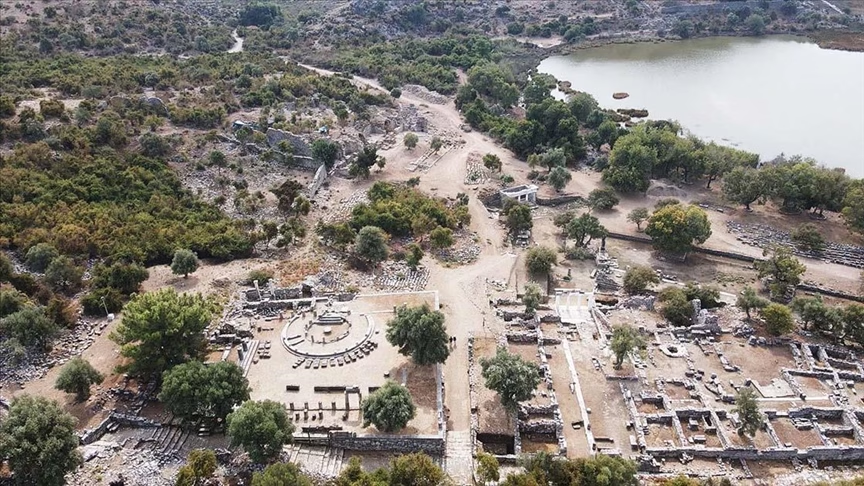
Archaeologists in Kaunos Ancient City, located in the Köyceğiz district of Muğla, southwestern Türkiye, have unearthed a Byzantine church built atop a Roman-era healing complex.
The discovery reveals how the site — now on UNESCO’s World Heritage Tentative List — evolved from a medical center of the Roman Empire into a Christian monastic hub spanning more than a millennium.
A Multi-Layered Complex Linking Medicine and Faith
According to Assoc. Prof. Ufuk Çörtük of Muğla Sıtkı Koçman University, who leads the Kaunos excavations, recent work focused on the Archaic fortification zone, known as the “monastery area.”
Excavations have exposed architectural remains, medical tools, and ritual objects belonging to different occupation phases from the 2nd century CE through the 14th century.
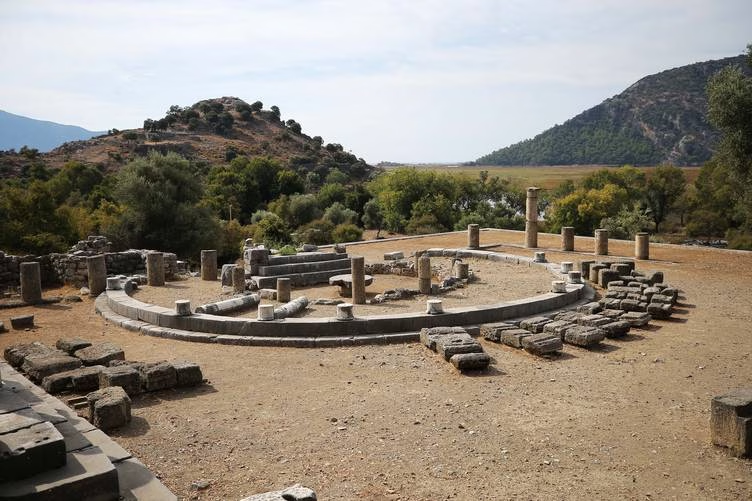
“For the past three years, we have been excavating a Late Antique architectural complex,” Çörtük said.
“Findings of surgical and healing instruments suggest that during the 2nd and 3rd centuries CE, this structure functioned as a Roman valetudinarium — a military hospital that later opened to civilians.”
The building’s courtyard-centered layout and proximity to the ancient harbor further support its identification as a medical facility.
Over time, the complex was repurposed into a monastic structure and eventually transformed into a Byzantine church, reflecting the shifting spiritual and social landscape of Anatolia.
Archaeologists also found a coin belonging to the Aydınoğulları Beylik, proving the site remained in use well into the Turkish-Islamic period.
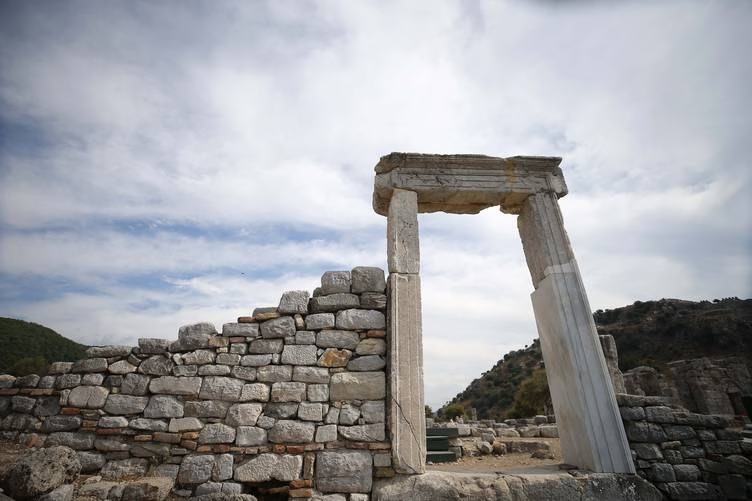
The Sacred Harbor of Caria: Where Healing Met Faith
Once the maritime gateway of Ancient Caria, Kaunos served as a thriving port where commerce, religion, and medicine intertwined. Its sanctuaries were dedicated not only to gods but also to human well-being.
The newly uncovered church demonstrates that Kaunos was more than a harbor — it was one of the ancient world’s true “cities of healing.”
The transformation of a Roman hospital into a Byzantine monastery and church encapsulates over a thousand years of architectural, medical, and religious continuity along Anatolia’s southwestern coast.