
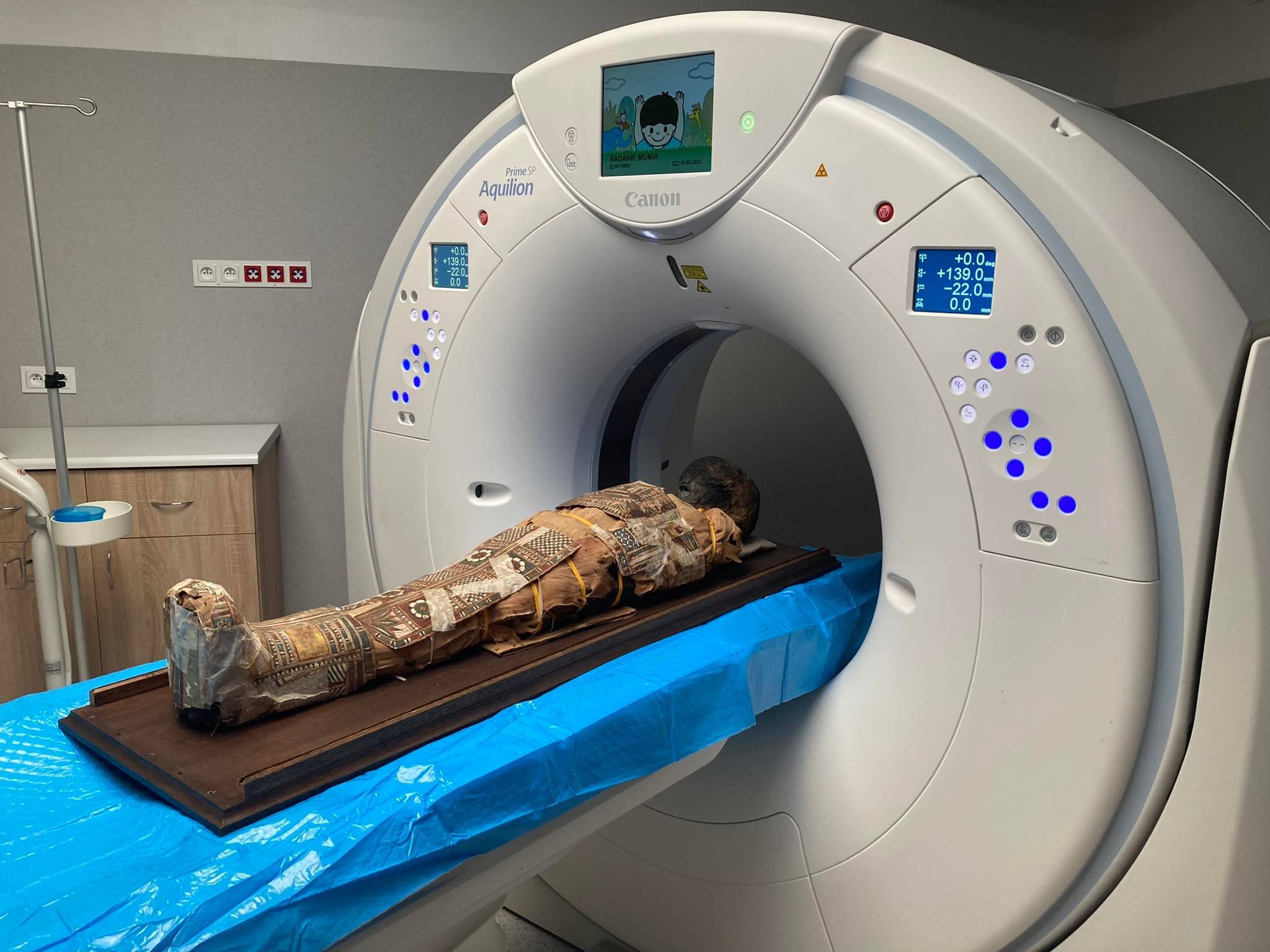
A 2,000-year-old Egyptian child mummy scanned with artificial intelligence has revealed hidden amulets and a surprisingly preserved organ, offering a rare glimpse inside an ancient burial that had remained sealed for over two millennia.
What researchers found was not entirely expected.
Using advanced imaging in Lublin, scientists were able to look inside the mummy without unwrapping it—and what emerged challenges long-held assumptions about how ancient Egyptians prepared their dead.
A Mummy Opened Without Being Touched
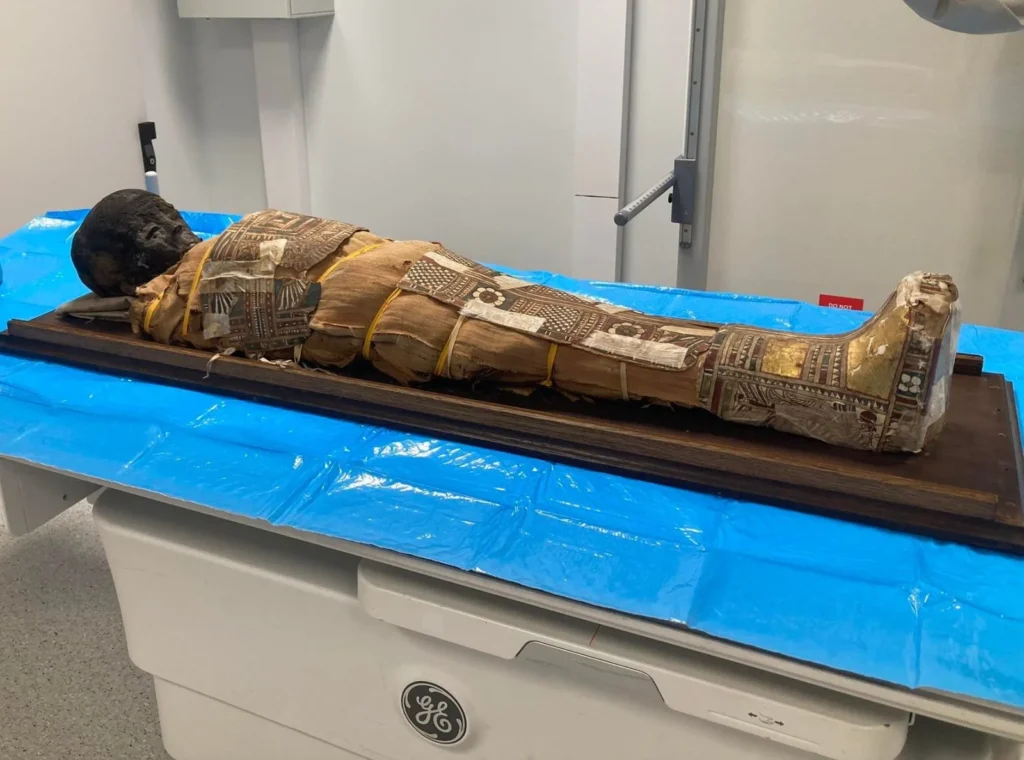
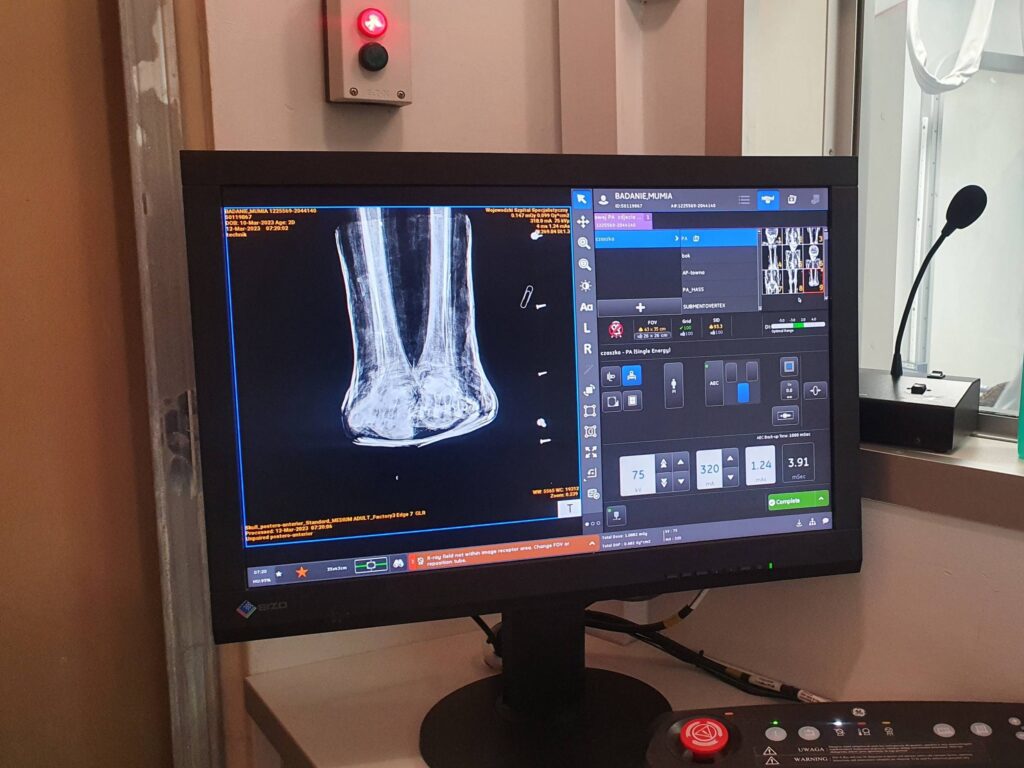
At the Stefan Cardinal Wyszyński Provincial Specialist Hospital, radiologists used an 80-slice CT scanner enhanced by artificial intelligence to generate high-resolution, three-dimensional images of the body.
The result was effectively a “digital autopsy”—a complete internal examination carried out without damaging the fragile wrappings.
Radiologist Maciej Mazgaj emphasized the uniqueness of the process:
“We were able to examine the interior of the mummy in a way that would have been impossible just a few years ago, without risking any damage to the artifact,” he said.
The same diagnostic tools used in modern hospitals were adapted to study a child who lived more than 2,000 years ago—offering a level of access rarely achieved in archaeology.
Hidden Amulets—and an Unexpected Discovery
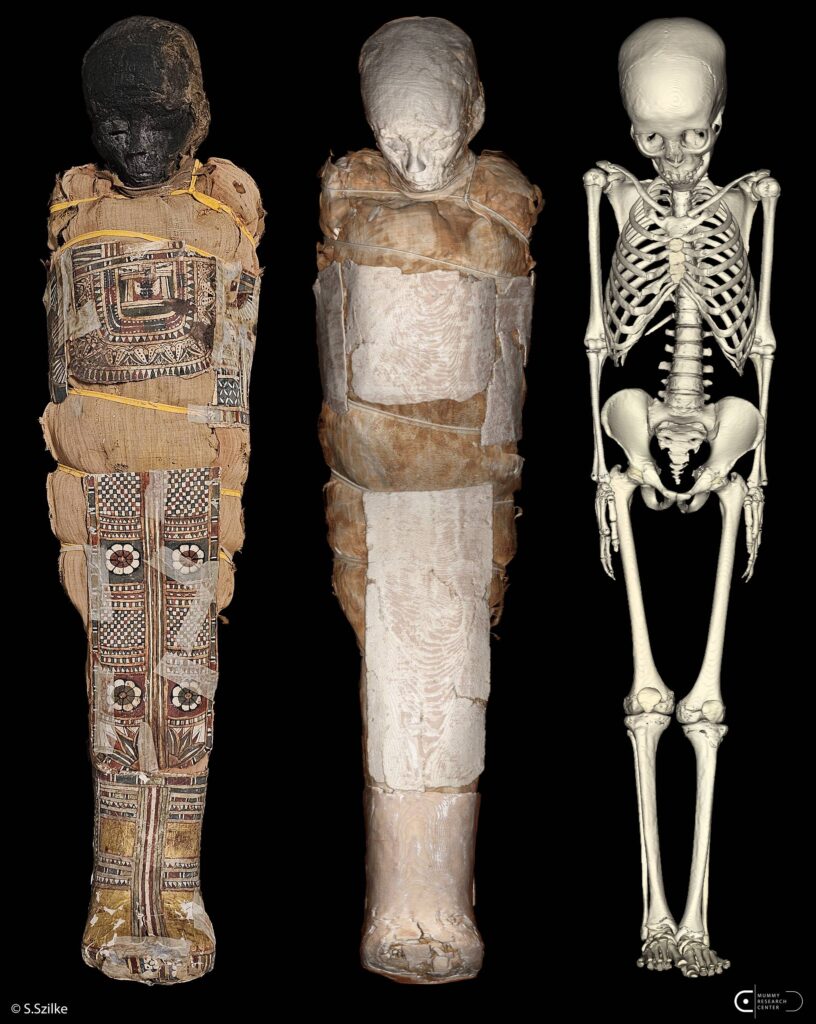
The scans revealed multiple amulets placed carefully between layers of linen. These objects were not random. In ancient Egyptian belief, such items served as protective symbols, guiding and safeguarding the deceased in the afterlife.
But the most striking discovery lay deeper inside the body.
The liver was still present.
This is highly unusual. In standard ancient Egyptian mummification, internal organs were typically removed and stored separately in canopic jars. The presence of a preserved liver suggests that this burial did not follow conventional rules—or that regional practices were more flexible than previously believed.
Another detail adds to the mystery.
Researchers identified an unknown object resting on the chest. According to Agata Kubala of the University of Wrocław, it could be a papyrus fragment—possibly containing the boy’s name. “The scans revealed the presence of an object on the chest that may be a papyrus, potentially preserving the identity of the child,” Kubala noted.
A Child’s Life—and Death—Frozen in Time
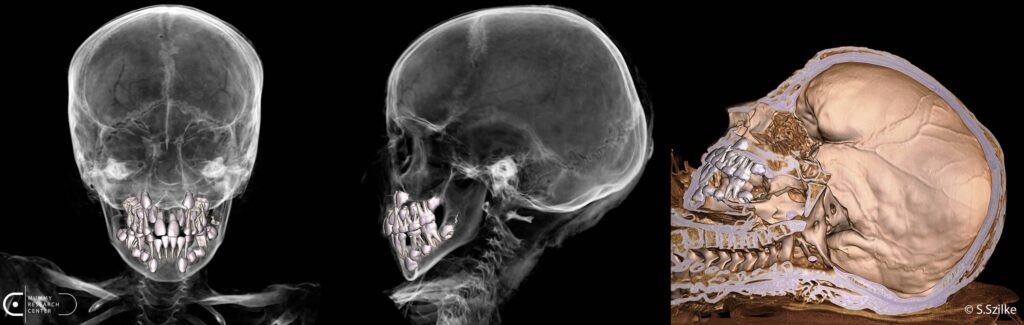
The mummy belongs to a boy estimated to have died between the ages of 8 and 10. Radiological analysis confirmed that the brain had been removed through the nasal cavity, a known embalming technique in ancient Egypt, while most internal organs were also taken out.
Yet the process was not entirely uniform.
The combination of retained organs, hidden amulets, and a possible written artifact suggests a more individualized burial practice—one that does not fully align with textbook descriptions of mummification.
Physically, the mummy measures around 123 cm in length. The face is partially visible due to earlier unwrapping, showing darkened skin coated with embalming substances and traces of salt. Researchers believe the face may once have been covered by a funerary mask.
From the Nile to Poland
Today, the mummy is preserved at the Archdiocesan Museum in Wrocław in Wrocław. It arrived there in 1914 as part of a collection assembled by Adolf Bertram.
Analysis of the cartonnage suggests the mummy originated in Upper Egypt—possibly from Kom Ombo or Aswan—regions long associated with elaborate burial traditions.
A New Era of Archaeology
This study highlights a broader shift in archaeology.
Instead of physically opening mummies—a process that can cause irreversible damage—researchers can now explore their contents using AI and medical imaging, preserving them for future generations.
At the same time, discoveries like this raise new questions. How standardized were ancient Egyptian burial practices? Were deviations more common than assumed?
Kubala A., Ożarek-Szilke M.A., Szilke S., Ejsmond W. (2026). Digital technology in the service of mummy studies. Egyptian child mummy at the Museum of the Archdiocese in Wroclaw. Digital Applications in Archaeology and Cultural Heritage, 40, e00505. https://doi.org/10.1016/j.daach.2026.e00505