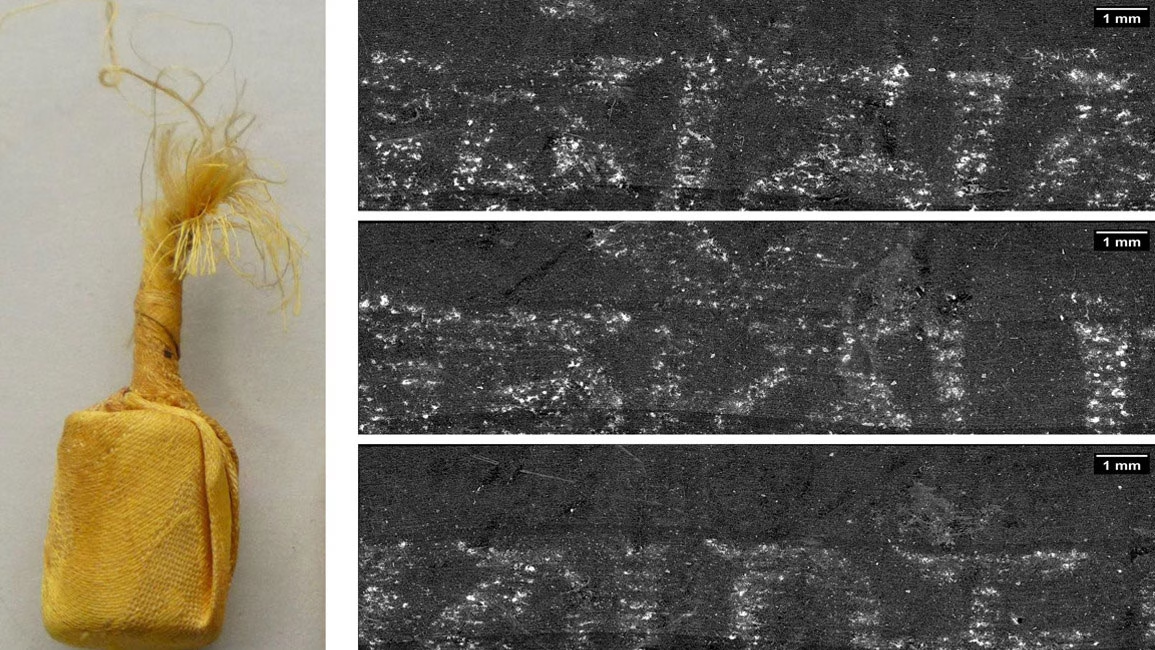
In Berlin, researchers have virtually “unrolled” an ancient Buddhist prayer scroll that had remained sealed for centuries. Scientists at Helmholtz-Zentrum Berlin used advanced 3D X-ray tomography combined with experimental artificial intelligence to examine the fragile manuscript, part of a portable shrine known as a gungervaa, without physically opening it.
A forgotten nomadic Buddhist tradition
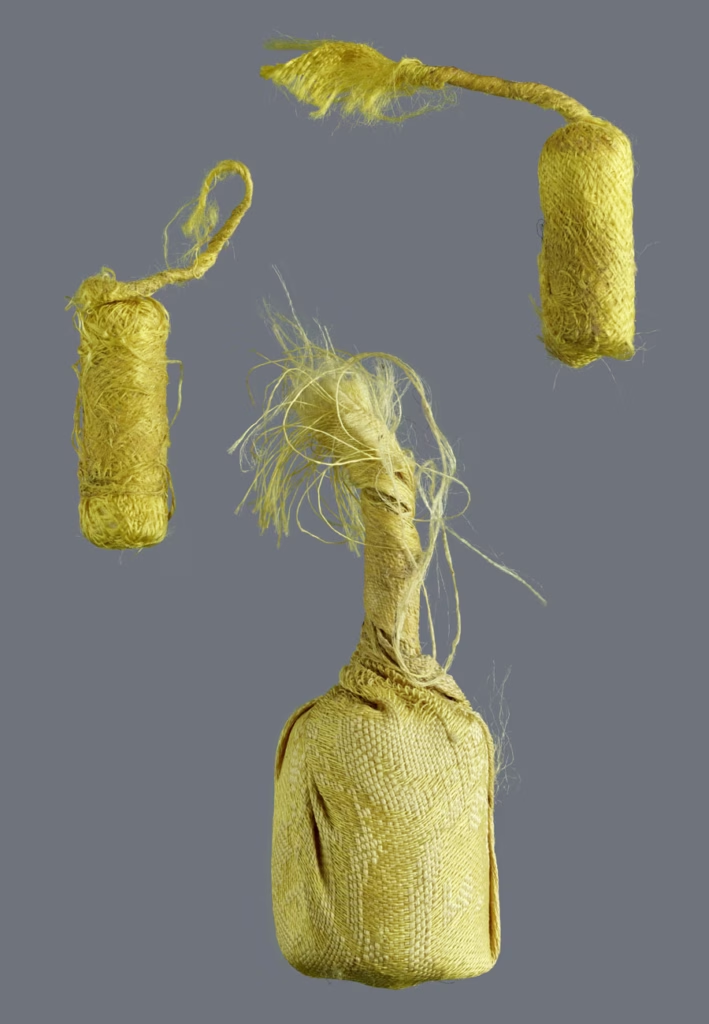
For centuries, Mongolian nomads carried small portable shrines during their seasonal migrations. Known as gungervaa, these miniature sanctuaries often contained religious relics, statues, and most importantly dharanis—tiny prayer scrolls stored in silk pouches. The tradition nearly vanished after the Mongolian Revolution of 1921, when countless shrines were destroyed.
One rare surviving example, however, found its way into the Ethnological Museum of Berlin, where it remained in storage until now.
Fifty layers of hidden prayers
The Berlin team digitally analyzed three miniature scrolls from the shrine, each no larger than an inch in diameter. To their surprise, the scans revealed that the scrolls were made of 31.5-inch parchment strips, tightly wound up to 50 times.
The imaging also uncovered traces of text. The script was Tibetan, but the language was Sanskrit. Among the legible phrases was the iconic Buddhist mantra “Om mani padme hum”, translated as “praise to the jewel in the lotus.”
Powerful but not yet practical
While the breakthrough highlights the power of noninvasive technologies in cultural heritage studies, researchers caution that 3D tomography remains a labor-intensive and costly process. It is far from becoming a routine method for the study of fragile manuscripts.
Rediscovering a spiritual legacy
Now preserved in Berlin, the scrolls not only embody a spiritual tradition but also revive a nearly lost chapter of Mongolian Buddhist heritage. The study demonstrates how cutting-edge science can bring forgotten voices of the past back into focus—without ever breaking the seal.