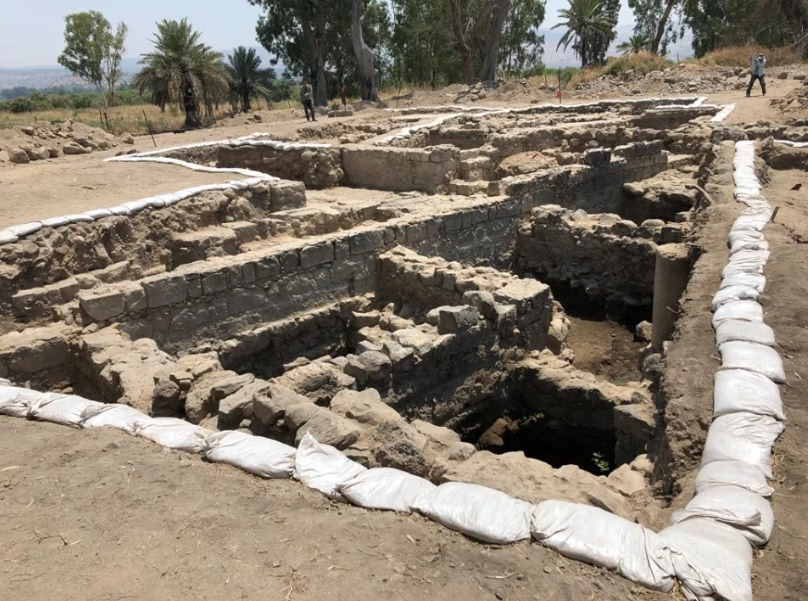
A late-July wildfire along the northern shore of the Sea of Galilee has unexpectedly unveiled what archaeologists believe could be the long-lost biblical village of Bethsaida.
The fire, which swept across the Betiha Nature Reserve, cleared thick vegetation and revealed hundreds of small mounds, long hidden beneath dense reeds and eucalyptus trees. Experts suggest these formations may represent rooms and structures from a first-century fishing village, offering a rare glimpse into a site tied to the apostles Peter, Andrew, and Philip.
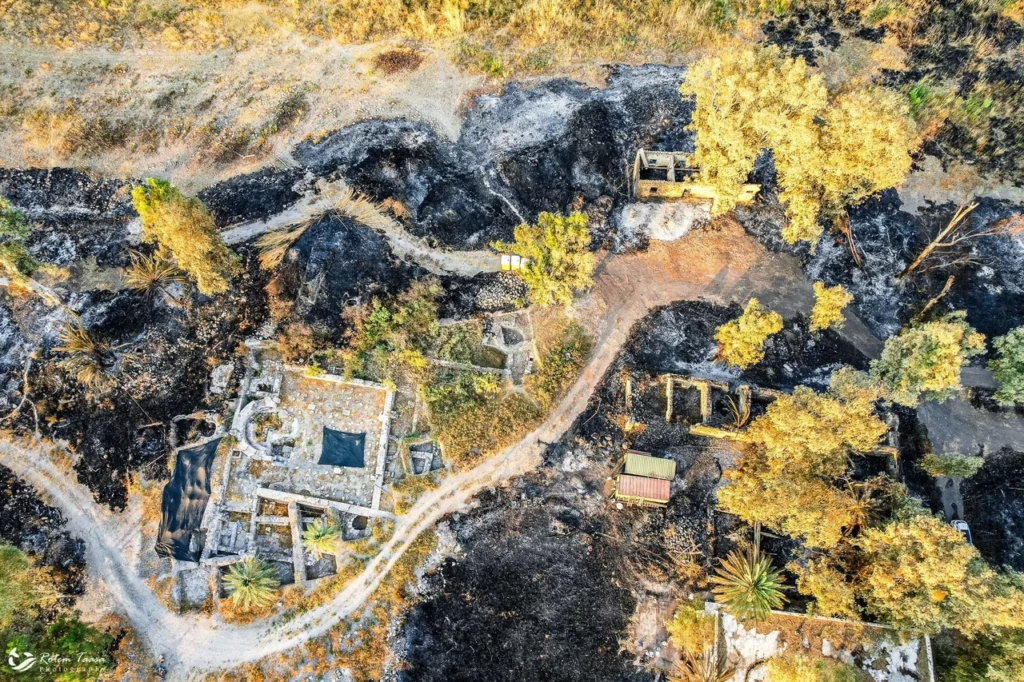
The blaze forced the closure of Highway 87, prompted swimmers to flee nearby beaches, and burned for more than 17 hours. Yet when archaeologists returned to the charred landscape, they found stone blocks, pillar fragments, and other architectural remnants previously concealed. Mordechai Aviam, director of the el-Araj excavation project at Kinneret College, described the wildfire as an “unfortunate event that nonetheless provided a unique opportunity to survey the site with unprecedented clarity.”
Rethinking the Location of Bethsaida
For decades, the exact location of Bethsaida, mentioned in the New Testament, has been debated. The traditional site, known as e-Tell, lies over a mile inland at a higher elevation, which conflicts with descriptions of a lakeside fishing village. Excavations at el-Araj, however, have uncovered Roman-era pottery, fishing tools, and the remains of a bathhouse, aligning more closely with first-century accounts and suggesting that el-Araj may indeed be the historical Bethsaida-Julias.
Layers of history complicate the site’s excavation. A Byzantine-era church and monastery from the 5th century sits atop the Roman layer, while a Crusader-era sugar factory was later constructed above the church. The recent wildfire has cleared surface vegetation, allowing archaeologists to identify potential areas for further excavation without obstructions.
Fire as an Unexpected Archaeological Aid
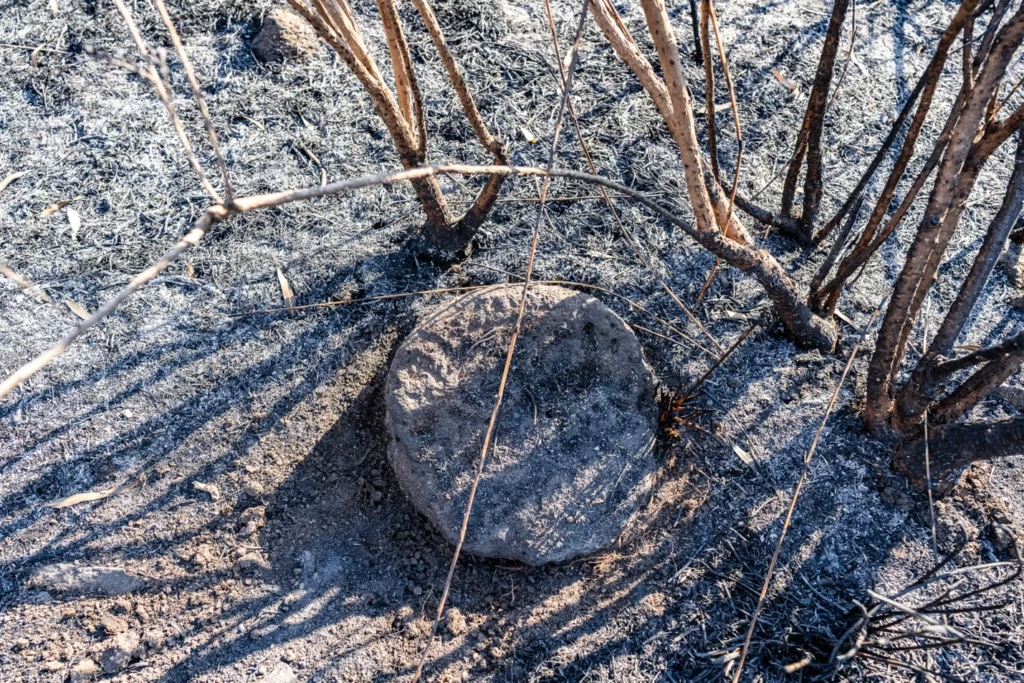
The wildfire, starting near Amnun Beach, created an unusual opportunity for researchers. As the flames consumed shrubs and trees, they revealed hundreds of mounds scattered across the site. “Each mound may represent an ancient room,” Aviam noted. Among the debris, the team also identified fragments that could indicate public buildings or communal spaces.
Remarkably, the church at the site was spared, with the fire stopping just short of its perimeter. This preservation allows archaeologists to continue studying the sacred space while exploring the residential and commercial layers beneath.
Excavation Progress and Volunteer Involvement
Excavations at el-Araj began in 2016 under the supervision of Aviam and historical director R. Steven Notley from Pillar College, Newark. Since then, the team has uncovered significant Roman-era structures, including a bathhouse that confirmed the presence of a settlement dating to the time of Jesus.
Volunteers play a critical role at the site, coming from around the world to assist with excavation. Some, like Zachary Wong from Hong Kong, have been returning annually with family members, contributing to everything from uncovering mosaics to documenting inscriptions. Notably, young participants, even toddlers, are encouraged to engage with the site in age-appropriate ways, fostering an early appreciation for archaeology and biblical history.
Among the remarkable discoveries is an inscription mentioning the Apostle Peter, linking the site directly to the biblical narrative. “It explicitly references the keeper of the keys,” Wong explained, connecting the mosaic to Peter in a tangible, historical context. Such findings underscore el-Araj’s potential significance as the authentic location of Bethsaida.
Looking Ahead
The wildfire, though destructive, has accelerated the study of el-Araj by exposing previously hidden features and guiding archaeologists toward promising areas. Researchers are optimistic that continued excavation will uncover additional evidence of the Roman-era village, providing a deeper understanding of the region during the time of Jesus.
As vegetation begins to regenerate and the archaeological team resumes work, the site stands as a vivid reminder of how natural events can unexpectedly illuminate human history. With each season, el-Araj offers new insights into a village that may have been lost to time—and now, partially revealed through fire.
Cover Image Credit: The main excavation site (Area A) at el-Araj. Photo Credit: El-Araj Excavation Project