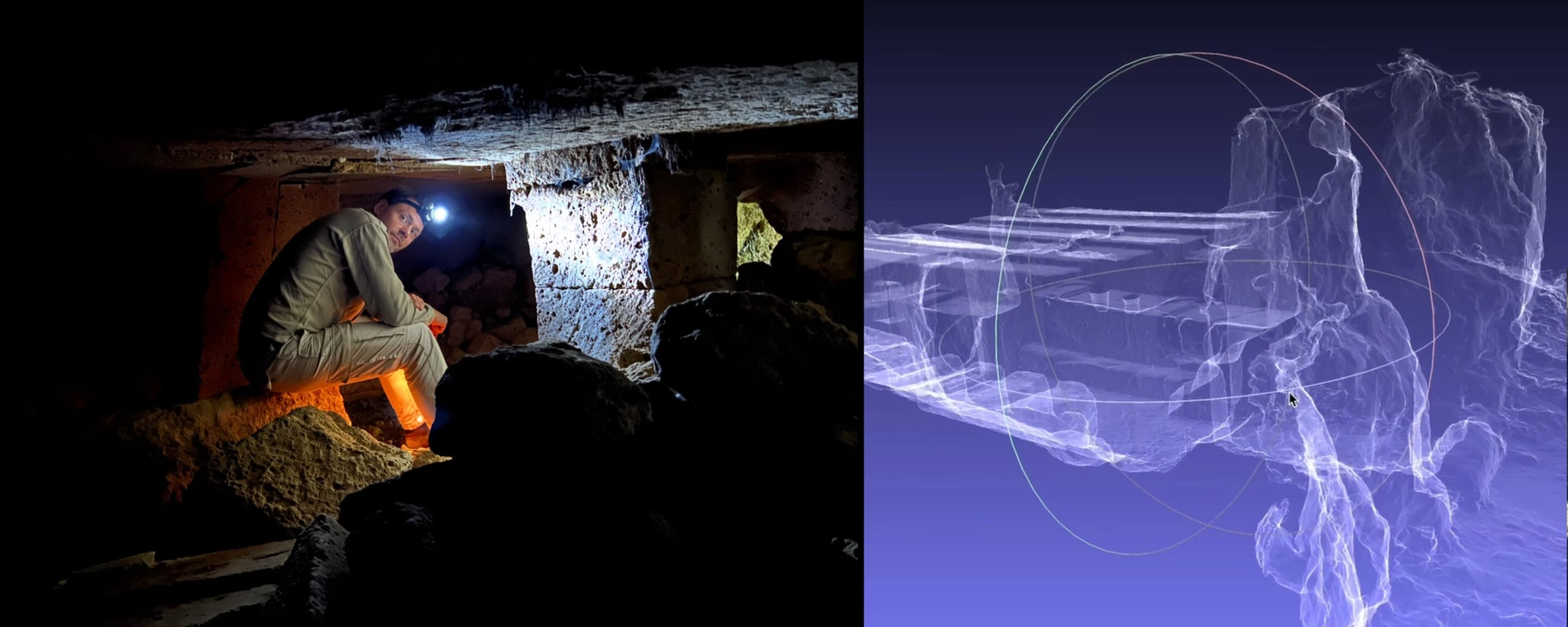
Imagine descending into a 2,500-year-old tomb, squeezing through narrow passages, and brushing past dust-laden stone walls—without ever leaving your home. Thanks to a pioneering project by the University of Gothenburg and the Swedish Institute in Rome, nearly 280 Etruscan chamber tombs in Italy have now been digitally documented and opened to the world through a new online portal.
From Field Notes to 3D Scans
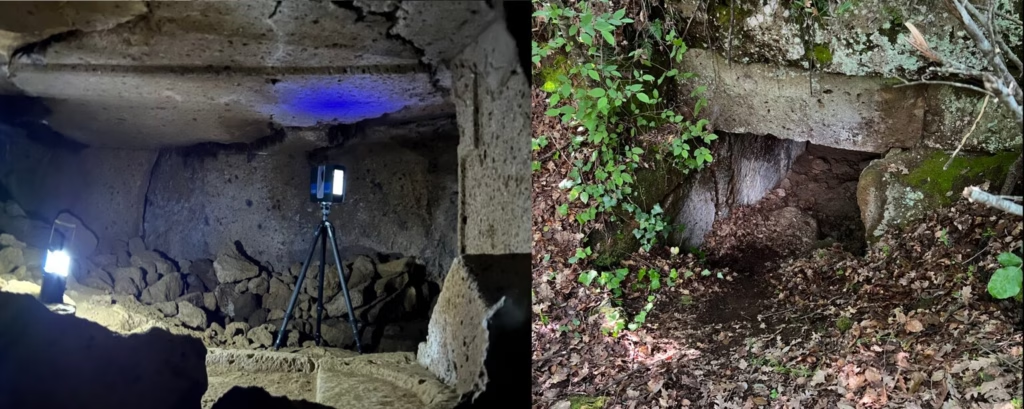
The initiative combines historic excavation records from the Swedish Institute’s archives with cutting-edge technologies such as photogrammetry, laser scanning, and digital databases. The result is a platform where scholars, students, and the public can explore these ancient tombs in unprecedented detail.
“We are never the first to visit these places – they have been used by shepherds and farmers and recorded by archaeologists for more than a hundred years. Yet it sometimes feels as if time has stood still,” says Jonathan Westin, director of GRIDH, the University of Gothenburg’s research infrastructure for digital humanities.
Virtual Reality Access to Hard-to-Reach Sites
Many of the tombs are located far from public roads, often requiring archaeologists to crawl through collapsed corridors in thick dust. Now, 3D models and a Virtual Reality application allow users worldwide to experience these hidden chambers safely and interactively.
“Above all, the scans allow people who have never been able to travel to these sites or descend into the chambers to both experience them and extract new data for the first time,” Westin explains.
A Century of Swedish Archaeology in Italy
The Swedish Institute in Rome has been central to archaeological research in Italy since 1925. Its work in southern Etruria during the 1950s brought international attention—thanks in part to King Gustav VI Adolf of Sweden, a passionate archaeologist who personally joined excavations until shortly before his death in 1973. Today, the institute’s library remains one of the world’s foremost resources in Etruscan studies.
Looking Ahead: Teaching the Next Generation
Starting in 2026, the digital tomb portal will also become a teaching tool. Students at the University of Gothenburg will gain hands-on experience in data collection, 3D scanning, and digital publishing, working alongside the Swedish Institute in Rome.
Global Access to Ancient Heritage
For archaeologists, historians, and enthusiasts alike, the project represents a breakthrough in how cultural heritage can be preserved and shared. By transforming inaccessible burial chambers into an interactive archive, Swedish researchers have ensured that the silent world of the Etruscans speaks once more—this time in digital form.
Cover Image: Hampus Olsson, researcher at the Swedish Institute in Rome. Credit: Jonathan Westin