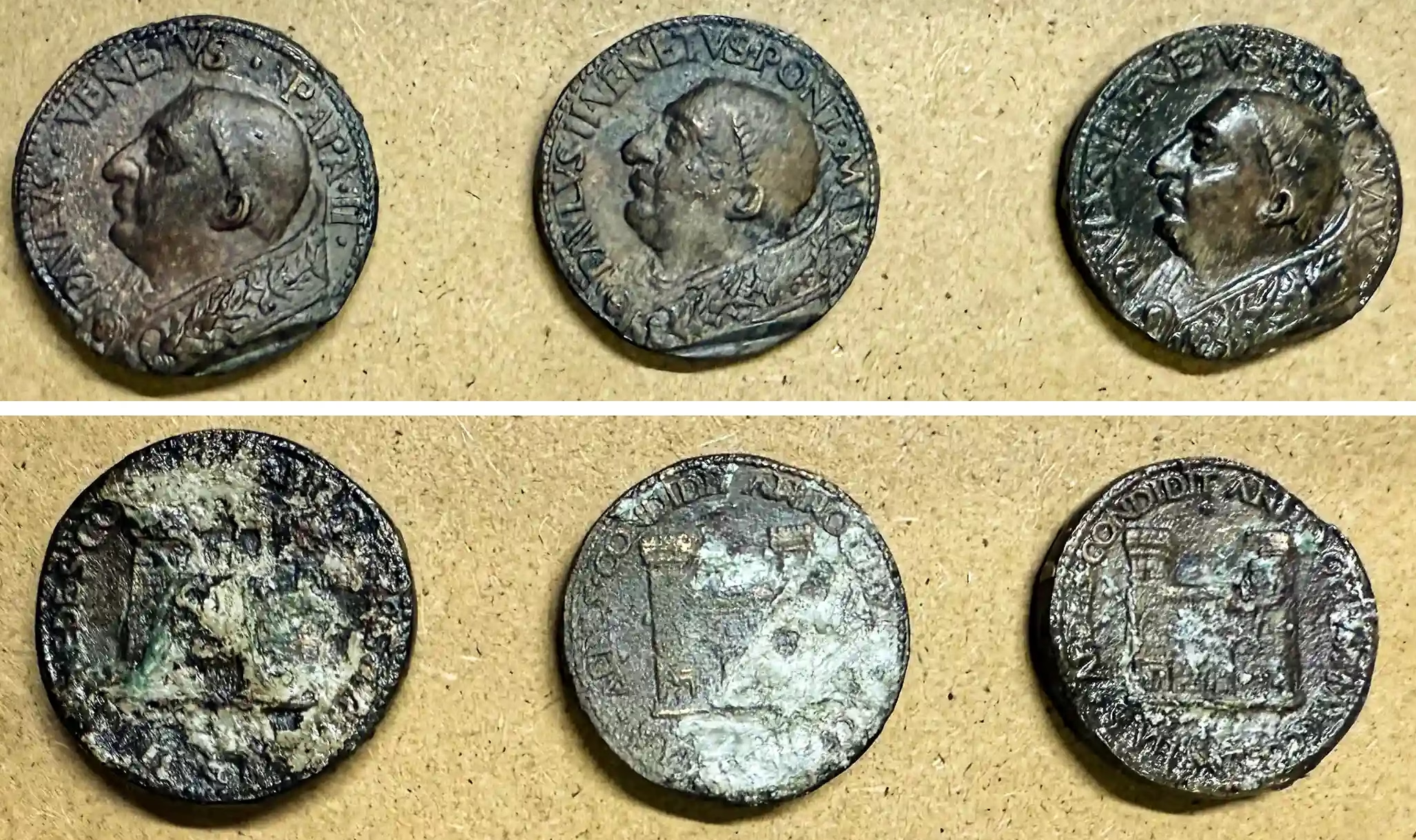
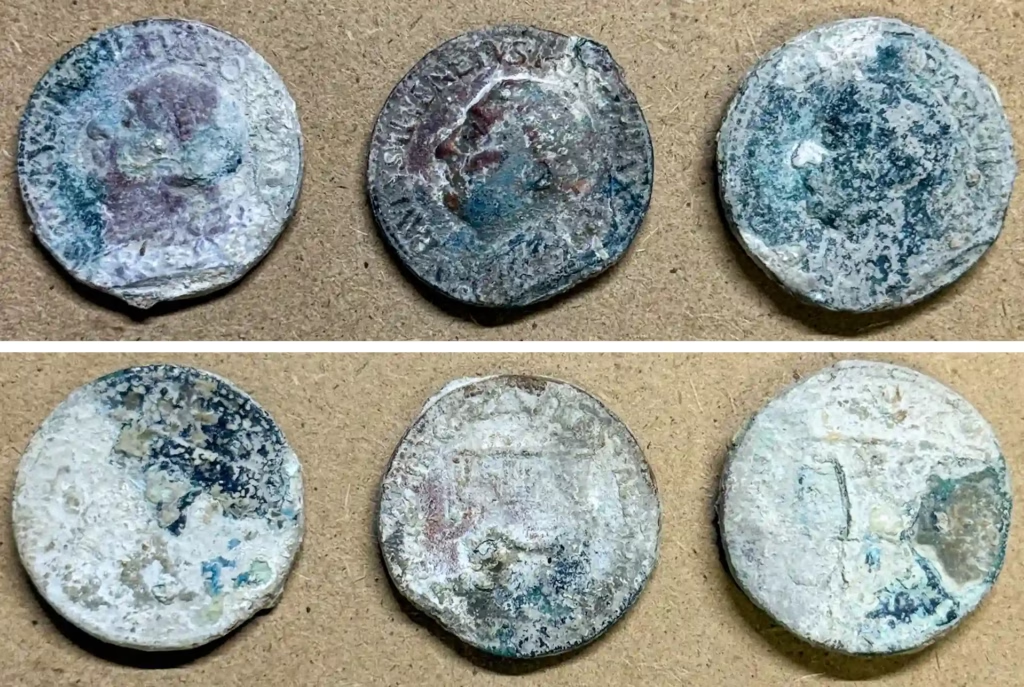
Rome’s Piazza Venezia has once again revealed a piece of hidden history. During excavations for a new Metro station in the city’s historic heart, archaeologists uncovered bronze medallions dated to 1465, bearing the effigy of Pope Paul II. The objects were concealed inside a terracotta pot and deliberately placed within the foundations of the Palazzetto Venezia as part of a foundation ritual intended to bring good fortune to the building.
A Renaissance Tradition Beneath Modern Rome
The discovery provides tangible evidence of an ancient practice: embedding coins, medallions, or votive objects in the foundations of major constructions. “Concealing these objects in the plinths of large and small buildings is an auspicious practice of a much older tradition,” explained Marta Baumgartner, archaeologist of the Superintendency and scientific director of the excavation. She noted that such rites were common not only for grand palaces and churches, but also for private houses—a tradition stretching from antiquity into the Renaissance and, in some ways, into modern times.
The Story of the Palazzetto Venezia
Commissioned in 1467 by Pope Paul II, the Palazzetto Venezia originally stood beside the larger Palazzo Venezia. The pontiff used it as his residence until his death in 1471, after which it was completed by his nephew. In the early 20th century, however, the building was dismantled and reconstructed on the opposite side of St. Mark’s Basilica to make way for the vast Piazza Venezia and the monumental Victor Emmanuel II Memorial. Unlike many other medieval and Renaissance structures demolished during this period of urban transformation, the Palazzetto was spared from total destruction.
Archaeologist Rodolfo Lanciani, a contemporary critic of the demolitions, documented similar finds of terracotta vessels containing three or five medallions in the foundations of the Palazzo Venezia, suggesting the ritual was consistently practiced.
From Excavation to Exhibition
The newly discovered medallions have been cleaned and stabilized. After further study and conservation, they will go on public display inside the new Metro station at Piazza Venezia—bridging Rome’s modern transport network with the city’s Renaissance and ancient past.