
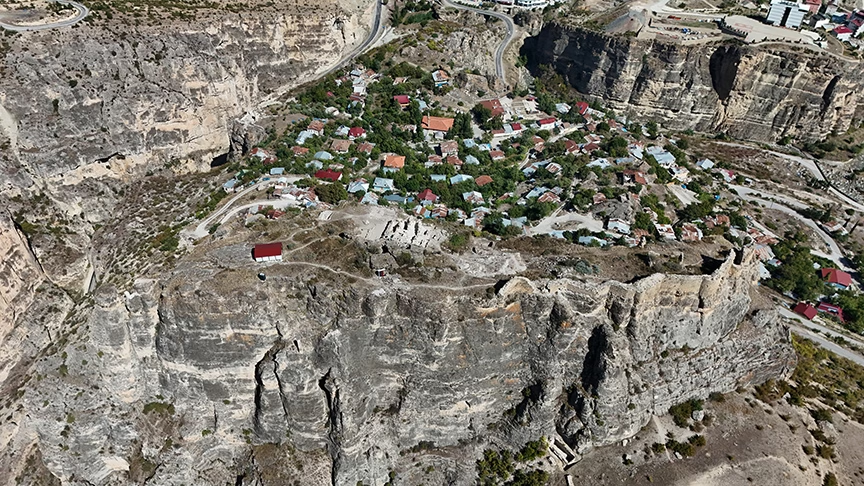
Archaeologists excavating the medieval fortress of Gevhernik Castle in Ardanuç, Artvin Province (northeastern Turkey) have located what they believe to be the burial chamber of Georgian King Ashot the Great (Ashot I Kuropalates).
The discovery, made beneath the apse of the Church of Saints Peter and Paul, could confirm a key detail in Georgian chronicles describing the monarch’s final resting place in the ancient city of Artanuji—the heart of his 9th-century kingdom.
The long-lost royal tomb comes to light
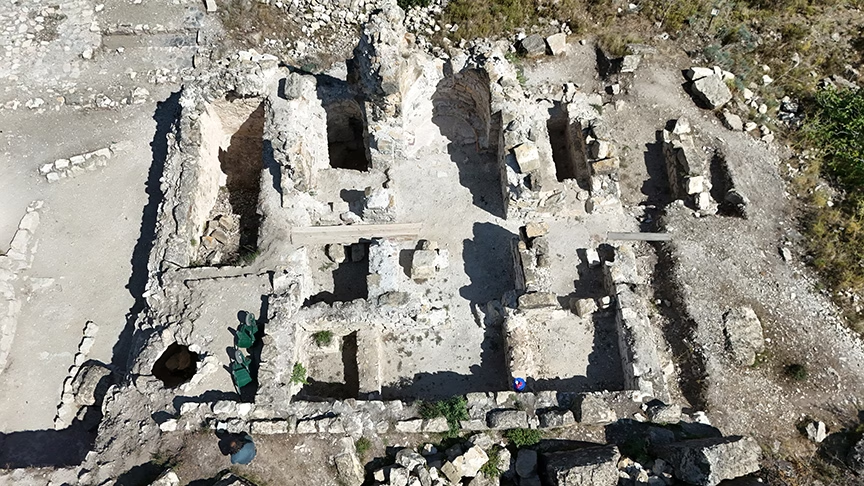
The excavation team, operating under the Turkish Ministry of Culture and Tourism in partnership with Van Yüzüncü Yıl University, uncovered a 2-meter-long vaulted stone chamber hidden directly below the church’s sanctuary.
No skeletal remains were found inside, but the chamber’s location, architectural form, and proportions match medieval written descriptions of Ashot’s burial.
Project director Dr. Osman Aytekin explained:
“According to historical sources, King Ashot was buried in this church, which he himself commissioned. The chamber beneath the apse aligns precisely with that record. We can now identify this space as the site of Ashot’s tomb with strong archaeological confidence.”
A complex fortress with signs of daily life
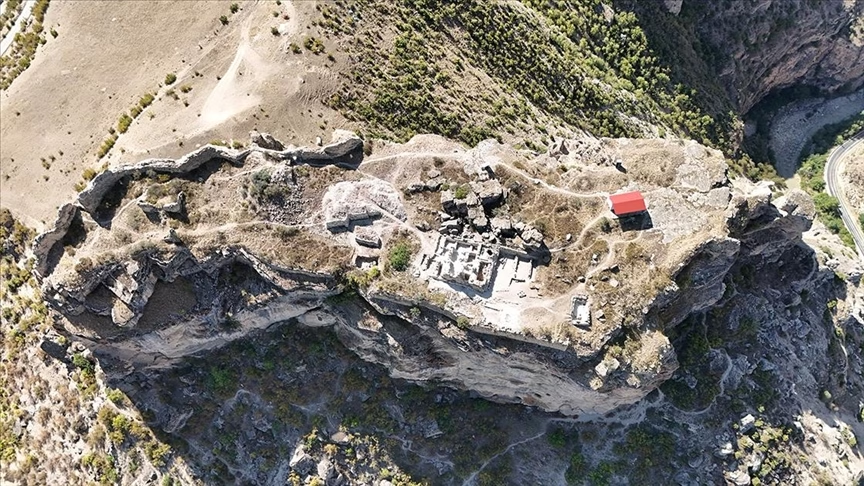
Alongside the burial chamber, the team documented a large tandoor-style kitchen, several cisterns for water storage, and numerous portable finds including Byzantine coins, ceramic fragments, and stone projectiles.
These remains indicate a substantial population living within the inner fortress — both administrative and religious officials who likely supported the royal establishment.
Two cisterns have already been fully excavated, and a third is currently under investigation.
All recovered artifacts will be transferred to the Artvin Museum after the season concludes.
A royal stronghold between Anatolia and the Caucasus
Built initially in the 5th century CE, Gevhernik Castle was expanded by King Ashot I in the 9th century, when he transformed the region into the core of the Bagratid realm of Tao-Klarjeti.
The fortress controlled trade and communication routes linking eastern Anatolia to the Georgian highlands — a crossroads of Christian and Byzantine influence.
Excavations suggest that while nobles and the ruling elite resided within the upper citadel, merchants and craftsmen lived in the walled lower town containing a bathhouse, fountains, and a network of smaller chapels.
Archaeology meets the medieval chronicle
The Kartlis Tskhovreba, Georgia’s national chronicle, recounts that Ashot the Great was interred in the Church of Saints Peter and Paul in Artanuji after his death in the mid-9th century.
The discovery of a vaulted tomb beneath the church apse at Gevhernik provides the first material correlation to that narrative — effectively tying historical text to a tangible site.
Engineering of monumental precision
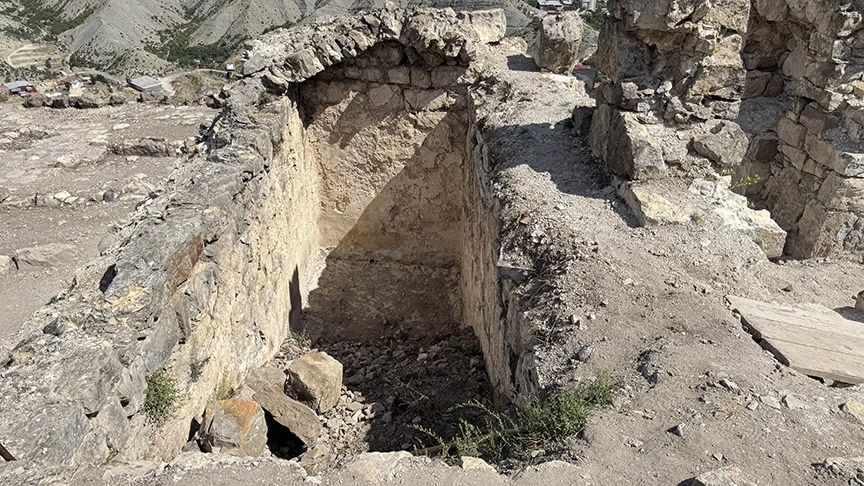
Structural analysis by Dr. Turgay Beyaz of Pamukkale University revealed that the castle walls incorporate monolithic stones weighing up to 10 tons, all sourced from nearby rock formations.
Such construction methods indicate advanced knowledge of local geology and a deliberate effort to display royal power through monumental architecture.
A discovery redefining medieval Artvin
Though the burial chamber contained no human remains, its confirmation marks a rare case where textual tradition and field archaeology converge.
For scholars of medieval Georgia and Anatolia alike, Gevhernik Castle now emerges not only as an architectural relic but as the political and spiritual anchor of Ashot’s kingdom.
Excavations will continue over the next five years, with conservation plans aiming to open parts of the site to visitors once research and stabilization are complete.
Cover Photo: Aerial view of Gevhernik Castle in Ardanuç, Türkiye, where archaeologists identified a vaulted burial chamber beneath the Church of Saints Peter and Paul — believed to be the tomb of Georgian King Ashot the Great. Credit: Yusuf Okur/AA