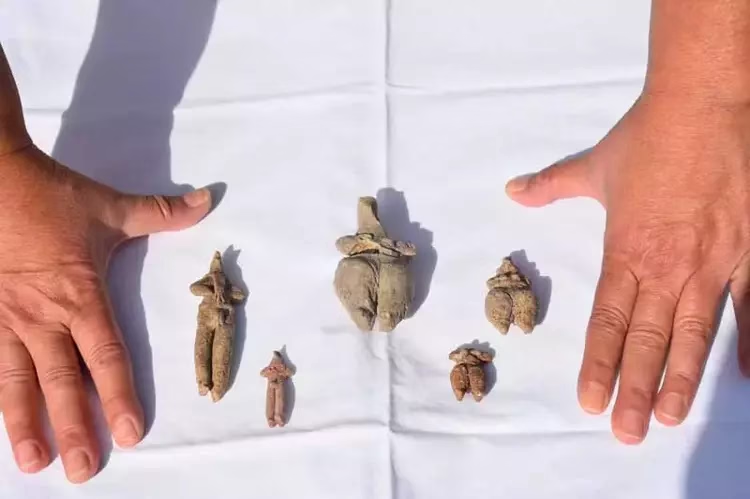
Archaeologists in İzmir’s Kemalpaşa district have uncovered five clay figurines dating back 8,000 years. The Neolithic finds, depicting both women and men, shed new light on the symbolic and ritual practices of one of Anatolia’s earliest farming communities.
The ancient settlement of Ulucak Höyük, considered the oldest known village in western Turkey, has once again revealed remarkable traces of Neolithic life. Excavations led by Prof. Dr. Özlem Çevik of Trakya University uncovered a group of five clay figurines, three female and two male, all found together within a building layer.
Measuring between 3 and 10 centimeters, the figurines show striking differences in size and detail. Some of the female figures are depicted holding their breasts, a gesture commonly associated with fertility and abundance. According to Prof. Çevik, such variation may reflect social distinctions based on age and gender within the community.
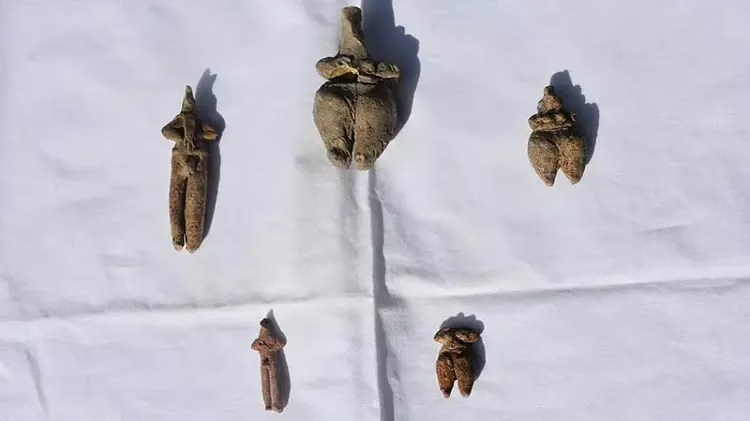
Unlike earlier discoveries, these figurines were not retrieved from the floor but from fill material above it. This suggests they may have once been suspended on a wooden post to dry before a destructive fire hardened the clay. One figurine, notably, was found unbaked and was naturally fired during the blaze.
Radiocarbon analysis of the building indicates a date between 6005 and 5840 BC, placing the figurines firmly in the early Neolithic. The discovery marks the smallest anthropomorphic clay figurines yet identified from Ulucak, offering rare insights into the ritual and household practices of early Anatolian farmers.
With continuous occupation for more than 1,150 years, Ulucak Höyük provides a unique window into the daily and symbolic lives of Neolithic communities in the Aegean region. The new figurines highlight the role of ritual, fertility beliefs, and social identity in shaping the world’s earliest settled societies.
Cover Image: Neolithic clay figurines, around 8,000 years old, discovered at Ulucak Höyük in western Turkey. Credit: DHA