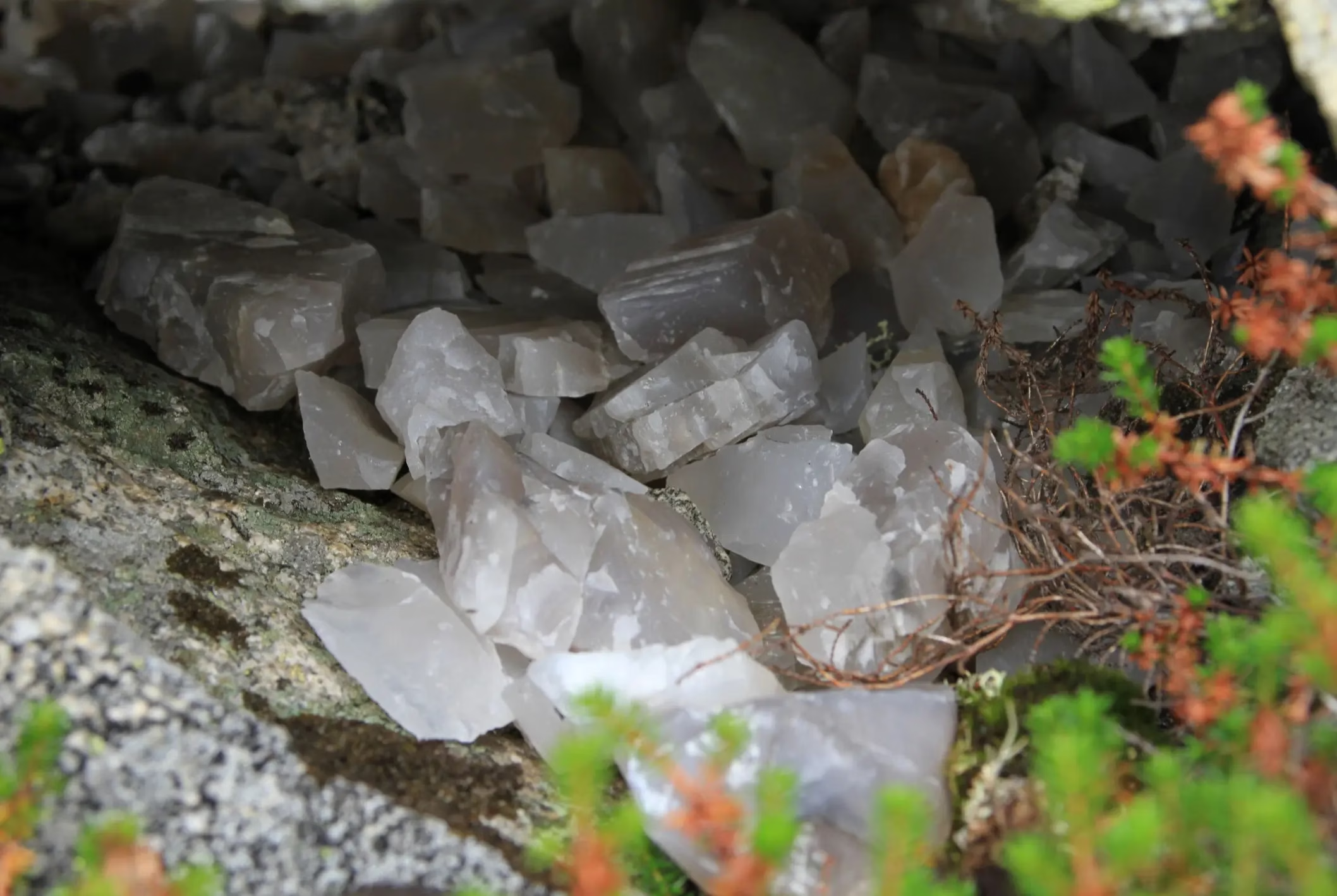
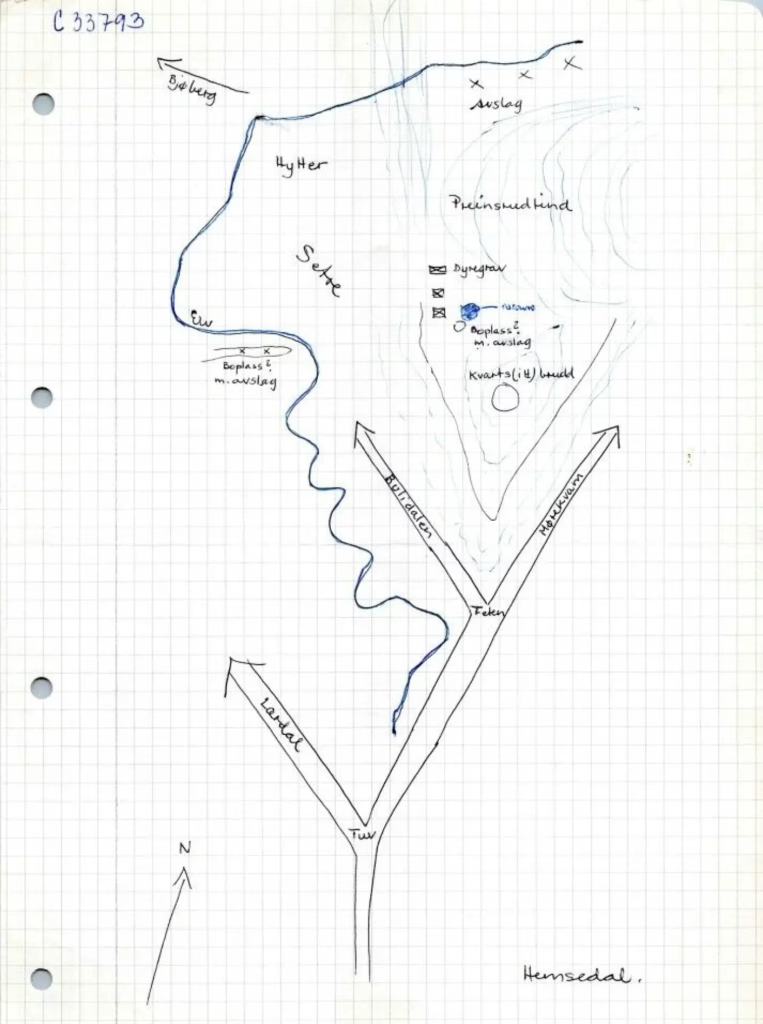
High in the mountains of Hemsedal, eastern Norway, archaeologist Astrid Nyland followed the glimmer of white quartzite to a site first noted more than half a century ago. What she uncovered was not just a quarry, but evidence of a long-lasting tradition of toolmaking that stretched from the Stone Age into the Iron Age.
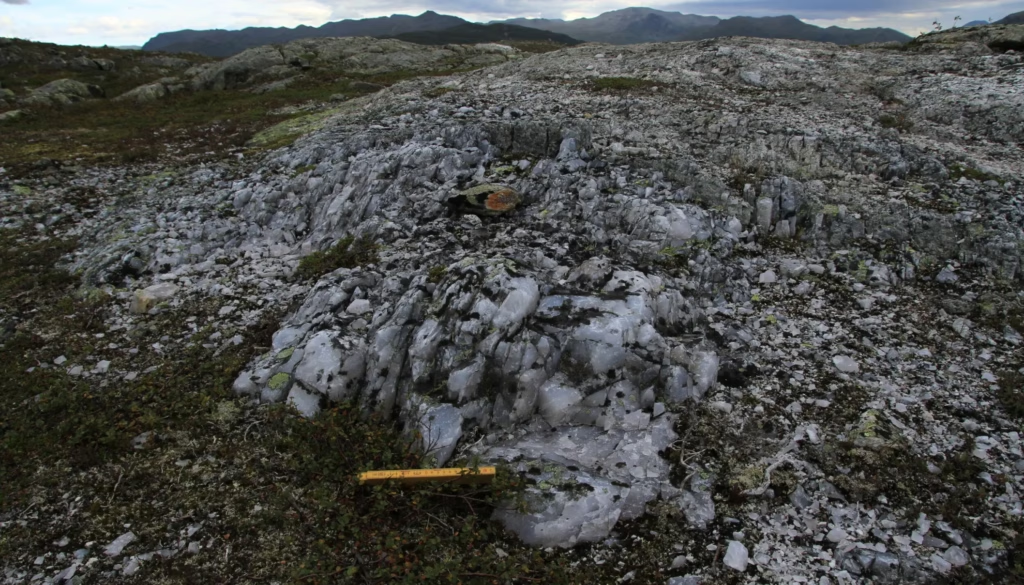
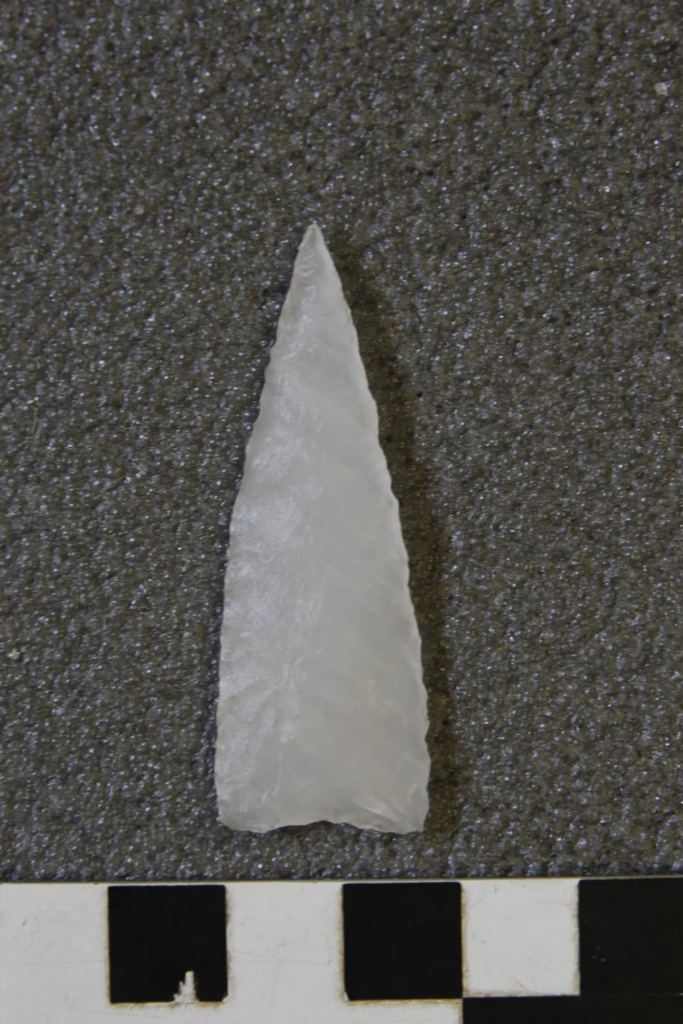
The Halsane quarry, first documented in 1970 by archaeologist Kari Thorrund, had remained largely unstudied until Nyland launched new investigations in 2012. Her research revealed that people extracted quartzite here for nearly 7,500 years, crafting arrowheads, spear points, knives, and scrapers from its durable stone.
Flint Was Scarce in Norway
When the first settlers arrived on Norway’s coasts around 11,000 years ago, they preferred flint for shaping weapons and tools. But unlike southern Scandinavia and northern Germany, Norway had little natural flint. In the mountains, prehistoric communities instead turned to other stones: rock crystal, sandstone, rhyolite, mylonite, and especially quartzite.
At Halsane, Nyland estimates the quarry stretched across 4,000 square meters—roughly the size of seven tennis courts. The total volume of extracted stone may have reached 100 cubic meters, enough to fill a large truck container.
Hidden Offerings or Stored Tools?
One of the most puzzling discoveries was that many partially worked stones and unfinished tools had been deliberately placed beneath massive boulders. Nyland suggests this could have been a way to store materials for later use—or perhaps a ritual act, giving something back to the spirits of the mountains.
Protected Cultural Heritage
Today, the Halsane quarry is listed as a protected cultural heritage site. Visitors can hike to the dramatic location, but removing stones is strictly forbidden.
“This was one of the most memorable field trips I’ve ever had,” Nyland reflected. “The landscape is breathtaking, and the history embedded in the rock is extraordinary.”
Source Acknowledgment
This article is based on reporting by Marte Dæhlen for Science Norway, reworked with additional context for international readers.