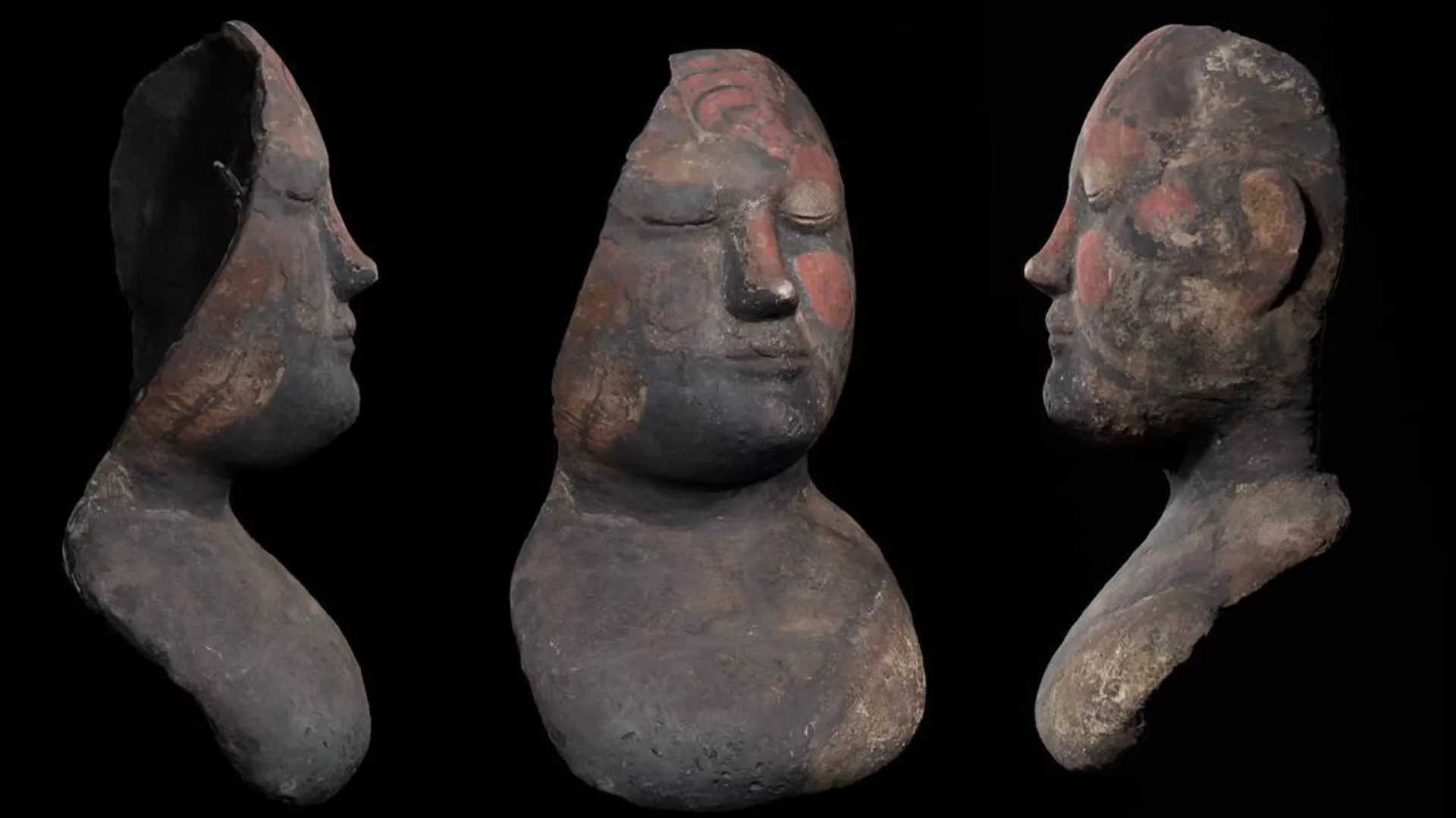
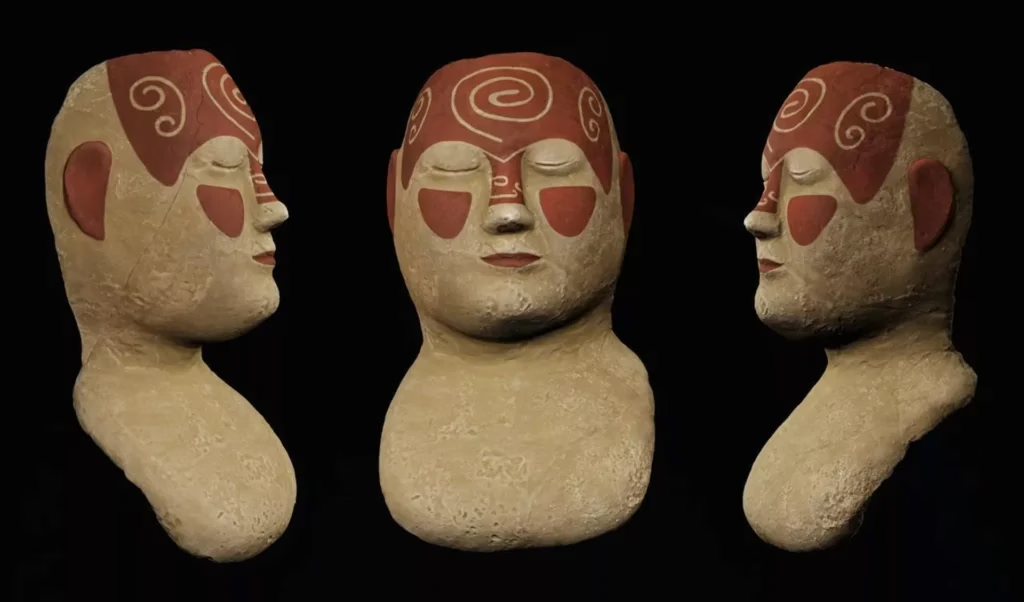
Researchers at Moscow’s State Historical Museum, working with technology experts from a leading innovation center, have digitally reconstructed a rare funerary mask of the Tashtyk culture from southern Siberia.
Using 3D scanning, AI-based modeling, and advanced restoration tools, the team recreated missing elements of the centuries-old artifact, offering the public a striking glimpse into the rituals and artistry of a vanished civilization.
Rebuilding a Lost Artifact
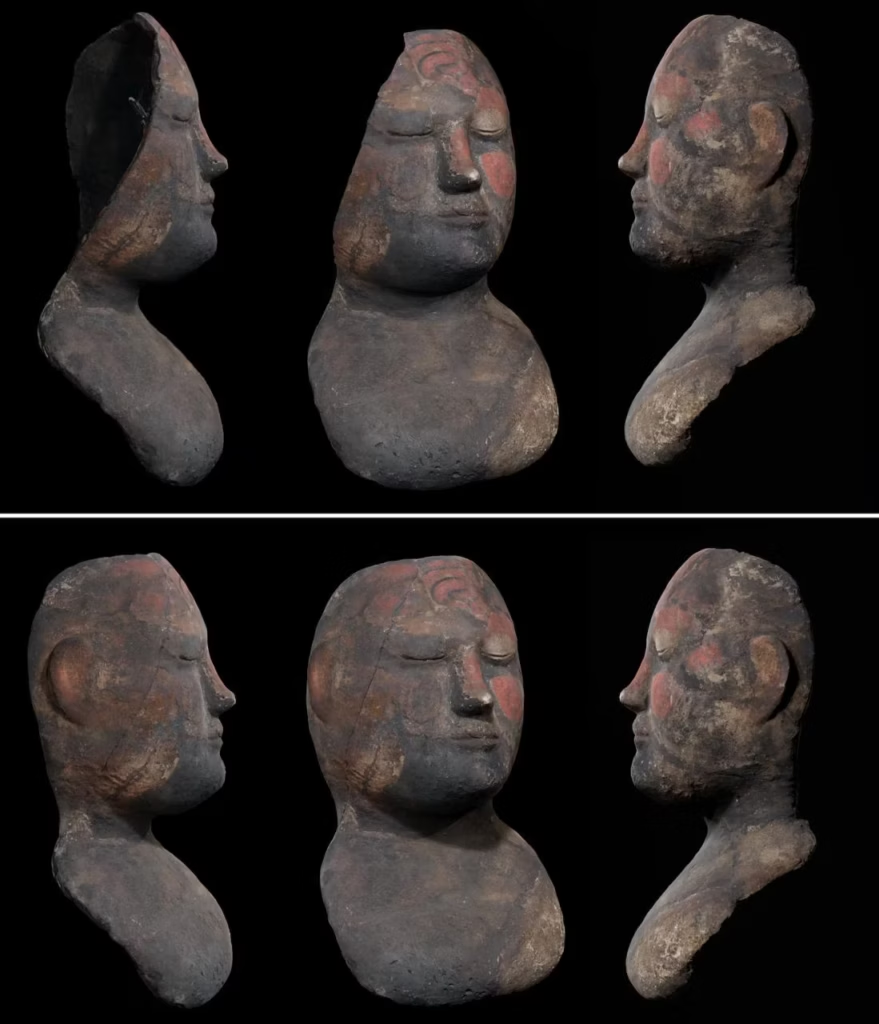
According to the museum’s statement, the interactive 3D model was designed using archaeological comparisons, studies of ancient mask-making, and detailed scans of surviving fragments. The reconstruction is believed to closely resemble the mask’s original form before centuries of deterioration.
“Modern technologies significantly expand the possibilities of archaeological science, allowing us to study priceless artifacts without damaging them,” said Alexey Levykin, Director of the State Historical Museum. He added that digital radiography now reveals hidden features of ancient objects, including tool marks and structural elements invisible to the human eye.
The Tashtyk Masks
The museum preserves 26 fully restored Tashtyk masks, six partial examples, and nearly 200 fragments excavated in Krasnoyarsk Krai during the late 19th and early 20th centuries. These masks, often made of plaster or gypsum, were central to the funerary rites of the Tashtyk culture, which thrived in southern Siberia between the 1st century BCE and the 7th century CE.
Unlike many cultures that buried their dead intact, the Tashtyk practiced cremation. Afterward, families crafted mannequin-like effigies of the deceased, complete with a painted funerary mask, hair, and sometimes jewelry or textiles. These masks served not only as portraits but also as sacred objects in extended commemorative rituals.
Scholars believe they embodied ancestor veneration and ideas of life after death, preserving personal identity long after cremation. Many masks show lifelike facial expressions, making them unique anthropological windows into ancient Siberian society.
A Civilization of Mystery
Archaeological evidence suggests the Tashtyk were a multi-ethnic community shaped by Scythian, Sarmatian, and Central Asian nomads. They lived in fortified settlements, farmed the land, and excelled in textile weaving and metalwork. By the 7th century CE, however, the Tashtyk disappeared, absorbed by waves of Turkic migration across Siberia.
Heritage Meets Technology
The fusion of archaeology and artificial intelligence is transforming heritage preservation. Digital tools now allow fragile artifacts to be reconstructed and shared globally as interactive 3D models. Even fragmentary Tashtyk masks can be virtually restored, helping researchers and the public explore Siberia’s lost traditions.
The digital rebirth of the Tashtyk funerary mask not only revives the memory of a vanished civilization but also underscores the power of technology to bridge millennia. What once lay buried now reemerges—not just as an artifact, but as a testimony to human ritual, creativity, and remembrance.
Sber Immersive Technologies Center ( Центр иммерсивных технологий Сбера)