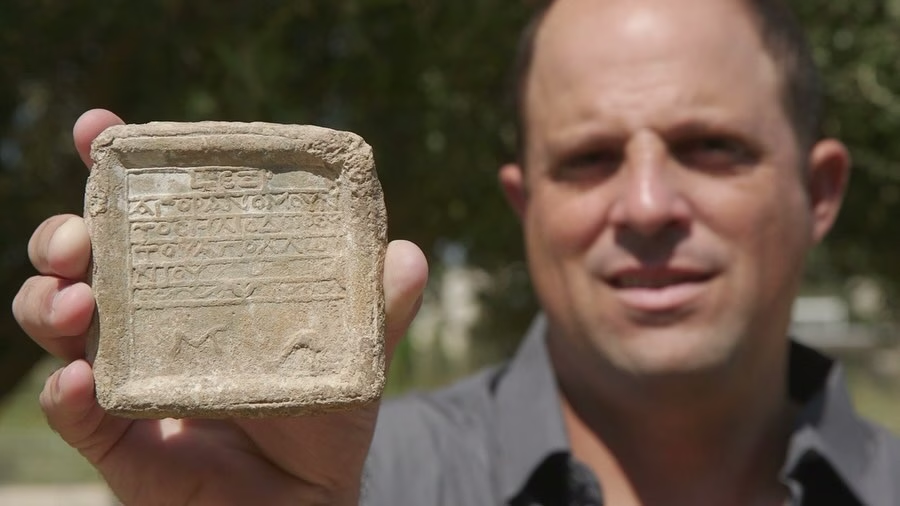
Jerusalem – A rare lead weight dating back more than two millennia has been seized in an operation carried out by the Theft Prevention Unit of the Israel Antiquities Authority. The artifact, remarkably well preserved, bears the name of an official responsible for regulating trade during the Hellenistic period.
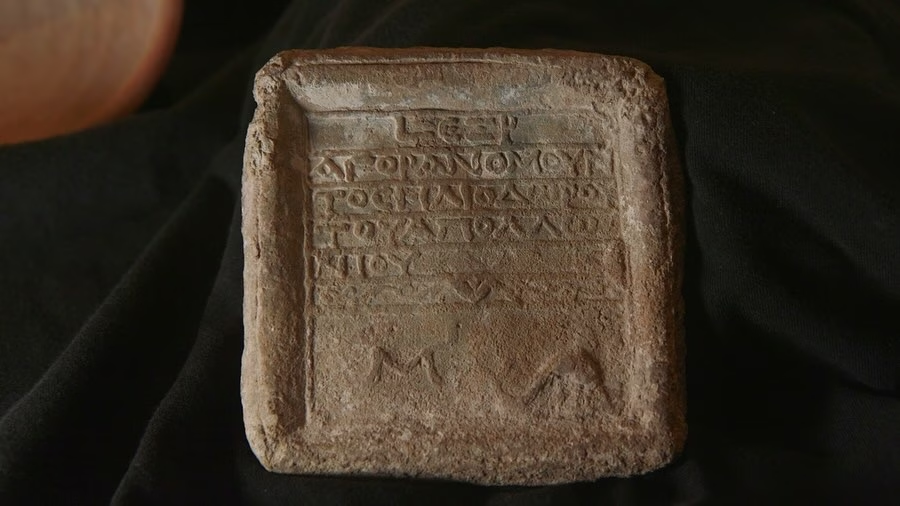
The inscription reads: “Heliodoros, son of Apollonios, Agoranomos” – identifying the official in charge of ensuring fair weights and measures in the marketplace. The weight, dated to 165 BCE, corresponds precisely to one mina, equal to one hundred Greek drachmas, the standard measure of the time.
Next to the inscription, a dolphin symbol was engraved. Its meaning is still under investigation, with scholars hoping it may reveal the city where the weight was originally produced.
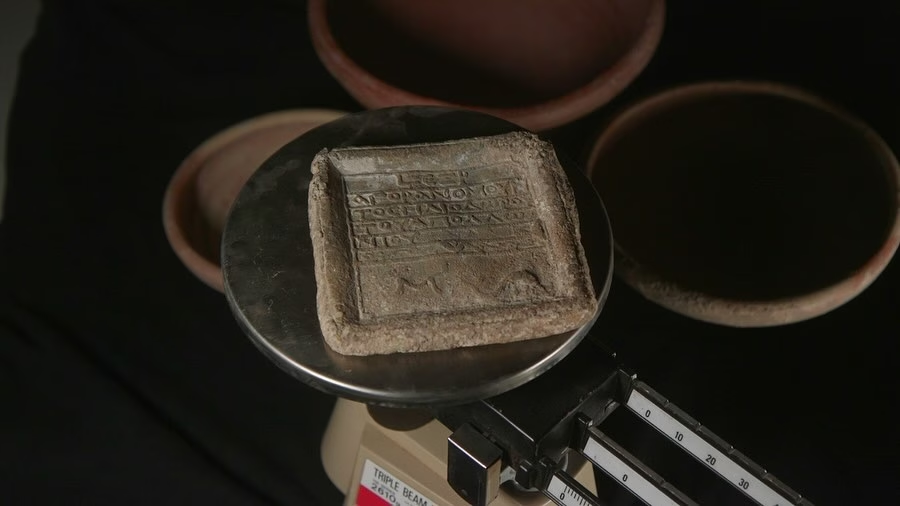
The operation followed intelligence reports and was conducted in an antiquities shop in Jerusalem. Investigators are now working to trace the middlemen and looters who removed the piece from its archaeological context.
According to Ido Zangen of the Israel Antiquities Authority, the names Heliodoros and Apollonios reflect the strong imprint of Hellenistic culture on the region:
“These Greek names, both linked to sun deities Helios and Apollo, show the cultural-religious connections of the time. Such names were especially common in Idumea, where the local god Qos was identified with the Greek sun gods.”
Ilan Haddad, Head of Antiquities Trade Supervision, emphasized the loss caused by looting:
“Once an object is removed without proper excavation, we lose priceless historical information. If found in situ, this weight could have added significantly to our understanding of the period.”