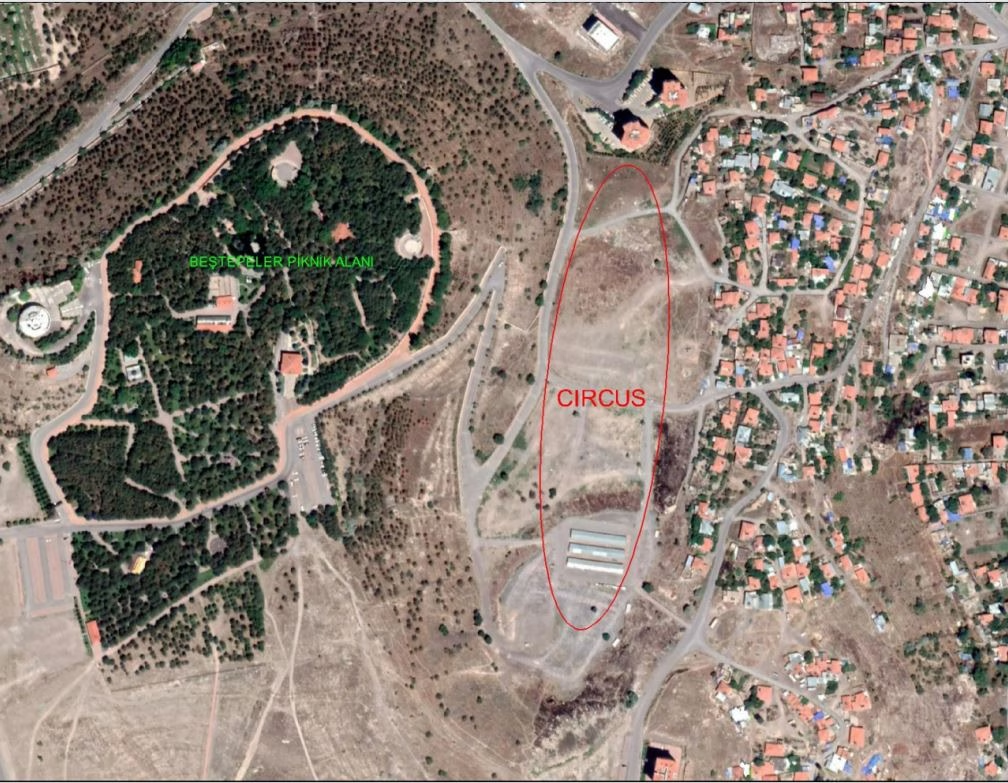
Archaeologists confirm the remains of a vast Roman arena buried beneath modern Kayseri — revealing a forgotten chapter of Ancient Cappadocia, once the imperial capital of Caesarea.
Hidden beneath layers of modern construction, a forgotten chapter of Cappadocia’s Roman past has come to light. Researchers in central Türkiye have located the remains of a 450-meter-long Roman hippodrome beneath Kayseri — the ancient city once known as Caesarea. This major find redefines the city’s ancient topography and places Kayseri among the few Anatolian centers known to have hosted such imperial-scale arenas.
The discovery emerged from a multi-year effort by Kayseri Metropolitan Municipality’s cultural heritage unit, which combined historical cartography, travel records, and archaeogeophysical surveys to trace ancient structures long lost beneath the urban fabric.
Early clues came from 19th-century travelers and scholars such as Gregorios Bernardakis, who noted a mysterious structure labeled “Circus” in his sketches of the city — the Latin term for a Roman chariot-racing stadium. By overlaying those hand-drawn maps with modern satellite and orthophoto imagery, specialists narrowed the likely zone to a section of the old city once used as a landfill during the mid-20th century.
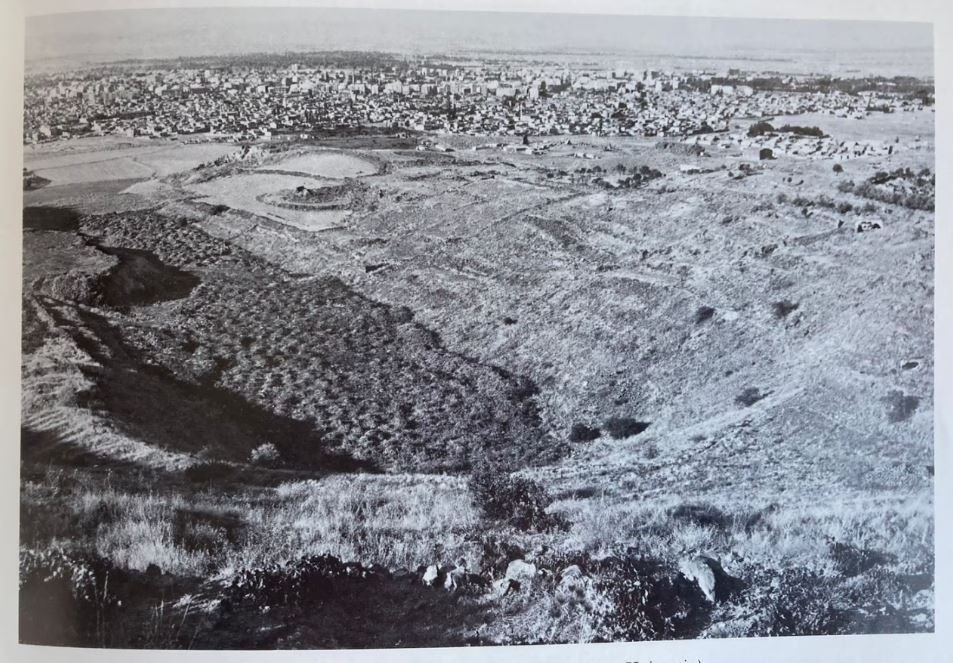
Subsequent ground-penetrating surveys confirmed the presence of elongated foundations consistent with a Roman circus, measuring roughly 450 meters in length. According to officials, the area had been filled with nearly 20 meters of debris between the 1950s and 1980s, effectively sealing the ancient structure beneath the surface.
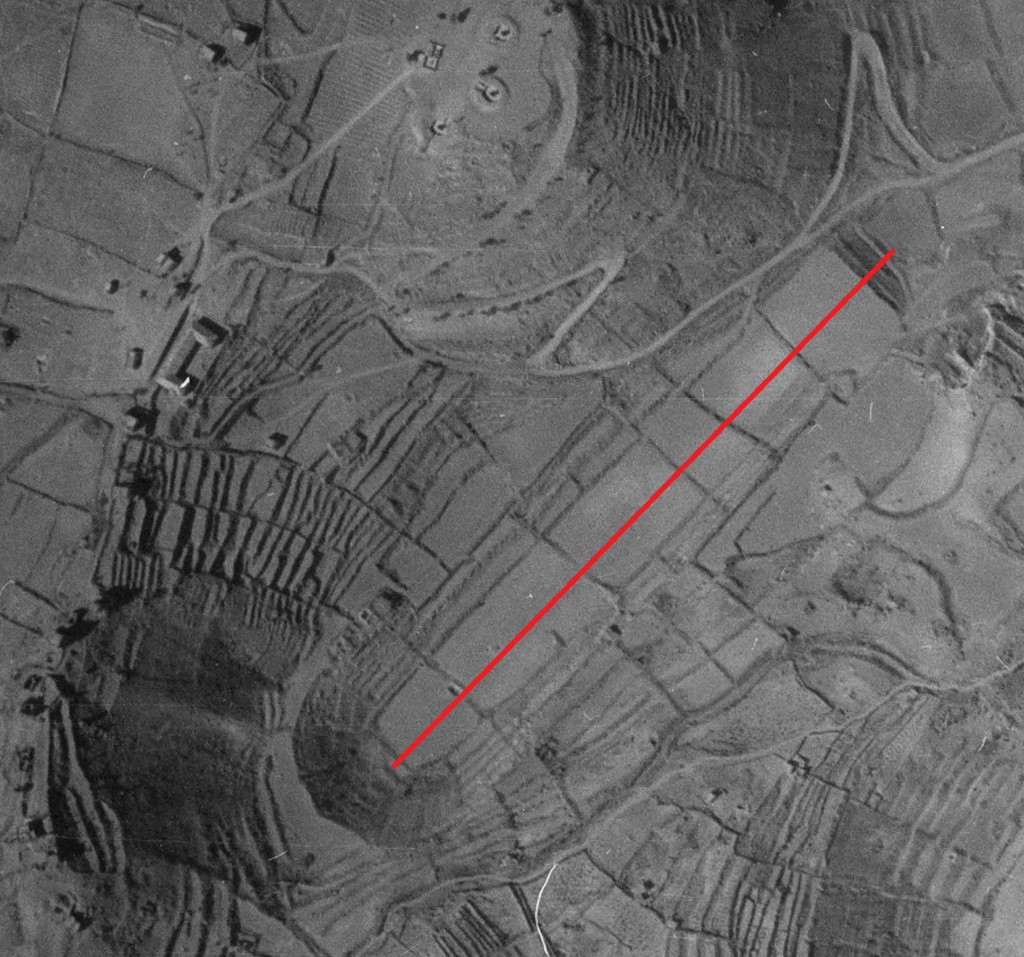
Following these findings, the Kayseri Regional Board for the Protection of Cultural Heritage formally recognized the location as a third-degree archaeological site on September 25, 2025, ensuring its protection under Turkish heritage law. Further excavations and stratigraphic analyses are now being planned to refine the dating and understand how the complex functioned within the urban layout of ancient Caesarea.
Historical and Cultural Significance:
Before it became a Roman metropolis, Kayseri was known as Mazaka, later renamed Eusebia under the Ariarathid kings. When Emperor Tiberius annexed Cappadocia to Rome in the first century CE, the city was transformed into Caesarea, a provincial capital complete with temples, theaters, and monumental civic architecture.
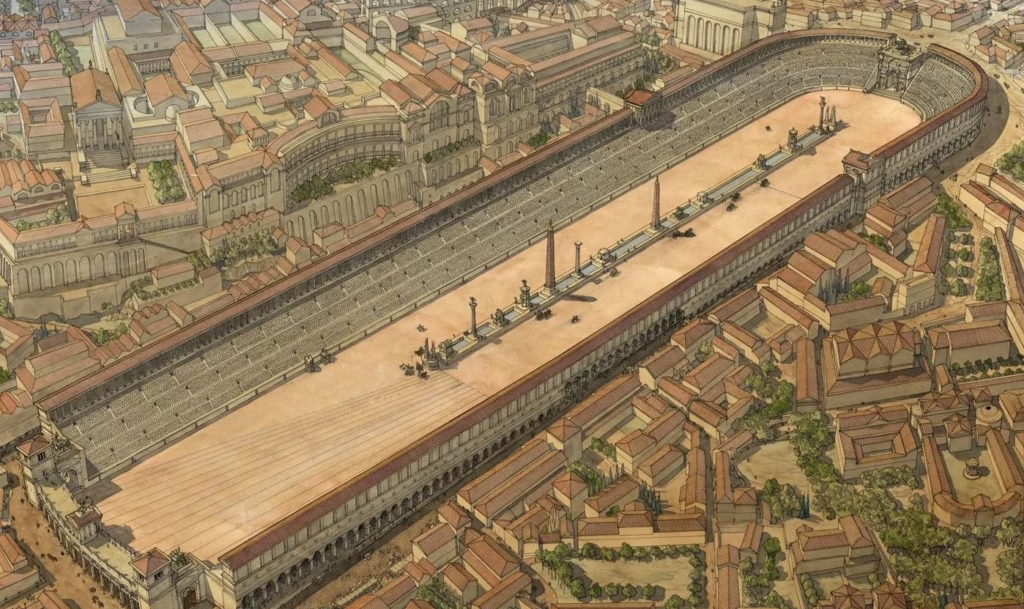
The newly identified hippodrome provides strong evidence that Caesarea rivaled other major Roman centers such as Antioch and Smyrna, where large-scale spectacles and chariot races served both political and ceremonial purposes. It suggests that Cappadocia’s elite embraced imperial urban culture earlier and more fully than previously believed.
According to archaeologists, the find “bridges a major gap in understanding how entertainment architecture spread through the eastern provinces of Rome.”
Cover Image: Aerial view showing the location of the newly identified Roman hippodrome beneath modern Kayseri, ancient Caesarea in Cappadocia. The elongated area marked as “Circus” corresponds to the remains of a 450-meter-long arena — the third known Roman hippodrome in Anatolia. Credit: Kayseri Metropolitan Municipality