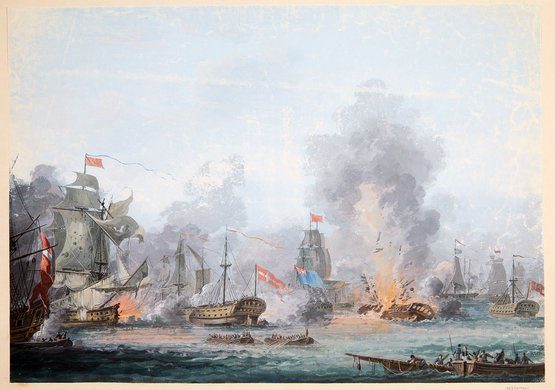
For more than two centuries, it was a story told in books—of fire, chaos, and a warship that vanished in an explosion.
Now, archaeologists have found it.
The wreck of the Danish warship Dannebroge—destroyed during the Battle of Copenhagen in 1801—has been discovered on the seabed of Copenhagen harbour, along with human remains and personal belongings of sailors who never made it ashore.
This is not just a shipwreck. It is the first time this iconic battle has been documented through archaeology.
A Warship Lost in Flames
On the morning of April 2, 1801, Dannebroge stood at the heart of Denmark’s defensive line against the British fleet led by Admiral Horatio Nelson.
Within hours, the battle turned catastrophic.
Under relentless bombardment, the ship caught fire. Flames spread across the deck as cannon fire tore through the hull. By late afternoon, the burning vessel drifted north—and then exploded with a blast powerful enough to echo across the city.
Moments later, it was gone.
Now, 225 years later, its remains lie 15 meters below the surface, buried in thick layers of harbour silt.
Found in Darkness, Piece by Piece
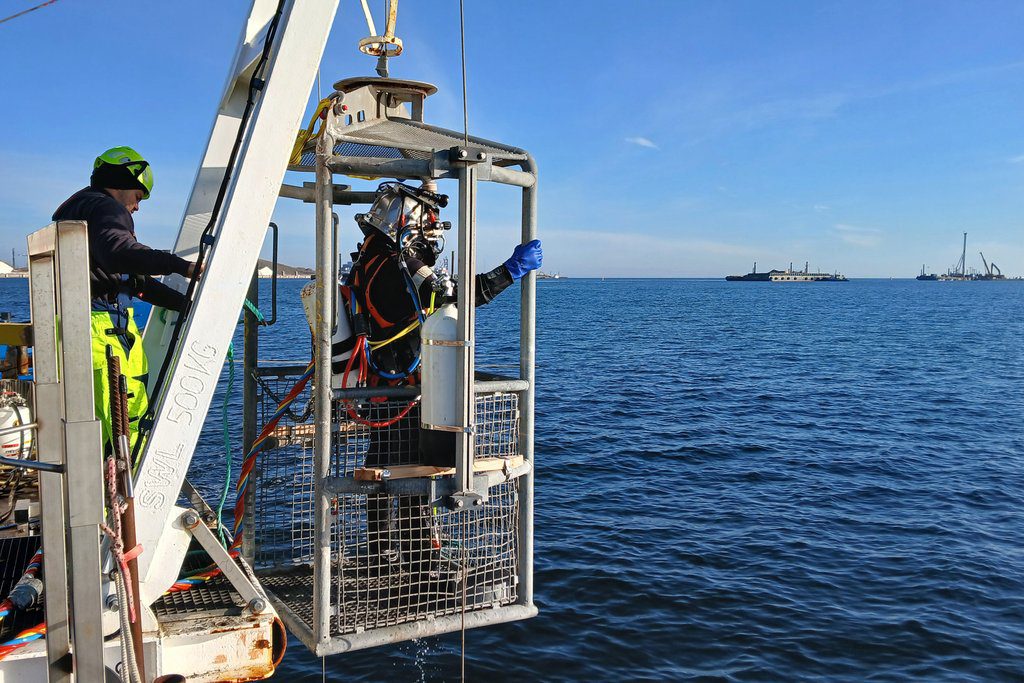
The discovery was made by maritime archaeologists from the Danish Viking Ship Museum, working in near-zero visibility conditions as part of seabed investigations linked to the Lynetteholm artificial island project.
Diving into dark, sediment-heavy waters, the team advanced slowly—meter by meter—until the outlines of a large wooden warship began to emerge.
Then came the confirmation.
“The dimensions of the timbers match historical drawings exactly, and dendrochronology dates the wood to 1772,” said excavation leader Otto Uldum.
“We are as close to certainty as you can get—this is Dannebroge.”
Around the wreck, the seabed is scattered with the unmistakable debris of battle: cannonballs, bar shot, and even cannons themselves.
The First Archaeological Evidence of the Battle
Despite its historical importance, the Battle of Copenhagen had never before been investigated archaeologically.
Until now, everything we knew came from written accounts, paintings, and national narratives—often shaped by heroism and myth.
This discovery changes that.
“We are creating an archaeological record of the battle for the first time,” Uldum explained.
“That’s entirely new. No one has examined this event in this way before.”
For historians, this marks a shift from storytelling to material evidence—from interpretation to physical proof.
A Human Story Beneath the Sea
But the most powerful discoveries are not the cannons or the ship itself.
They are the people.
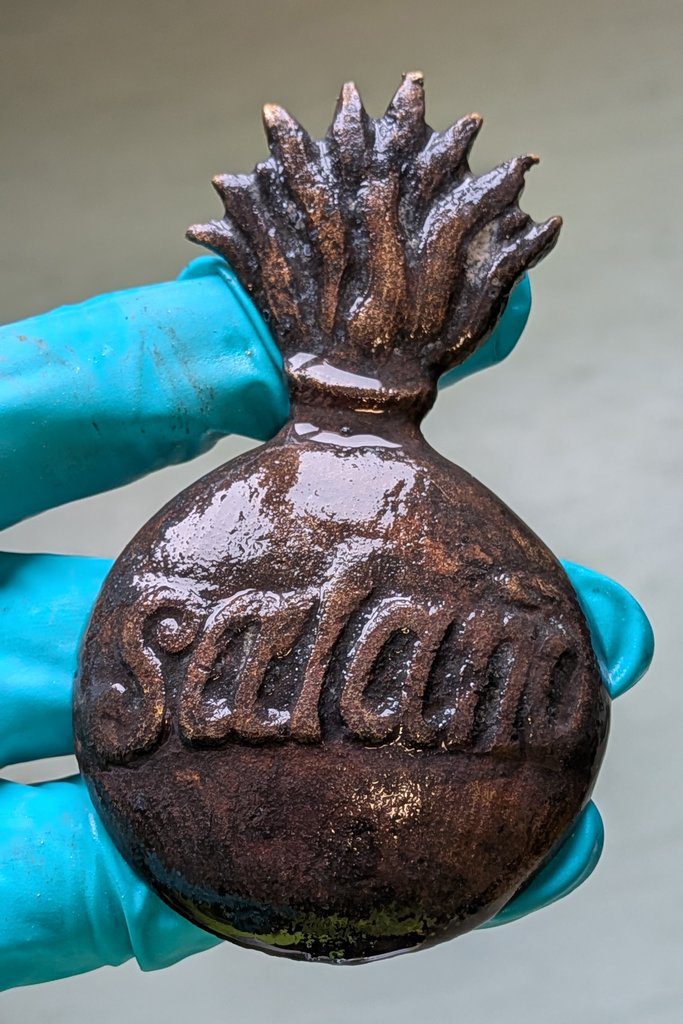
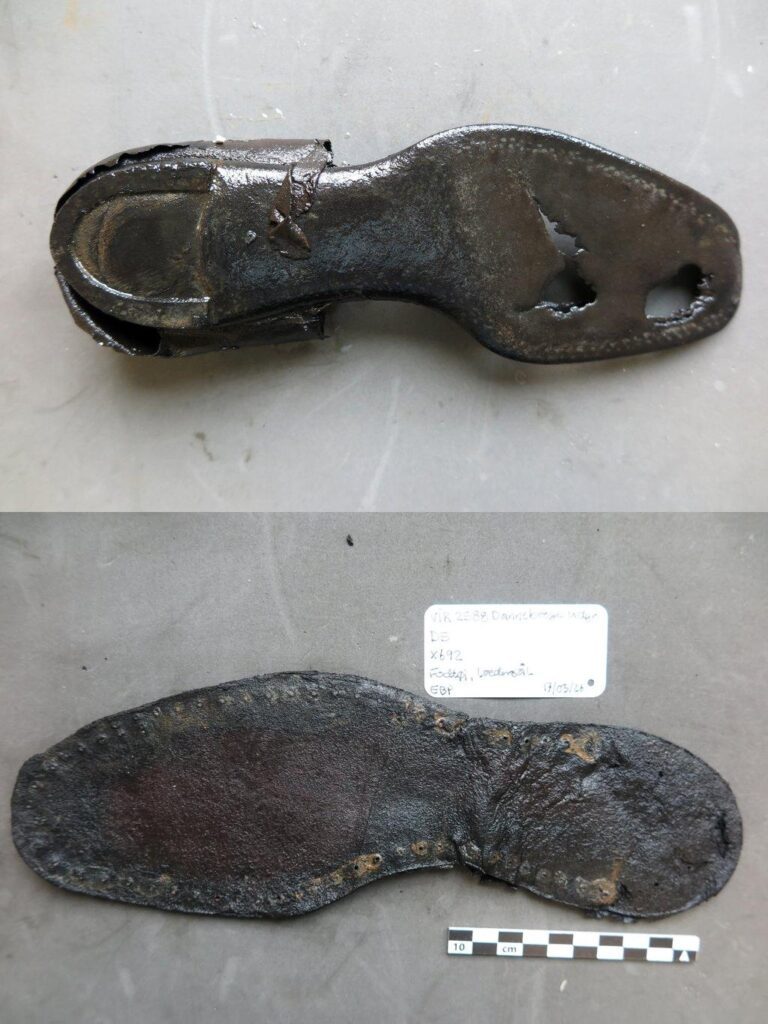
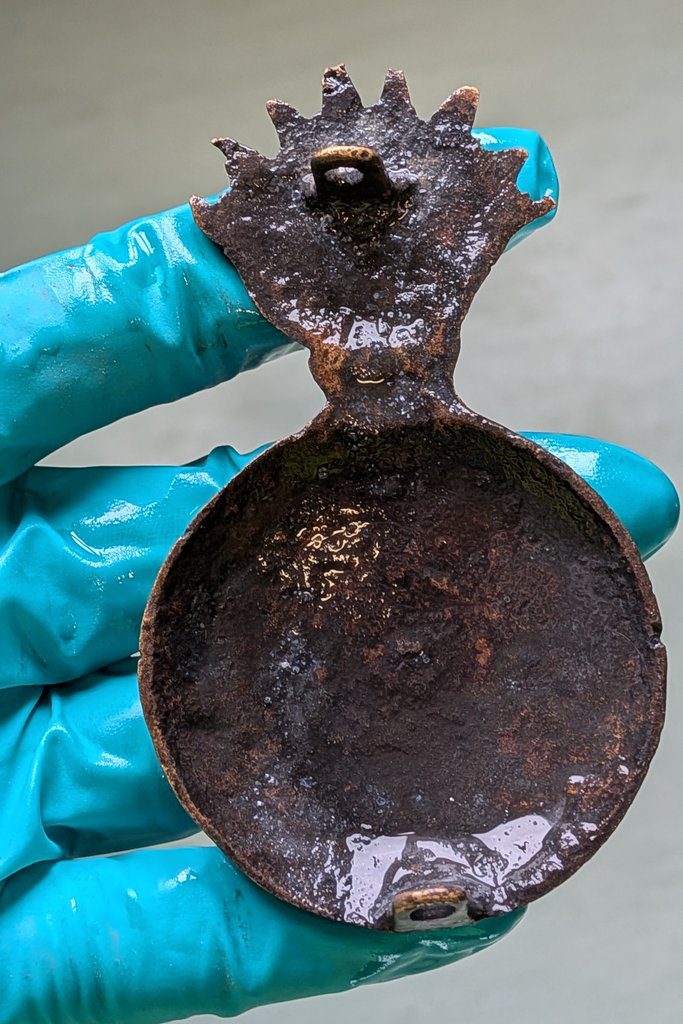
Among the wreckage, archaeologists have recovered shoes, fragments of clothing, clay pipes, uniform insignia, and other everyday objects carried by sailors.
And then, something more.
Human remains.
A lower jaw. Rib fragments. Bones that may belong to members of the crew—men who disappeared during the battle and were never recovered.
Historical records show that 19 sailors were listed as missing from a crew of 357.
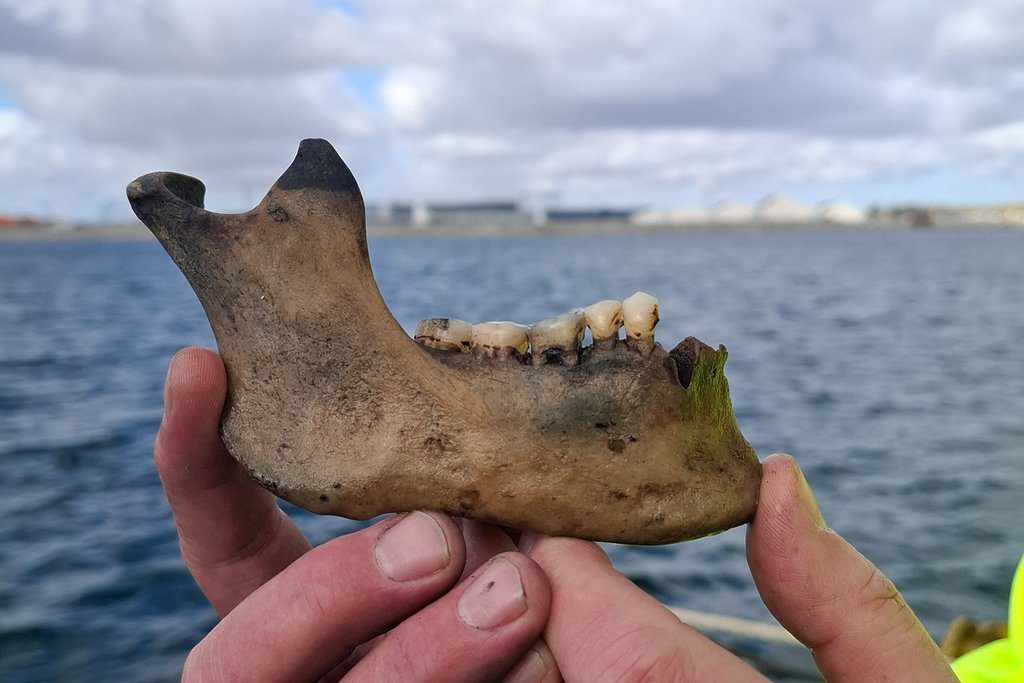
Now, at least one of them has been found.
“Museum collections usually preserve the fine things—officers’ uniforms, prestigious objects,” said Uldum.
“But here, we are finding the belongings of ordinary sailors. That makes this discovery socially more representative.”
It is a rare moment where archaeology restores not just an event—but its human cost.
When History Becomes Physical
The Battle of Copenhagen has long been part of Denmark’s national identity—retold in books, depicted in art, and remembered as a defining moment.
But until now, it lacked something essential.
Physical presence.
With the excavation of Dannebroge, that changes.
The ship is no longer just a story. It is timber, ballast, iron, and bone—lying exactly where it fell on one of the most violent days in Danish history.
And with every artifact recovered, the past becomes a little less distant.
A Battlefield Recovered from the Sea
On that April day in 1801, the waters outside Copenhagen turned into a battlefield of fire and smoke. British ships brought more than 1,200 guns against a Danish defence that could not maneuver—only endure.
Within hours, the sea was filled with wreckage.
Hundreds were dead. Hundreds more wounded.
Some never returned.
Today, beneath the same waters, the remains of that battle are surfacing again—not as legend, but as evidence.
Cover Image: Danish warship Dannebroge moments before its catastrophic explosion during the Battle of Copenhagen, 2 April 1801. The wreck of the vessel has now been identified by maritime archaeologists beneath Copenhagen harbour. Painting: The Battle of Copenhagen by Gustaf Boberg (1801). Public Domain, SMK.