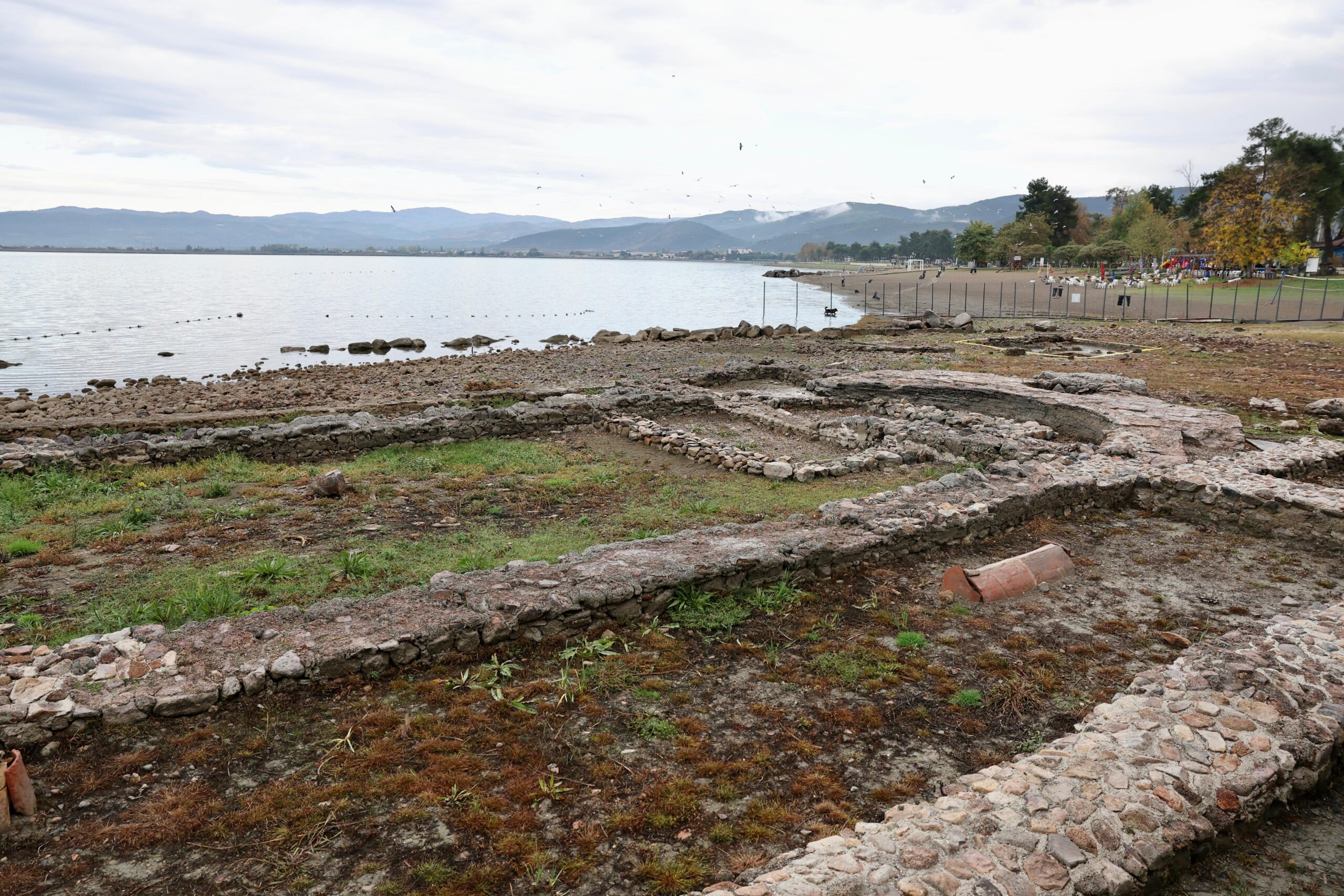
In the ancient city of Nicaea — modern-day İznik in northwestern Turkey — an extraordinary underwater basilica has reemerged as a new landmark in biblical archaeology. The Biblical-Era Basilica Beneath Lake İznik, first identified through aerial photographs in 2014, is now officially open to visitors following a joint initiative by the Turkish Ministry of Culture and Tourism and the Bursa Metropolitan Municipality.
Recognized by the Archaeological Institute of America as one of the Top 10 Archaeological Discoveries of 2014, the basilica bridges faith, history, and underwater archaeology — offering rare insight into the early Christian transformation of Nicaea, where the foundations of Christian doctrine were once laid.
A Basilica Hidden Beneath the Waters
The remains of the early Christian church lie about 50 meters from the southern shore of Lake İznik, under a depth of two to three meters. Excavations revealed a three-aisled basilica measuring approximately 41 by 18 meters, featuring an apse, narthex, atrium, and side chambers — architectural characteristics typical of the 4th and 5th centuries AD.
Archaeologists believe the church was dedicated to Saint Neophytos, a local martyr executed during the persecutions of Emperor Diocletian in 303 AD. Coins and decorative fragments confirm its late-Roman origin, while nearby burials suggest the site also served as a memorial sanctuary for early Christians in Bithynia.
From Pagan Nicaea to a Christian Stronghold
Nicaea has long held a central role in early Christianity. It hosted the First Council of Nicaea in AD 325, where bishops from across the empire debated the theological foundations of the faith. The submerged basilica lies close to the ancient shoreline that once framed those pivotal discussions.
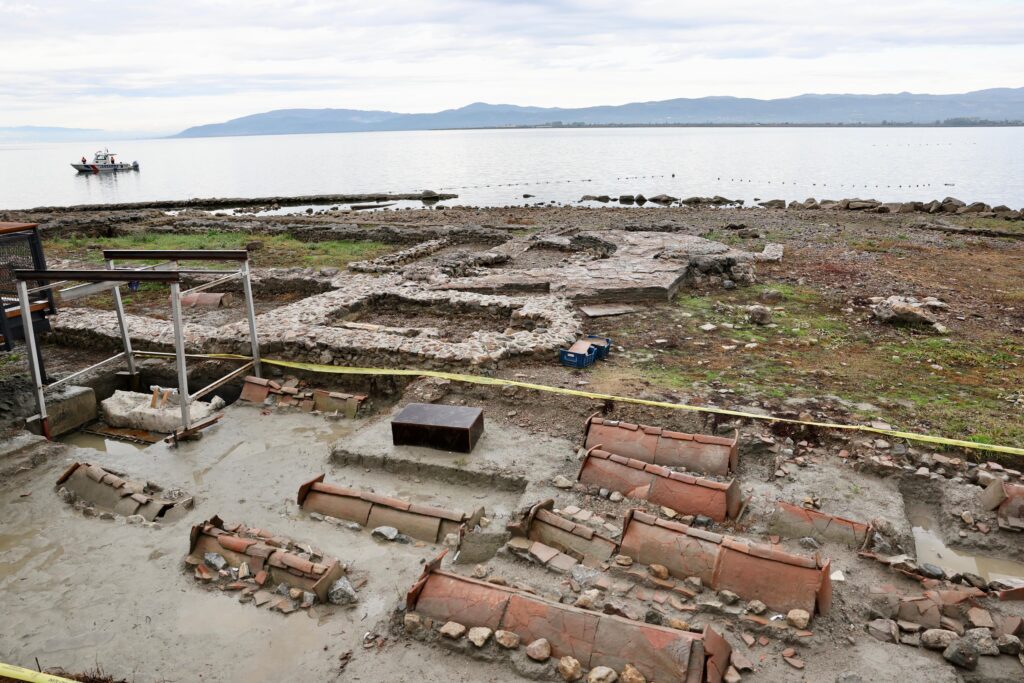
Researchers suggest that the church sank beneath the lake after a powerful earthquake — possibly the one recorded in AD 740 — that altered the landscape and submerged part of the city’s sacred quarter. For more than a millennium, the basilica remained invisible, its form only rediscovered through modern aerial imaging.
Reclaiming a Lost Landmark
A newly constructed visitor center, inaugurated in 2025, now welcomes guests to explore the basilica’s story through interactive exhibits and underwater visualizations. The facility integrates archaeological preservation with educational outreach, allowing visitors to experience the ruins virtually without disturbing their fragile structure.
Bursa Mayor Mustafa Bozbey described Nicaea as “a crossroads of beliefs, cultures, and ideas — a city that still preserves the ancient urban layout of antiquity and continues to inspire dialogue between civilizations.”
Faith Beneath the Surface
The re-opening of the basilica coincides with the 1700th anniversary of Christianity’s recognition as an official religion, making the event symbolically powerful for both archaeology and faith history.
With its blend of Roman engineering, Christian devotion, and underwater mystery, the Lake İznik basilica reaffirms Nicaea’s place among the most sacred archaeological landscapes of the ancient world.