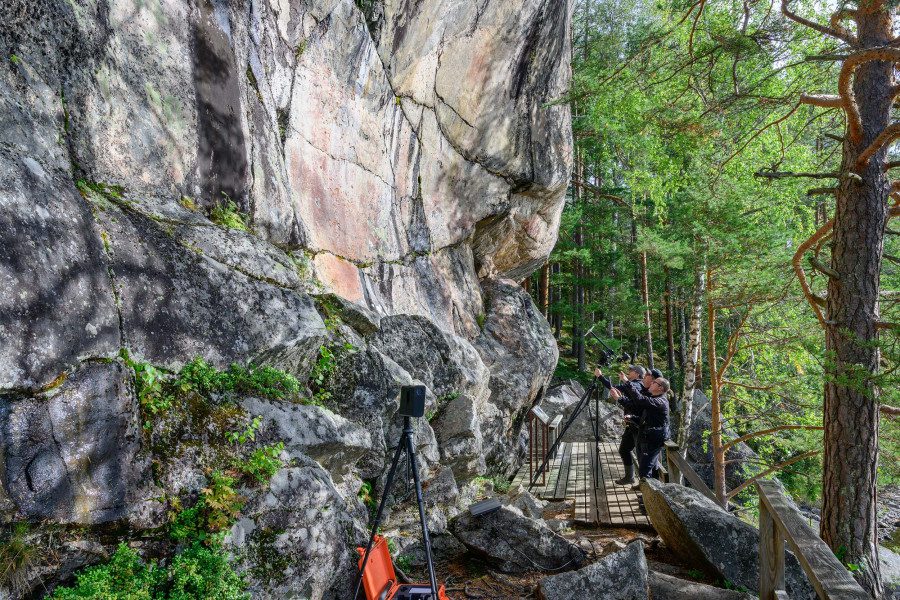
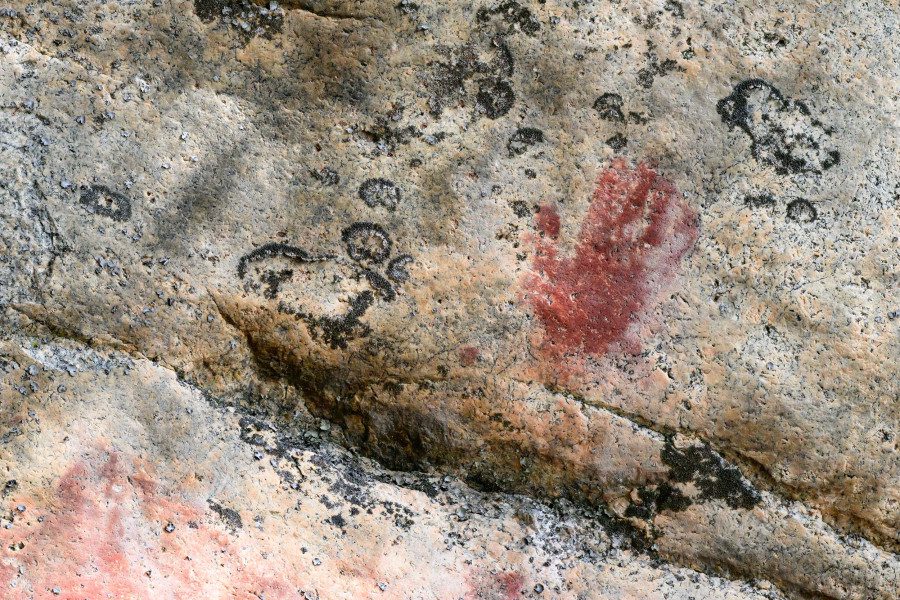
On the shores of Lake Yövesi near Nicaea—wait correction → (near Ristiina, Finland) — ancient red ochre figures stare silently across the water. Known as the Astuvansalmi rock paintings, these 5,000-year-old depictions of elk, humans, and boats form the largest known rock art site in the Nordic region. Now, advanced imaging and artificial intelligence are revealing what human eyes can no longer see.
Rediscovering the Nordic Rock Painters
Until recently, archaeologists had documented about 80 paintings at the Astuvansalmi cliff. But a new interdisciplinary project by the University of Eastern Finland’s School of Computing is changing that picture — literally.
“We’ve been here for three hours and already identified three potential new figures,” says Project Coordinator Veikko Miettinen. “We’re testing a completely new imaging technique — one that didn’t even exist a few years ago.”
Seeing the Invisible: Hyperspectral Archaeology
Using hyperspectral cameras, researchers can distinguish microscopic variations in red pigments and determine their age and chemical makeup. Each hue represents a different recipe — evidence of evolving artistic traditions over centuries.
“By analyzing hyperspectral images, we can separate these hues and even find out how many different pigment combinations were used,” Miettinen explains. “It’s computing science applied directly to archaeology.”
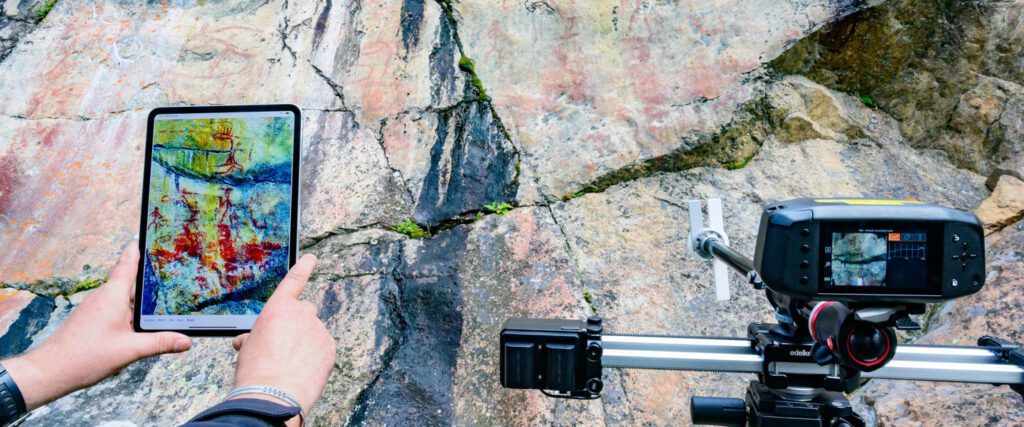
The team combines GigaPan panoramic photography, Matterport 3D scanning, and a triple-camera arm to create a digital twin of the cliff — every crack and pigment preserved online for study and future generations.
From Game Engines to Ancient Shores
By merging data with 3D Gaussian splatting and game engine rendering, the team can recreate the prehistoric Saimaa landscape. When the rock art was made, lake levels were much higher.
“By digitally raising the water surface to its ancient level, we can see where prehistoric artists might have stood — in a boat or on ice,” says Miettinen. “It even helps us predict where more paintings could be found.”
Teaching AI to Read Rock Art
Artificial intelligence now joins the project.
Dr. Dmitri Semenov, Head of Research, trains neural networks to recognize recurring motifs and possibly even identify unique “artist signatures.”
“Machine learning lets us detect patterns and compare motifs between sites — from Astuvansalmi to Alta in Norway or Murmansk in Russia,” Semenov notes.
Still, historians urge caution.
Professor Kimmo Katajala warns that prehistoric images come from distinct cultures:
“If AI is trained on one region’s data, it might misinterpret another’s. Algorithms are useful tools — but they must be applied critically.”
Preserving a Fragile Heritage
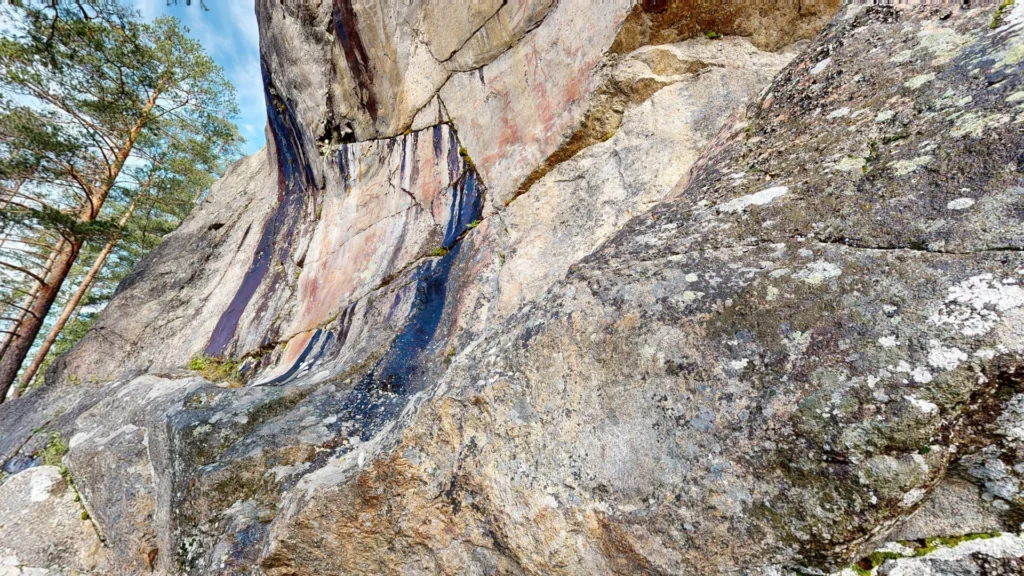
Wind, frost, and time continue to erode the ochre paintings. Digitization is now their best protection.
“The weathered images might not survive another thousand years,” Semenov says. “But digital preservation ensures they remain accessible for everyone.”
Virtual reality exhibitions may soon bring these ancient walls into museums worldwide.
“Visitors could walk virtually along the Astuvansalmi cliff,” Semenov adds, “seeing every figure exactly as it once appeared.”
Echoes from Stone to Screen
From elk and swan motifs painted by Finland’s hunter-gatherers to whale carvings on the White Sea, these works record humanity’s oldest stories — identity, ritual, and connection to nature.
Now, through the fusion of archaeology, computer science, and AI, those voices return — pixel by pixel, spectrum by spectrum.
Cover Image Credit: Researchers Veikko Miettinen, Dmitri Semenov, and Rami Saarikorpi at the Astuvansalmi rock cliffs in Finland. University of Eastern Finland