
Archaeologists investigating a late Iron Age settlement in central France have uncovered a deliberately damaged sword, an enigmatic limestone statue and evidence that horses were butchered for meat on an unusually large scale.
The discoveries were made at Le Désert in Mettray, just north of Tours. The enclosed rural settlement dates to the La Tène D1 period, between approximately 150 and 80 BC, during the final centuries before Roman rule transformed Gaul.
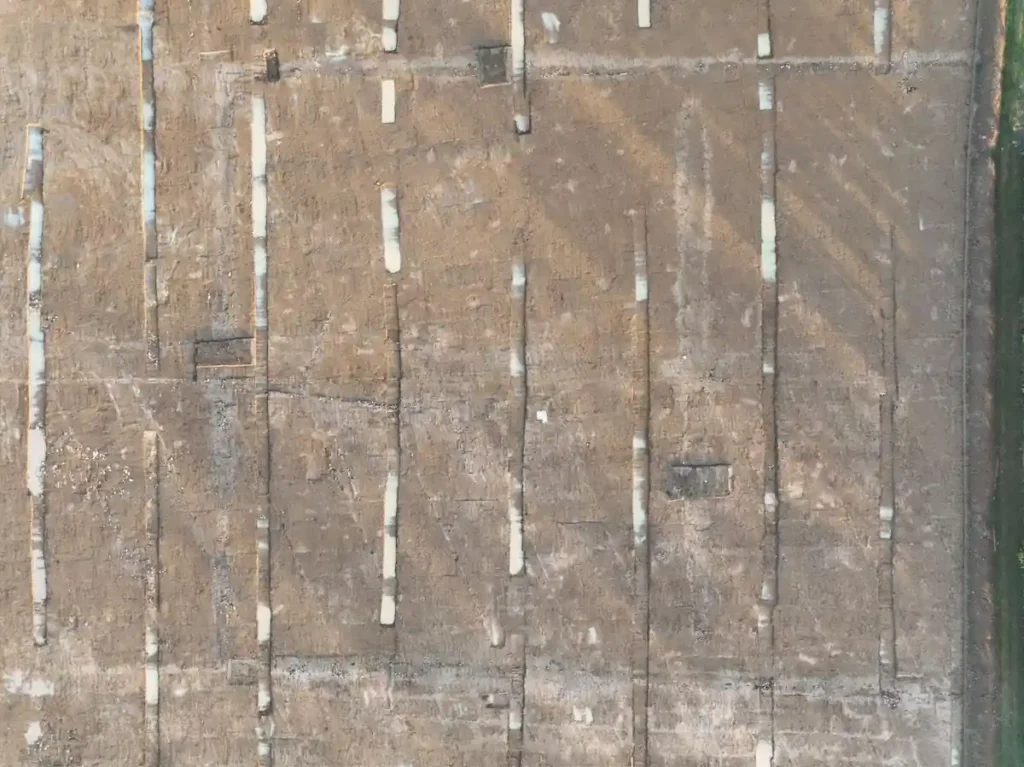
Excavations by France’s National Institute for Preventive Archaeological Research, or Inrap, exposed almost the entire settlement. Its rectangular residential enclosure covered about 1.2 hectares and contained separate areas for living, production, storage and waste disposal.
A sword deliberately rendered useless
The most striking find came from a ditch dividing the interior of the enclosure.
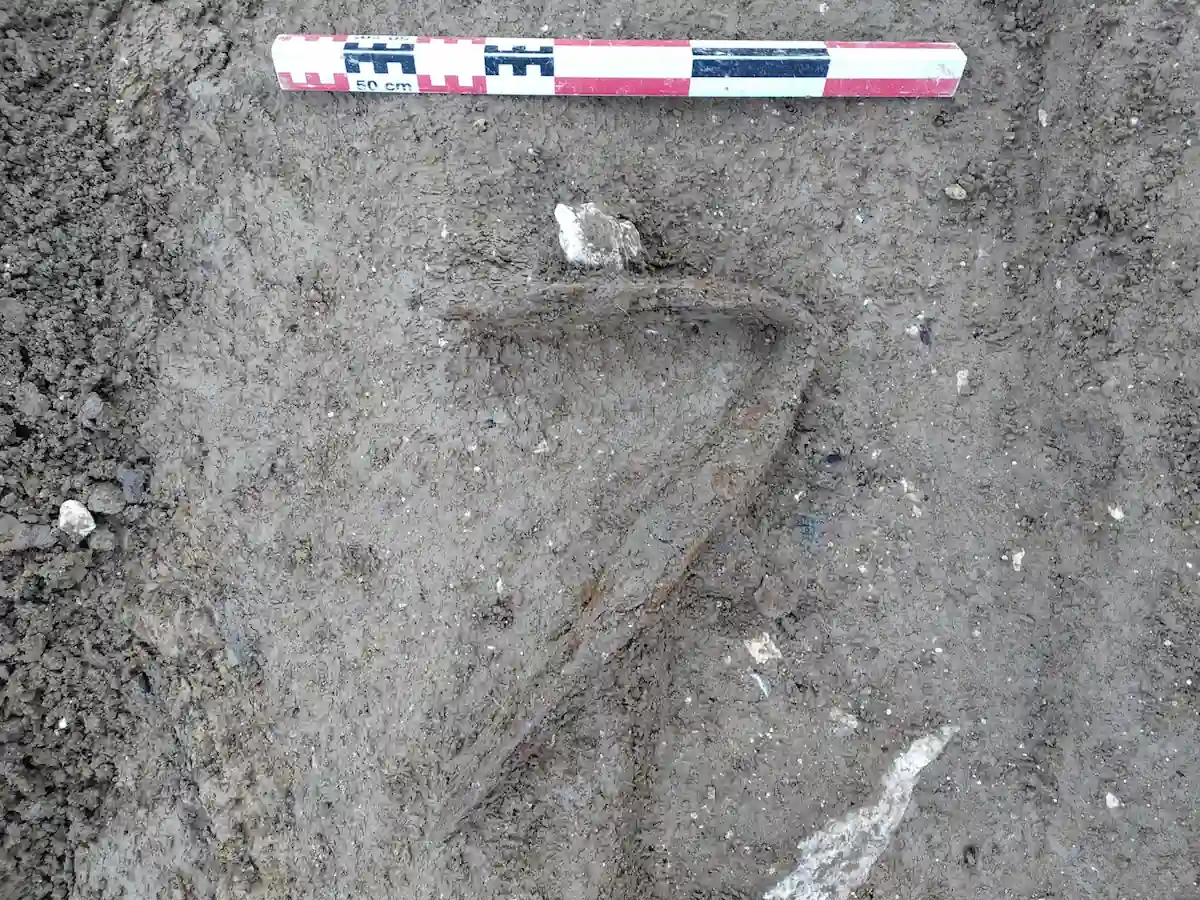
Near a crossing point that allowed movement between different sections of the settlement, archaeologists discovered an iron sword together with its scabbard. The weapon had been deliberately broken and deformed, leaving it incapable of further use.
Its condition and location suggest that it was not simply damaged in combat or discarded as ordinary waste. Inrap associates the deposition with the final abandonment of the settlement, raising the possibility that the sword was ritually “killed” before being placed in the ditch.
Destroying an object could permanently remove it from everyday circulation while giving its deposition symbolic meaning. At Mettray, the sword’s placement near an internal passage may have marked the closure of a space that had previously connected different parts of the community.
The evidence does not reveal exactly who performed the act or what ceremony accompanied it. However, the deliberate destruction of the weapon and its carefully chosen position make an accidental loss unlikely.
Horses were butchered for meat
Animal bones recovered from the settlement revealed another unusual feature.
During the first phase of occupation, horses made up a particularly high proportion of the animals processed for food. Cut marks and intentional fractures on the bones show that the carcasses were butchered and broken apart rather than deposited as complete animals.
Horse meat was not unknown in Iron Age Gaul, but the scale of its consumption at Mettray appears unusual when compared with other settlements in the region, where cattle, sheep, goats and pigs normally formed a larger part of the meat supply.
Why the settlement’s earliest inhabitants relied so heavily on horses remains uncertain. The pattern may reflect local livestock management, environmental pressures or cultural food preferences specific to the community.
The practice did not remain constant. Horse consumption declined during the settlement’s second phase, suggesting that its inhabitants reorganized their herds and subsistence strategies over time.
Life inside an enclosed Gallic farmstead
Most of the finds came from more routine activities, offering a detailed picture of daily life within the enclosure.
Iron slag and forging debris indicate that metalworking took place at the settlement. Tools could therefore be manufactured, maintained or repaired without relying entirely on outside specialists.
Rotary querns were used to grind grain, while whetstones kept blades and other implements sharp. Loom weights and spindle whorls document textile production, from spinning fibres into thread to weaving cloth.
Burned animal bones and butchery waste point to the preparation and consumption of food inside the enclosure. Together, the evidence suggests a community capable of meeting many of its own agricultural, craft and domestic needs.
The settlement was not static. Archaeologists identified two successive occupation phases, each involving changes to the internal arrangement of buildings, working areas and waste deposits.
This allows researchers to examine how a single rural community changed over several generations rather than comparing unrelated settlements from different locations.
An enigmatic limestone statue
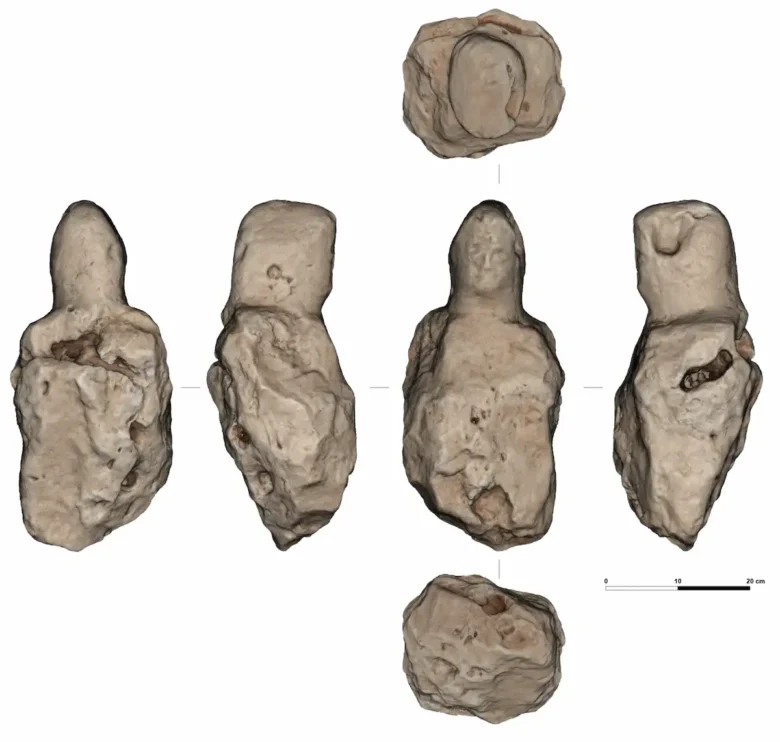
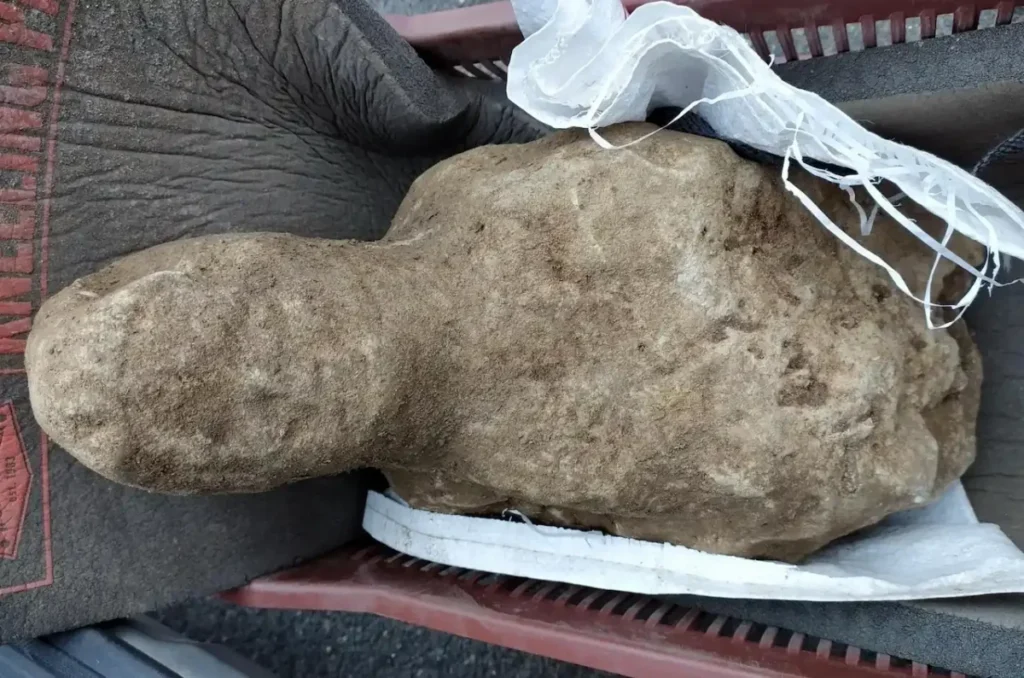
The excavations also produced a limestone statue from one of the enclosure ditches.
Inrap has not yet released a detailed identification of the figure, leaving its form and original purpose uncertain. Its presence is nevertheless notable because stone sculpture is not an ordinary find at rural settlements of this period.
The statue and the iron sword are described as two of the site’s most distinctive objects. Both came from enclosure ditches, although there is currently no evidence that they were deposited during the same event or formed part of a single ritual.
The statue may eventually provide clues about belief, identity or social representation at Mettray. Until its study is complete, however, interpreting it as a deity, ancestor or status symbol would be premature.
A settlement that resisted the regional pattern
In its overall design, Mettray resembles other enclosed farms of the late Iron Age. Its inhabitants raised animals, processed crops, produced textiles and worked iron within a clearly organized residential space.
Yet several elements set the site apart.
The unusually intensive butchery of horses during its earliest occupation, the later change in dietary practices, the limestone statue and the deliberate destruction of a sword reveal a community whose economic and symbolic choices were more complex than the architecture alone would suggest.
Mettray was not merely a farm surrounded by ditches. It was a lived-in landscape whose inhabitants repeatedly reorganized their work, their livestock and the spaces around them.
When that occupation finally ended, the abandonment may have been marked not by simply walking away, but by destroying a valued weapon and placing it beside one of the routes through which people had once moved.