
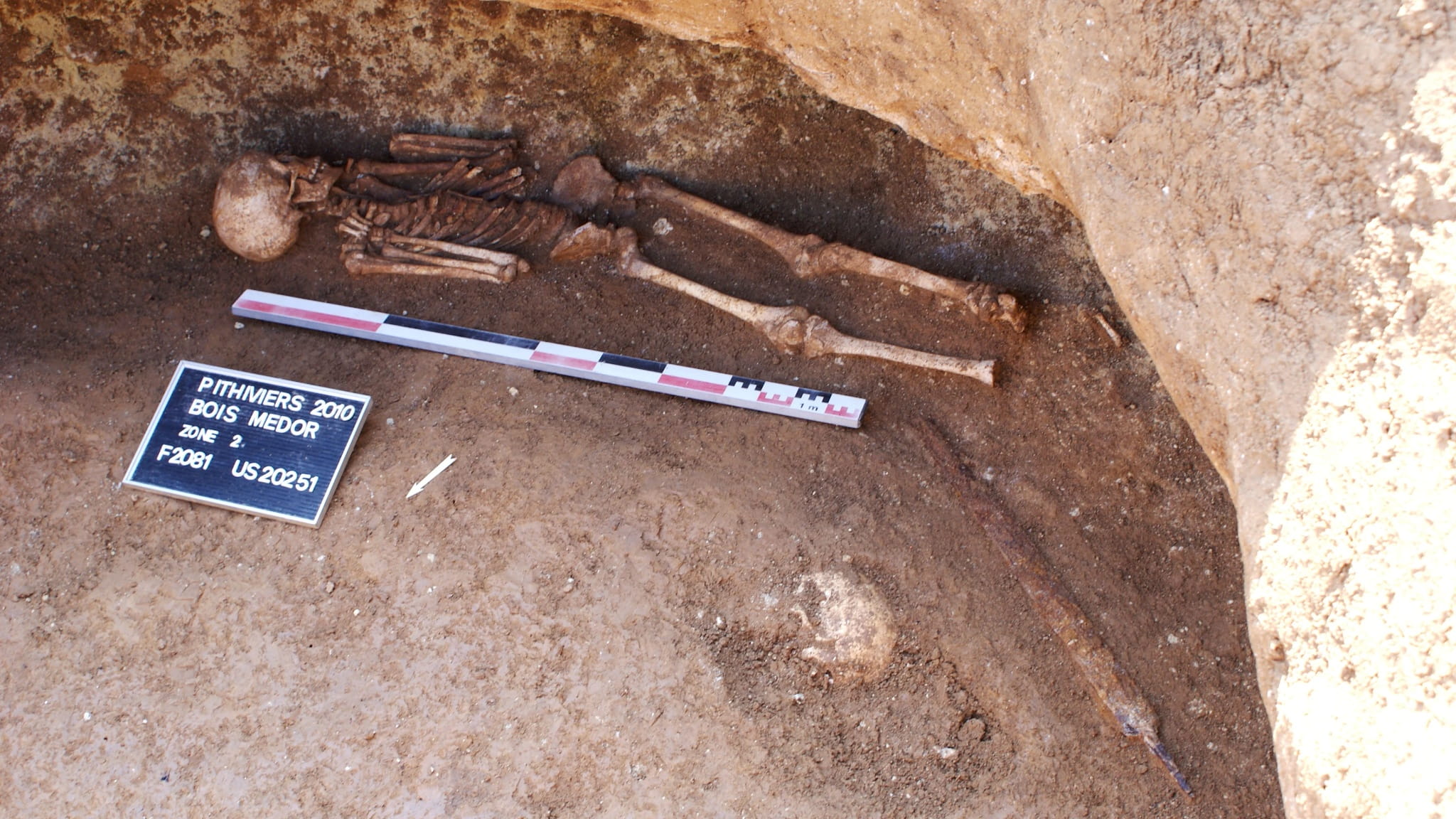
A 2,400-year-old child burial with a sword was uncovered inside an abandoned grain silo at the Gaulish settlement of Pithiviers “Bois Médor” in central France.
The child, who died before the age of 15, had been placed curled against the wall of the underground pit. An iron sword in its scabbard lay near the legs, alongside a fibula and possible remains of a shield.
The burial was one of four human deposits found during excavations carried out by France’s National Institute for Preventive Archaeological Research, Inrap, ahead of a road bypass project in 2010.
One of Loiret’s Oldest Iron Swords
The settlement, located in the Loiret department, was occupied during the fifth and fourth centuries BCE. Its inhabitants used large underground silos to store several cubic metres of grain.
After these pits fell out of use, many were filled with domestic waste. Three silos along the eastern edge of the settlement, however, contained six human bodies.
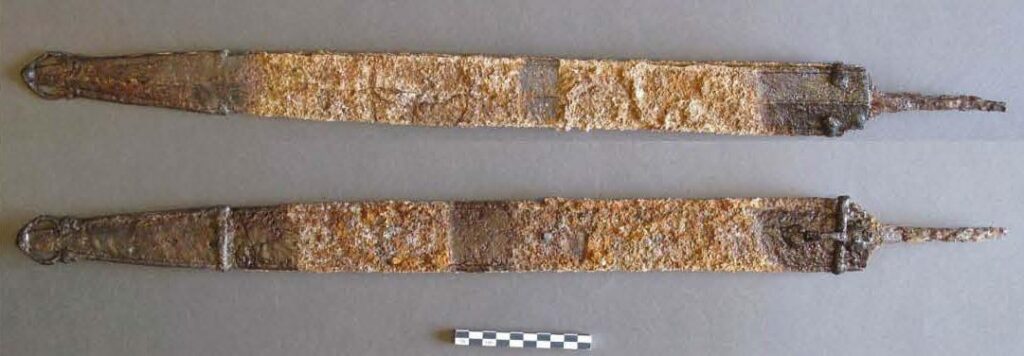
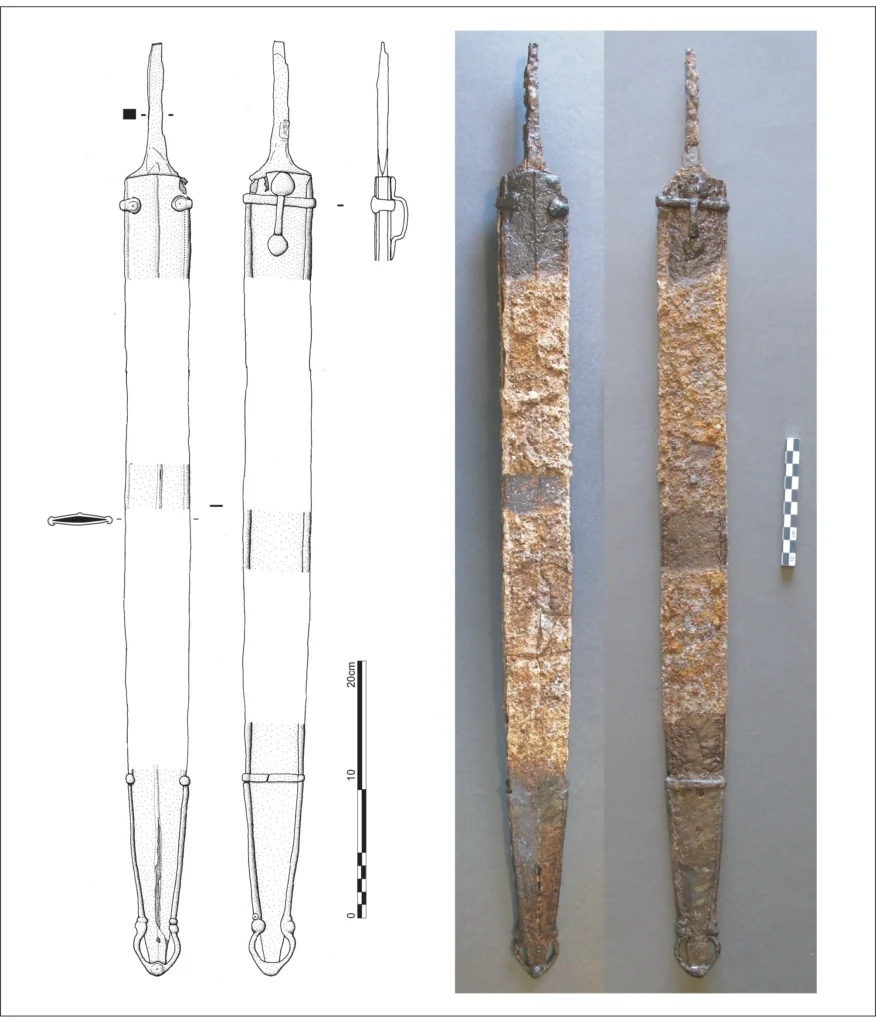
The silo holding the child dates to the end of the fifth century BCE. The iron sword found inside was a standard-sized weapon rather than a miniature produced for a young person. It is also among the oldest swords known from Loiret.
Its scabbard had no decoration, an uncommon feature at the beginning of the Second Iron Age, when sword cases were often ornamented.
The weapon had been laid beside the child rather than attached to the body. Archaeologists therefore cannot determine whether the sword belonged to the deceased or had been placed there to represent a future social role.
Weapon burials involving children are rare even in established Iron Age cemeteries. The Pithiviers example is more unusual because the body was deposited inside a former storage pit rather than a conventional grave.
Six Bodies Found in Three Silos
The other deposits revealed very different treatment of the dead.
One silo contained three bodies, two of them lying face down. Another held the remains of an adult man whose feet appeared to have been tied to his hands. His head had been separated from the body.
The positions suggest that the six individuals were not buried according to a single practice. Some had been carefully arranged, while others appeared to have been thrown into the pits or manipulated after death.
The child’s burial remains the clearest contrast. Unlike the other bodies, it was accompanied by objects linked to clothing and warfare.
Whether the sword marked the child as a young warrior, reflected family status or represented a role the individual had not yet reached remains unknown. Its presence inside a discarded grain silo makes the burial one of the most distinctive Iron Age discoveries from the site.